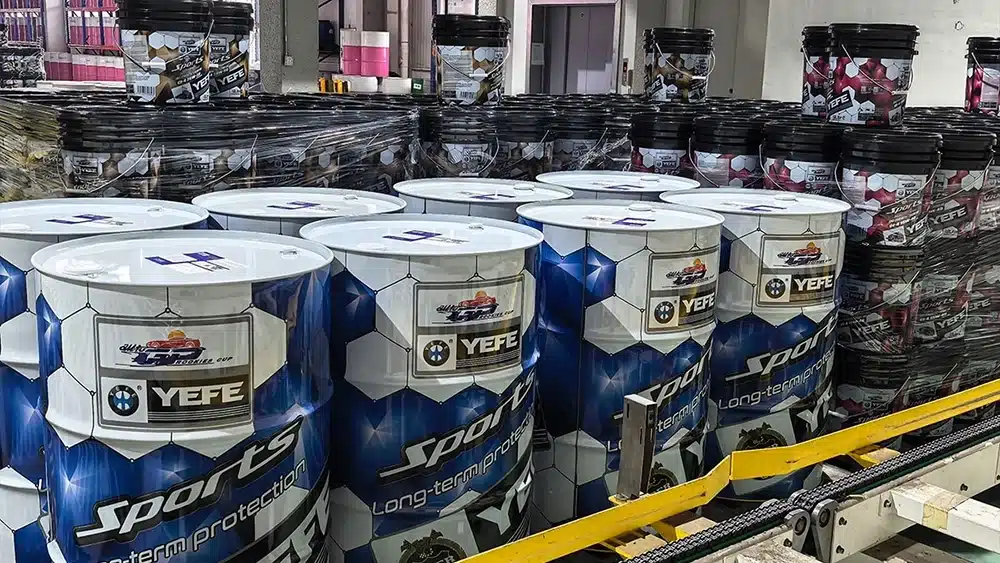
Motorcycle oil is not just an automotive oil that functions in a different engine it is specifically engineered to fulfill the special mechanical, thermal, and clutch-related requirements of the motorcycle engines.
Most individuals think that every engine oils are the same, irrespective of the type of engine. The fact is that motorcycles impose integrated requirements on the engine oil, transmission and at times the clutch over one common system. Application of automotive oil in the motor cycle engine may affect the performance of the clutch, protection of gears and the life cycle of the engine.
These variations are due to the nature of operation of motorcycles: the rpm is higher, the aggressive loads are frequent, and the integrated components require balanced lubrication without the loss of gain where it is highly required.
Why the Distinction Matters for Riders and Professionals
Selection of the appropriate oil has a direct impact on the quality of the shifts, clutch progression, longevity of gears as well as engine wear in the course of a thousand miles. In the case of motorcycle owners, a wrong decision may result in slippery or accelerated part failure. The distributors and technicians will be able to use such engineering realities to choose or advise products that are compatible with the actual use.
Why Motorcycle Engines Demand a Different Type of Oil
Motorcycle engines work with the conditions in which the lubricant is exposed to much more stress than normal car engines.
The revolutions of most modern motorcycles are much greater – frequently well over 10,000 RPM in the sport models, whereas in the car engines they hardly ever exceed 7,000 RPM. This is a high-rev operation, which produces high heat and mechanical shear. Also, most motorcycles share the same oil to lubricate the engine, the gearbox and the wet clutch which puts the lubricant under combustion, gear meshing and friction surface stresses.
Key Mechanical Differences
These aspects present the pressures which the normal automotive oils are not engineered to manage on a consistent basis.
| Engine Characteristic | Motorcycle Engine | Car Engine |
| Operating RPM | Higher (often 8,000–14,000+) | Lower (typically 2,000–7,000) |
| Oil sharing | Engine + gearbox + clutch | Engine only |
| Load fluctuation | Frequent, aggressive (acceleration, braking) | More stable |
| Shear stress | High | Moderate |
An elevated RPM raises the amount of heat and the rate of oil degradation in case the formula does not have strong shear stability. Compromising the clutch functionality of the gears in favor of lubrication, which is not part of the balance automotive oils, is also necessary in shared oil systems because automotive oils have fewer opportunities to do so.
The Role of the Clutch: The Biggest Difference Many People Miss
Wet clutch compatibility is the only single largest factor that distinguishes between motorcycle oil and car oil.
The various motorcycles have a wet clutch system which means that the plates of the clutch are engaged in the engine oil. This design conserves space and makes construction easier although it requires accurate friction properties of the lubricant. The oil should permit unhindered engagement and disengagement and it should not be able to slip under load.
Friction modifiers are also common in automotive oils in order to enhance fuel efficiency by reducing internal drag. These modifiers result in slippage between the plates in a motorcycle wet clutch, and therefore, they are required to control the required grip.
Clutch Compatibility Comparison
| Oil Characteristic | Motorcycle Oil | Car Oil |
| Wet clutch compatibility | Designed for it | Not designed |
| Friction modifiers | Controlled or absent | Commonly added |
| Clutch performance impact | Stable engagement | Risk of slippage |
Lack of proper friction control causes riders to have irregular shifting, lack of power and early wears of the clutch. Specific motorcycle formulations retain the increased friction required to ensure good stability.
Formulation Differences Between Motorcycle Oil and Car Oil

In addition to the clutch needs, motorcycle oil must contain an additive package that is well balanced in order to serve several functions at the same time.
In motorcycle formulations, great attention is given to the shear stability to counter-act high RPM and shearing of gears. Additives are concentrated on the cleanliness of the engine, valvetrain and piston wear protection, and durability of gears – without reducing clutch friction.
Car oils are more focused on fuel economy and on emissions, and may have more friction modifiers and detergents specialized to particular transmission systems. This may result in poor protection in motorcycle-specific stresses.
Formulation Aspect Comparison
| Formulation Aspect | Motorcycle Oil | Car Oil |
| Shear stability | High priority | Lower priority |
| Additive balance | Engine + transmission + clutch | Engine-focused |
| Friction control | Carefully managed | Optimized for fuel economy |
These variations make the oil to have viscosity and film strength even in the long-high rev usage or rough riding.
Standards and Specifications: Why Motorcycle Oil Is Classified Differently
The motorcycle oils are classified in different systems that depict their specific use.
Oil used in the automotive industry is largely based on the API (American Petroleum Institute) and ILSAC standards that dwell on fuel efficiency, catalyst protection, and low emissions. These are passenger car oriented, and not much concern the wet clutch performance or extreme shear conditions.
Motorcycle oils usually conform to the JASO (Japanese Automotive Standards Organization) T 903, especially JASO MA or MA2 to four stroke engine wet clutch. JASO testing is specifically designed to test the friction properties to confirm that there is no slippage, shear stability among other motorcycle relevant criteria.
Although there are motorcycle oils with API classification, the JASO classification is used to meet the specific requirements which API does not cover comprehensively. Standards are not labels alone – they denote testing that is in concordance with actual engine designs and working conditions.
Can You Use Car Oil in a Motorcycle? What Really Happens
Application of automotive oil in a motorcycle (particularly a motorcycle that operates on a wet clutch) tends to result in observable and gradual problems.
This can be short term because the engine can operate without immediate failure especially under low load situations. The mismatch is exposed with time, however.
Typical real-life consequences are:
- Slipping of the clutch during acceleration or changing gears that minimise the transfer of power resulting in uneven performances.
- Jerking or sluggish movement as a result of changed friction in the transmission.
- Poor protection in high shear conditions increases wear of the clutch plates, gears, and bearings.
- Hot/high-RPM This is an accelerated degradation resulting in varnish formation or oil degradation.
- The air-cooled engines may also experience potential overheating where the oil plays a cooling role as well.
Risks increase when the loads are heavy or when the highway is used extensively or in hot weather. A slight slip will lubricate the clutch surfaces and will have to be replaced at high cost.
Choosing the Correct Oil for Your Motorcycle Engine
To choose the ideal oil is to have the formulation appropriate to your motorcycle design and operating conditions.
The motorcycle-specific oil provides appropriate viscosity behaviour over temperatures, and the ability to engage the wet clutch and provides strong resistance to shear and heat. These properties are all interacted with by factors such as riding style (urban commuting or track use), climate, and engine type among others.
In the case of motorcycles that need a common lubricant to be used as engine, transmission, and clutch, find oils with the JASO MA or MA2 specifications. When evaluating options, consider motorcycle oil formulations engineered precisely for these demands.
Conclusion — Motorcycle Oil and Car Oil Serve Different Mechanical Realities
The engineering requirements are the reason behind the differences between motorcycle oil and car oil and not branding or marketing.
Motorcycle engines run at higher rates of RPMs, have several parts in a single lubricant system and they depend on accurate frictions of clutches – all of which automotive oils cannot contend with over time. Lubrication should be done in proper proportion to the actual needs of the engine, to guarantee smooth working, less wear and life span of its parts.
Knowledge about these facts assists the owners, technicians, and professionals in the industry to make well-informed decisions to safeguard their investment and performance in the long term.