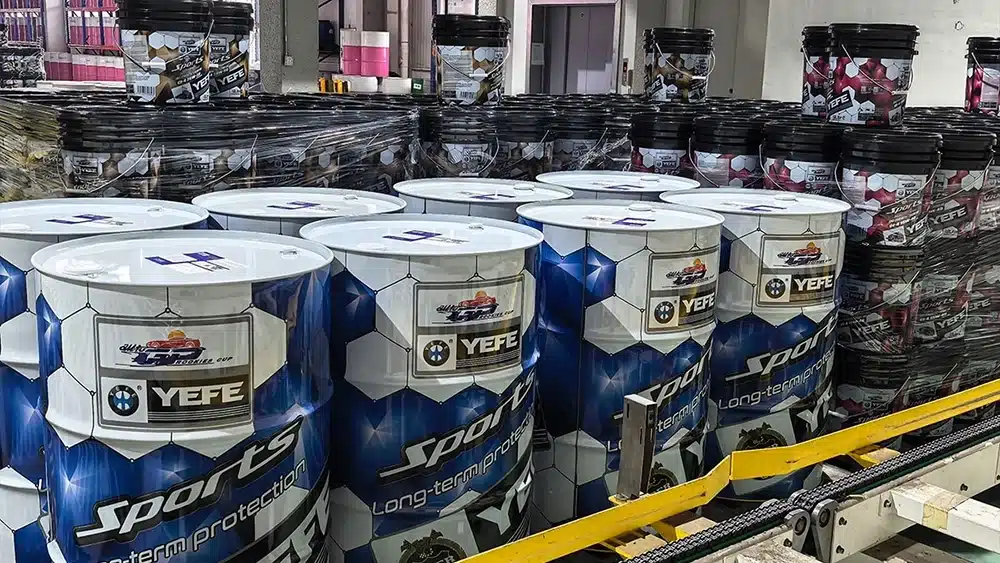
The ISO hydraulic oil standards offer internationally acceptable way to describe and define the characteristics of viscosity and performance of hydraulic fluids. These standards consist of standards created by the International Organization for Standardization (ISO) via its ISO VG (Viscosity Grade) grade divisions and analogous standards such as ISO 11158, which serves as a means of guaranteeing the consistency of hydraulic oils, their dependable lubrication, and protection properties in a variety of industrial applications.
The ISO hydraulic oil standards guarantee the production of oils to the best quality and performance standards thus resulting in increased system protection and longevity. Adhering to these standards will allow avoiding disputes like insufficient viscosity, insufficient protection against wear, and premature equipment malfunctioning. It is a common belief that hydraulic oils do different things, but ISO-compliant hydraulic oils are designed keeping in mind specifications of the performance benchmarking of hydraulic oils internationally, and thus, they are reliable and of high quality in tough conditions.
The ISO hydraulic oil standards enable the end user to attain uniform operations, less downtime and economical maintenance of hydraulic systems used in industrial machinery, mobile equipment as well as manufacturing processes.
What Are ISO Hydraulic Oil Standards?

The ISO standards of hydraulic oil are a methodical application of establishing the characteristics of the hydraulic liquids, with the main concern on the viscosity despite the inclusion of types of performance.
International Organization of Standardization (ISO) formulates these standards to enhance consistency of the quality of lubricants all over the globe. The most commonly used is the ISO VG system (of ISO 3448) of classifying industrial lubricants according to their kinematic viscosity at 40 C. Also, the ISO 11158 defines minimum requirements on mineral oil-based hydraulic fluids in different categories including HH, HL, HM, HV, and HG, which refer to the aspects of oxidation stability, anti-wear, and viscosity index.
The consistency in quality and performance is essential as the compliance of ISO enables engineers and the operators to choose those fluids which perfectly fit the requirements of the system and do not depend on the supplier and location.
| Term | Explanation |
| ISO | International Organization for Standardization |
| Hydraulic oil standards | Industry-specific formulations and classifications for viscosity and performance |
| Compliance | Ensures reliability, performance, and longevity in hydraulic applications |
Common ISO Hydraulic Oil Grades and Their Applications
The fluids are categorized by ISO VG hydraulic oil grades as having constant kinematic viscosity at 40 o C, with each grade indicating a constant midpoint value and narrow tolerance band (usually = -10% to +10%).
The VG number refers to the thickness of the oil, the lower the number the thinner the oil will be, allowing it to flow faster and at lower temperatures and the higher the number the less viscous will be. The choice of the right grades of the ISO VG hydraulic oils has a direct impact on the efficiency of the pumps, the heat dissipation and the protection of components.
The hydraulic system common grades (oils) are characterized as ISO VG 32, 46 and 68 in the hydraulic system covering most of the industrial requirements.
| ISO VG Grade | Typical Application |
| VG 32 | Low-temperature or high-speed systems, lighter-duty equipment, cold climates |
| VG 46 | General industrial applications, moderate temperatures and loads |
| VG 68 | High-temperature or heavy-load systems, demanding environments |
These grades enable the matching of hydraulic oil to industrial systems to be used in particular operating conditions so that it has stable flow with minimal loss of energy.
Benefits of Using ISO-Compliant Hydraulic Oil
ISO-compliant hydraulic oil that is made to ISO-quality provides quantifiable benefits to the reliability and economics of the system. These oils preserve their characteristics during stress as a result of meeting standardized performance requirements, which minimizes changes in these oils that result in failures.
The main advantages are a uniform viscosity behavior over temperature, an excellent wearing protection and resistance to oxidation and contamination. This means that there are fewer instances of accidental breakdowns as well as more accurate supports of maintenance.
| Benefit | Explanation |
| Consistency | Ensures stable performance across systems and operating conditions |
| Wear protection | Prevents premature wear and damage to pumps, valves, and cylinders |
| Energy efficiency | Reduces energy loss through stable viscosity and lower internal friction |
| Longevity | Extends the service life of machinery and components |
How ISO Compliance Impacts Hydraulic System Efficiency
The fact that ISO compliance can directly impact the efficiency of the hydraulic system is due to the fact that the oil is kept at optimal properties at any given time. Oils that are properly designed and are of ISO hydrostatic oil qualify have high quality base stocks and additives to obtain the necessary viscosity index, anti-wear properties, and thermal stability.
Non compliant oils or unmatched oils may create a viscosity breakdown, more internal leakage, over-heat or insufficient film strength, which lowers pump volumetric efficiency and upsurges energy consumption. Conversely, formulations based on ISO standards aid stable operation, as they offer uniform flow, successful heat transfer, and powerful shield in adverse conditions.
| ISO Compliance Aspect | Performance Impact |
| Correct viscosity | Stable flow and reduced wear |
| Quality additives | Improved oxidation resistance and corrosion protection |
| Consistent formulation | Reliable performance in demanding environments |
Choosing the Right ISO-Compliant Hydraulic Oil

The choice of suitable ISO-compliant hydraulic oil should be initiated with the systematic review of the system requirements and conditions of its operation. The specified ISO VG grades of hydraulic oils should always be per the recommendation of the equipment manufacturer but those are affected by the type of pump used, pressure, range of temperatures, and load.
Take into account ambient temperatures, duty cycles and possible contaminants. Where higher temperature or heavy load is required, high viscosity grades can be useful. When faced with the need to act within a high temperature performance, it is good to seek solutions of encasing high temperature hydraulic oil that could harbor formulations that are not affected by heat and offer stability.
By optimally matching the oil with the requirements of the system, such side effects as cavitation, overuse of the device or its ineffectiveness can be avoided, which provides the high-scope reliability.
Common Mistakes When Choosing ISO-Compliant Hydraulic Oil
Even seasoned experts might make a pitfall in the process of choosing hydrocarbon fluids. To prevent these typical errors it is recommended to do the following to keep systems healthy:
- The decision to select oil only on price but not on performance requirements which may result in poor protection and increased expenses over the long-term.
- Disregarding the incompatibility of oil with materials of the system, seals, or existing fluids, which leads to the condition of swelling as well as leakage or even chemical reactions.
- Poor interpretation of ISO VG grades of hydraulic oil (like using excessively thin oil in hot situations (poor lubrication) or using excessively thick or thick oil in cold situations (sluggish response).
These pitfalls are avoided by careful assessment of specification and conditions.
Conclusion — Why ISO Compliance Matters in Hydraulic Oil Selection
The selection of fluids used in hydraulic systems relies on ISO hydraulic oil standards, which give guidance on how to obtain fluids that would offer dependable and steady performance in hydraulic systems. By allowing oils to be of a correct consistency, providing good wear resistance and limiting degradation, compliance guarantees a consistent and reliable operation at lower maintenance cost.
Using the ISO-compliant hydraulic oil with an ISO VG grade and system specification will provide the best performance of the machinery and avoid unwanted failure of the system, system downtime, and even unnecessary repair expenses. With cost-effectiveness of reliability being a key aspect in an industrial setting, compliance with these standards is still a feasible requirement of long-term health of equipment.