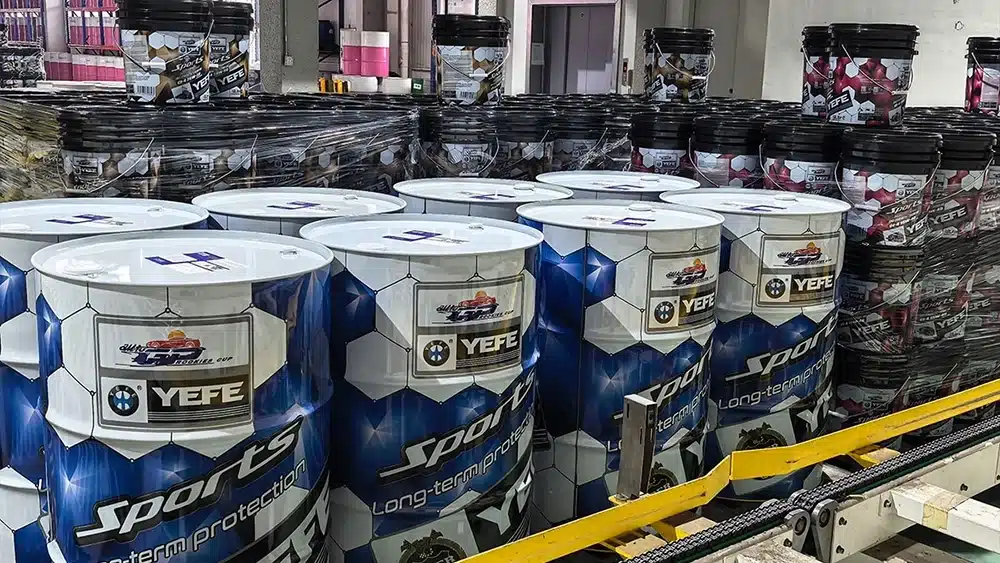
Hydraulic oil is a specialized industrial lubricant that can be used to conduct power in hydraulic systems at fluid pressure. It is not comparable to any other oils as it must withstand high pressures and at the same time perform a number of crucial functions. Hydraulic oil is not merely a power carrying liquid but an element in a framework, which has a duty of transferring stress, greasing and cooling heat and additionally equipment shielding.
The majority of people think that the hydraulic oil is not a lubricant, and actually it is, it also transfers the pressure, removes the heat and closes openings, it also prevents wear and corrosion in the systems. The understanding of the functionality of hydraulic oil is the secret to efficiency, reliability and service to the hydraulic systems.
To prevent the costly failure in construction equipment and in any industrial press or how it is used in mobile systems, the right hydraulic oil ensures the hydraulic systems are operating effectively and without unnecessary failure. Poor selection or wear and tear would lead to reduced performance and premature failure of the components.
What Is Hydraulic Oil?
Hydraulic oil, Hydraulic oil is a special lubricant that has been engineered to play the role of a fluid in hydraulic equipments that provide power transmission as well as provide lubrication, cooling and other protective roles in factors of the rough environment.
It is not comparable to general-purpose oils as it ought to be high pressure stable, oxidation resistant, comparable exchange rates of viscosity, anti-wear, anti-corrosion and anti-foam additives. Hydraulic oils are mostly made by using the mineral base stocks (purified of petroleum), or synthetic base stocks (having a design to ensure high stability of the extreme working condition). Nevertheless, the most popular mineral-based oils are found in the daily industry life of the economy and because of their effectiveness and proved stability, the synthetics are implemented in the processes of combined temperature change range or in processes that have to serve a long-lasting.
| Aspect | Explanation |
| Primary function | Power transmission through fluid pressure |
| Secondary functions | Lubrication, cooling, sealing, protection |
| Common applications | Construction, industrial machines, agriculture, mobile machinery. |
| Operating environment | Increased pressure, change of temperature, possible contamination. |
How Hydraulic Oil Works Inside a Hydraulic System
Based on the principles of the basic fluid mechanics, the hydraulic oil enables the multiplication of forces, accuracy of the movement since the pressure is evenly distributed throughout a closed system.
The principle action of Pascal that renders the operation of critical significance is, the pressure applied to an incompressible fluid in a confined, compressed fluid is, in every direction, equal. Hydraulic oil is virtually incompressible and therefore weak input force at one position leads to huge output force at other point since the areas of the surfaces of pistons or actuators vary.
In a typical system:
- The pump pulls out the hydraulic oil in the reservoir and pressurizes it.
- The pressurized oil passes through the valves and creates a direction and control.
- The oil passes to actuators or cylinders and therefore mechanical motion (linear or rotary) is obtained in place of fluid pressure.
- The petroleum is pumped back into the reservoir and cools down, thus eliminating the pollutants.
This operation is done many times and again and heavy machinery is able to bring the loads to the level of accuracy they are needed to be.
| System Component | Role of Hydraulic Oil |
| Pump | Transmits pressure from mechanical input to fluid |
| Valves | Controls flow direction, pressure, and volume |
| Cylinders/Actuators | Converts fluid pressure into linear or rotary mechanical force |
| Reservoir | Stores oil, allows heat dissipation and contamination settling |
Key Functions of Hydraulic Oil Beyond Power Transmission
There are multiple functions that hydraulic oil should perform simultaneously which they have to be sure that the system could be reliable since power transmission would not provide long term running.
This may animate the fluid though the transmission pressure is its primary mode of activity the rest of the functions are equally crucial as regards life span and productivity of the component.
| Function | Why It Matters |
| Lubrication | Reduces friction amongst moving components such as pumps, valves and pistons. |
| Heat transfer | Takes in and rejects heat to eliminate overheating and thermal breakdown. |
| Sealing | Redges micro-clearance in order to reduce interior leakage and to hold pressure. |
| Corrosion protection | Prevents rust and oxidation on metal surfaces, extending component life |
| Contamination control | Suspends particles and supports filtration to keep the system clean |
This is a combination of functions which make hydraulic oil an actual engineering constituent as compared with a transport medium.
A alternatives to high-performance hydraulic oil formulations that can assist these functions are detailed and available as well as to be found to explore hydraulic oil solutions tailored to industrial needs.
Why Hydraulic Oil Quality Directly Affects System Performance
The justification that Hydraulic Oil Quality is a direct factor in the work of the system.
Quality hydraulic oil provides stability on the viscosity, good anti-wear quality, and also resistant to oxidation which is known to have a direct effect on the efficiency of the system and longevity.
In the event that the oil is of the right viscosity in the working environment then the pumps will work properly with minimal internal leakage, the valves will respond correctly and the actuators will deliver a uniform force. Ineffective or improper oils can lead to increase in friction, increase in consumption of energy, hasten wear to pumps and seals, and cause more service.
Poor quality of oil leads to various downtimes in the long run, and causes high cost in its maintenance and decreased equipment lifespan. On the other hand, the risk of such a thing can be avoided by the selection of oil using the right additives and base stock formula, and continuous operation of even at the most extreme operation conditions can be made, such as the high-loading construction or the interchangeable-temperature agriculture.
Common Types of Hydraulic Oil Used in Industry

The most widely used hydraulic oils in industry are the anti-wear (AW) formulation that is graded with ISO VG viscosity to be applied in specific conditions of service.
To form the protective films over metal surfaces that reduce the wear in the boundary lubrication process, such additives as zinc dialkyldithiophosphate (ZDDP) are utilized in making anti-wear hydraulic oils. These viscosity grade options would depend on the temperature, load and speed requirements.
| Hydraulic Oil Type | Typical Use Case |
| Anti-wear (AW) | The general industrial systems that need wear protection. |
| ISO VG 32 | Low load or high speed cold cruising. |
| ISO VG 46 | Standard industrial and mobile equipment applications |
| ISO VG 68 | High-temperature environments or heavy-load systems |
Grade choosing is an assurance of high efficiency and safeguarding of machineries in different machineries.
What Happens When Hydraulic Oil Is Incorrect or Degraded
The gathered inappropriate hydraulic oil or degraded oil worsens the performance and reliability of the systems which would progressively and seriously degrade over time.
Excessive internal leakage, a consequence of the incorrect viscosity (neither too thin nor too thick) will increase energy use and component wear. Worn oil that could be caused by oxidation, contamination or loss of the additives, becomes incapable of protecting the various surfaces and thus leads to further wear in pumps valves and cylinders.
The heat transfer activity is low and overheating is more probable, varnish and sludge could cause a hindrance in the flow and block the filters causing unpredictable functioning. These problems are left in leaks, cavitations or even the defective break of a system in worst scenarios, this takes a lot of money to fix and a very long time.
Constant monitoring and timely replacements do not bring these chain causes and effects to critical levels.
Conclusion — Why Understanding Hydraulic Oil Matters
Hydraulic oil is not only a consumable product, it is also a component that is essential and defines the dynamics of the hydraulic system in every way.
With the right attitude toward the nature of hydraulic oil and its functioning, the equipment owners, the engineers and the buyers themselves will be able to make effective decisions regarding the choice, maintenance and surveillance. The expertise provides to improve the system reliability and to reduce the unexpected monotony along with raising the total equipments service life in the extremely rigorous industrial and mobile environment.
By the concept of demonstrating the multidimensional nature of hydraulic oil, technical decision-makers can be put into the context of the concept of quality and compatibility, which would ensure the long-term performance of operation without unnecessary risks.