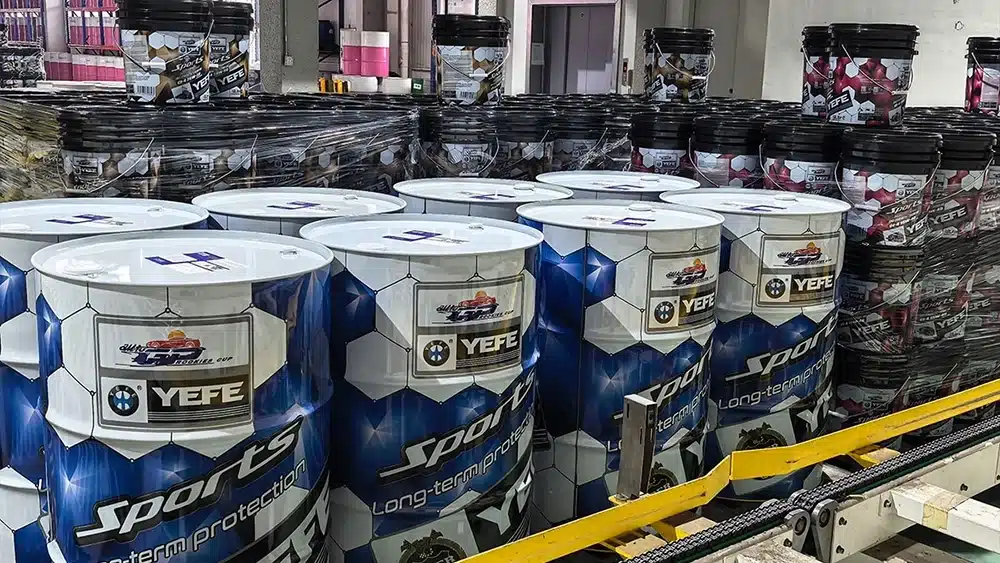
One area where OEM transmission oil is used in the B2B lubricant market is replacement transmission oil in custom-formulated, produced and packaged based on the specifications and branding requirements of the purchase, usually an importer, distributor or the owner of a label, as opposed to one pre-packaged and branded retail product. It do this through vigorous partnership with a transmission oil company on formula development, blending, testing, and filling typically under private label contract terms. The choice of suppliers here has a direct effect on the consistency of the products, performance of the product in the real exposure as well as the eventual reputation of the brands of the distributor in the market.
The possibility of selecting an incorrect OEM transmission oil partner will jeopardise their product quality, regulatory compliance, and credibility in the market in the short-term.

What OEM Transmission Oil Really Means
OEM transmission oil is quite unlike buying off the shelf branded transmission fluids and reselling them. It is one of the manufacturing alliances in which the supplier assumes responsibility of formulating or modifying a formulation to suit the target applications, the performance requirements and regional demands of the distributor.
The difference here would be in the area of control: in OEM sourcing it is the importer or distributor who owns branding and has some say in the formula but not just reselling a finished mass-retail product. This exceeds the level of just repacking or relabelling, actual OEM actually needs the in-house formulation know-how, specific blending and strict production checks to provide consistent results in different batches.
Here is a clear comparison:
| Aspect | OEM Transmission Oil | Branded/Finished Product Reselling |
| Formula development | Manufacturer-controlled, often customized | Fixed, no input from buyer |
| Production | In-house blending and filling | Pre-made, sourced ready-to-sell |
| Branding | Private label or distributor brand | Supplier’s retail brand |
| Responsibility | Quality and compliance shared between parties | Primarily on the original brand |
Such degree of engagement enables the distributors to produce the product to be exactly what the local market requires, like local hot climate requires a particular level of viscosity or that the local area has adult vehicle models popular with the population.
Why Importers and Distributors Choose OEM Transmission Oil
A large number of established importers and distributors in the oil industry resort to OEMs transmission oil in constructing or developing their own lubricant lines. The main sources are more opportunities to gain control and flexibility in contrast to the use of the branded products only.
When it comes to OEM sourcing, the business will have the ability to distinguish itself in the competitive markets through provision of customized solutions and bear its imprint. This method also helps in management of better margins and improvements in volumes.
| Business Goal | OEM Advantage |
| Brand ownership | Full label control and market positioning |
| Cost management | Flexible pricing based on volume and specs |
| Market expansion | Scalable production for regional adaptations |
These advantages are particularly important to distributors with diverse vehicle systems or entering new markets where branded alternative might not be as appropriate to local marketing.
Key Technical Factors to Evaluate in OEM Transmission Oil
Technical performance forms the foundation of any reliable transmission oil. When evaluating potential OEM transmission oil supplier partners, importers should not simply accept statement of capabilities made by them but also consider their potential to produce fluids matching actual transmission specifics.
Different types of transmission fluid have to be covered such as conventional automatic (ATF), continuously variable (CVT), dual-clutch (DCT) transmission gearboxes, and manual. Friction requirements, shear stability requirements and thermal resistance requirements are unique to each type.
Viscosity should not change with operating temperatures and the additive package should be able to offer wear protection and oxidation resistance over time. Regular designing avoids such problems as slipping, rough shifting, or early wear of parts.
| Technical Factor | Why It Matters |
| Formula stability | Ensures consistent field performance over time |
| Additive system | Controls wear, friction, and deposit formation |
| Testing capability | Provides verification of performance claims |
Distributors are advised to seek elaborated technical data sheets and wherever available, independent test results to ascertain fit.
Quality Control and Compliance: What Cannot Be Overlooked
High-quality control measures and 100 percent compliance with regulations cannot be compromised in the production of transmission oil in OEM. Batch-to-batch consistency shields the end-users against performance fluctuation which may result in warranties or lost reputation.
The issue can be easily identified and isolated using Traceability and the critical properties such as viscosity, flash point and friction properties are tested using laboratory. International standards and local import documents should be part of the compliance records, including approvals such as the DEXRON, MERCON or specifications that are established by the manufacturers.
| QC Element | Importance |
| Batch traceability | Enables accountability and rapid issue resolution |
| Lab testing | Confirms performance and stability |
| Compliance documents | Supports import clearance and market acceptance |
These elements are needed even in a technically good formula so that it does not amount to a liability of distribution.
Commercial Factors Importers Should Consider

On top of technical considerations, there are commercial terms that have a major influence when deciding whether an OEM partnership is viable or not. Flexible minimum order quantities (MOQs) ensure that the distributors can be able to test markets without the risk of excessive inventory and also stable lead times are used to plan supply steadily.
The packaging will need to correspond to the type of customer that the distributor is handling such as retail outlets, workshops, or fleets, i.e., consumer bottles all to the drums and bulk packaging.
| Commercial Factor | Impact on Distribution |
| MOQ | Influences market entry barrier and cash flow |
| Lead time | Affects inventory planning and availability |
| Packaging options | Determines customer coverage and logistics |
Constant business situations do minimize headache in operations and facilitate predictable business growth.
Risks of Choosing an OEM Transmission Oil Supplier Based on Price Alone
She is not always about concentration on the lowest price as this may create severe catastrophes in the long-term. Suppliers who approximate on raw material or process control could provide:
- Uneven formulation which differs in each batch creating changing problems or diminished protection in transmissions.
- There is a drift in quality in the long-term as additive effectiveness or quality of base oil becomes undermined by cost-cutting efforts.
- Unstable sourcing, bad planning or capacity.
This may lead to customer complaints, recalls, regulation or even transmission failures that hurt the brand credibility of the distributor.
How to Build a Long-Term OEM Transmission Oil Partnership
Effective OEM relations go beyond the first order. They are based on a free flow of communication in which technical inquiries, feedback of the market, and performance statistics may be communicated. An excellent partner will be of sustained support, such as changing the formulation depending on the actual performance or evolving policies.
The Stability in the Formulation over the long term guarantees that the product will be reliable despite changes in the vehicle technologies. The ability of the distributor to incorporate feedback on various markets and climates into future batches will result in consistency and excellence in the target future markets.
Periodic evaluations on supply performance level, quality indicators, and compliance levels enhance the relationship and reduce risks throughout the years of collaboration.
Conclusion — OEM Transmission Oil Is a Strategic Supply Decision
There should be a balanced consideration of the technical ability, quality management and reliability of the supply in sourcing the transmissions oil used by OEMs. To the importers and distributors, informed OEM partnering assists in uniform product quality and prolonged brand development. Businesses gain greater positions in the competitive market on lubricants by focusing on formulation expertise, traceability and consistent commercial terms than on saving in the short run.