Use of the private label transmission oil is a project that is driven by manufacturing, balancing the formulation capability, minimum orders, packaging implementation, and reliability of the supply over a long period.
The success of the oil projects in the private label transmission oil sector relies on the ability to match MOQ, formulation capacity and packaging implementation with the long-term distribution objectives. The common perception of many importers and distributors regarding the concept of undertaking the process of creating a private label is that it is quite easy and involves the addition of a logo to an already-existing product. As a matter of fact, this entails intense cooperation with the manufacturer in formulating the products, their planning of production, filling up, and continuous quality check-ups.
The three main pillars of decision are:
- MOQ (Minimum Order Quantity) — minimum economic standards and inventory risk.
- Choosing of formulas – has an influence on performance, compliance, and market fit.
- Packaging choices – can have a logistic, market placement, and final user impact.
Any of these areas may result in poor planning that may cause commercial risk (including too much inventory, strain on cash flow) and compliance risk (including regulatory violations or product failures on the field). The manufactures are involved with blending, additive integration, and filling processes under supervised conditions whereas the brand owner gains the responsibility to comply with the market, labelling accuracy and performance claims.

What Private Label Transmission Oil Really Means
Shear label transmission oil is no longer a matter of reselling a generic product under a new brand name it is an OEM manufacturing joint where the brand owner dictates the specifications whilst the manufacturer handles the production.
A drawback of using a transmission oil that is privately labeled is in contrast to simple reselling (where a distributor purchases finished, branded product and resells it), in this case the manufacturer develops the fluid or modifies it, batches of the finished product are mixed in controlled batches and then filled into a selection of packaging and custom labels are applied to it. The producer governs the manufacturing approach to guarantee that the various batches of the products produced are similar, whereas the brand owner has a joint responsibility of quality, compliance and functionality in actual practice.
Clear requirements and trust are necessary at the beginning of this shared model. In the case of transmission fluids (most frequently ATF or high performance gear lubricants), on-the-job performance criteria such as friction modification, oxidative stability and compatibility with sealants are essential and no compromises are expected.
| Aspect | Private Label Transmission Oil |
| Formula | Manufacturer-developed or customized |
| Branding | Distributor-owned |
| Production | OEM-controlled |
| Compliance | Shared responsibility |
For those exploring capabilities in this area, private label transmission oil services provide insight into typical execution scopes.
Understanding MOQ in Private Label Transmission Oil Projects
MOQ is due to the fact that lubricant blending and filling involves set up time, purchase of raw material, and testing, small lots are not only expensive but also unproductive to the manufacturers.
With the production of transmission oil, MOQ has a direct impact on unit pricing: the more oil is produced, the lower the costs are fixed (cleaning the tank, laboratory tests, replacing the lines) and the better the margins are. Low MOQ alternatives may either be charged at a premium or a restricted selection of formulas. The issue of inventory planning is critical, as the over-ordering would consume the capital whereas the under-ordering would lead to stockouts and the diminished sales.
MOQ depends on the packaging format and is different among different packaging formats. Small retail bottles will require more units to cover the production run whereas the drums or larger scale would suit bigger distributors or industries.
| Packaging Format | Typical MOQ Consideration |
| Small bottles | Higher unit MOQ (e.g., several thousand units) |
| Drums | Moderate MOQ (e.g., hundreds of units) |
| Bulk oil | Volume-based MOQ (e.g., full tanker or container loads) |
Tiered pricing is commonly adopted by the manufacturers: each crossing the MOQ can save significant money per liter to accommodate the brand expansion.
Formula Options: Standard vs Customized Transmission Oil

Choice of formula is a decision that will either satisfy the needs of the broad market in a short period of time or will provide a narrow differentiation of products in the competitive regions.
Multi-vehicle ATF (or Dexron/Mercon equivalents) in standard formulations permit rapid entry into the market with known important performance and reduced risk of development. They consist of pre-tested concoctions that can be used to importers in new markets without long and time-consuming validation.
Tailor-made recipes are designed to suit particular requirements: a high-temperature stable formulation in tropical locations, low-temperature fluidity certain cold locations, or even simply matching specific seal materials and transmission design. Differentiation is made more suitable through customization, which increases lead time, testing and cost.
Ongoing changes of the formula create risks: batch-to-batch inconsistency, re-validation requirement, and performance drift with time.
| Formula Type | Best Use Case |
| Standard | Fast market entry |
| Customized | Market differentiation |
| Climate-adapted | Extreme environments |
Packaging Options and Their Impact on Market Strategy
The pack decisions impact the different methods of how the product may reach final users, the logistics cost, and brand perception in the workshop or the retail store.
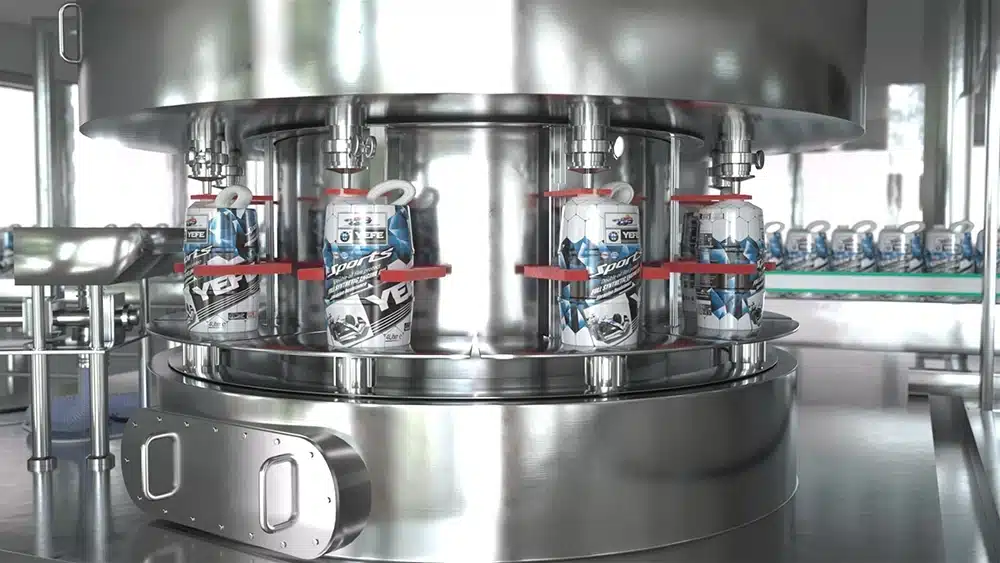
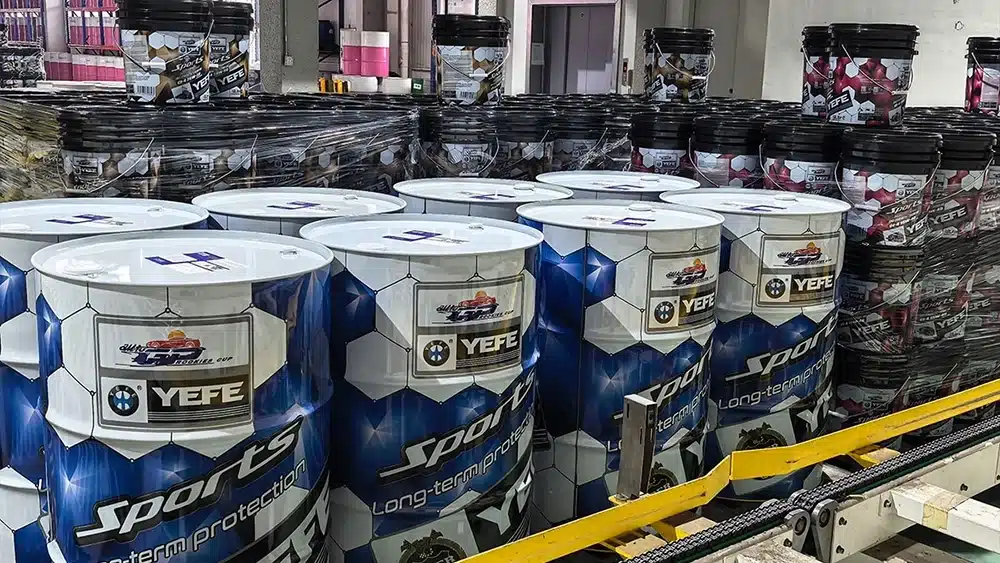
The plastic or metal containers of bottle sizes (the most common bottle size is 1L, 4L or 5L) are appropriate in cases of retail sales and service workshops, where convenientness and shelf attractiveness are a concern. Drums (200L) are aimed at fleet operators and industrial users who require bigger quantities but do not require frequent reordering. Bulk (IBC totes or flexitanks) is offered to large distributors or oil company chains that have high volume needs, so packaging waste and handling costs are reduced.
All formats affect storage capacity, efficiency in transportation and how the end customer handles, bad decisions results into lower freight expenses or non-recoverable damage to the cargo.
| Packaging Option | Market Application |
| Bottles | Retail and workshops |
| Drums | Fleet and industrial use |
| Bulk | Large-volume buyers |
Labeling, Compliance, and Documentation Considerations
In transmission oil, when it comes to the issue of a personal label, there is absolutely no bargaining with regulatory compliance, as any mistake can either hinder entry of the market or subject the company to recalls.
The labels should state the specifications of the products, level of hazard classification (GHS-compatible) and precautionary use correctly. Safety Data Sheets (SDS) are detailed hazard, handling, and transport information systems, needed to satisfy the safety in the workplace and also customs clearance. Export documents (conformity declarations, certificates of origin) make international deliveries easy.
Compliance is normally supported by manufacturers, although, brand owners have the ultimate responsibility regarding the accuracy of labels and SDS distribution.
| Compliance Element | Why It Matters |
| Label accuracy | Market approval |
| SDS | Safety and transport |
| Export documents | Customs clearance |
Common Risks in Private Label Transmission Oil Projects
A lot of problems can be explained by the fact that the concept of the use of a private label is considered a packaging selection but not an entire production venture.
- Underestimation of MOQ effect- results in unwanted inventory, cash held, or values below competitors.
- Neglecting formulation stability – performance complaints, warranty claims, field failures
- like these will occur.
- Investing in packaging, rather than performance – develops pretty products that do not work well during transmissions.
- Ignoring compliance specifics – leads to delays in shipments, penalties, or market prohibition.
- New supplier often — risks batch inconsistency, the absonance of long-term optimization.
How to Structure a Scalable Private Label Transmission Oil Program

To create a sustainable program, it is essential to start with alignment of the product range and actual market demand, i.e. high-turnover specifications (e.g. multi-vehicle ATF) should be made first before expanding.
Make plans to make repeat orders by forecasting realistically and picking flexible MOQs that can be scaled gradually. Have specifications, testing guidelines and quality gates firmly defined with the manufacturer so that there is consistency between batches.
The long-term relationships with suppliers allow making a refinery of the formulas, save costs in the long run, and react as quickly as possible to the changes in the market. Frequent performance evaluation and feedback would contribute to reworking what is offered without interfering with supply.
Conclusion — Private Label Transmission Oil Is an Execution Strategy
When MOQ planning, making decisions, and implementation of the packaging are synchronized with the distribution aspirations in the long term, the transmission oil projects of a private label are very successful.This interdependence of things enables importers and distributors to create stable, compliant and scalable lubricant brands. It is based on the implementation discipline, which reflects both on economical performance and stability and on regulatory compliance, not only on life savings. This is a strategy that helps in the provision of sustainable growth in competitive markets.