Inside the Engine — A World of Friction and Heat

Consider the thousands of sudden gunlike strokes of pistons, the banging doors of valves, the turning crankshafts, all working under great pressure, and giving off heat that would turn a metal man molten. Without an adequate science of lubrication, engines would stop within a few seconds because of friction and wear. Engine oils guard the metal surfaces creating a very thin, tough coating that isolates the components, lessening the contact and releasing heat.
Such is the core of the tribology in the design of engines: the analysis of friction, wear, and lubrication. The contemporary engine oil protection is an amalgamation of the physics and chemistry that helps control these forces to increase the engine life and efficiency. Boundary lubrication when starting up to hydrodynamic at full speed, oils are used to make smooth operations. The explanation of how oil lubrication helps to decrease friction in engines shows why the correct formula is a key to performance and longevity.
The Fundamentals of Lubrication
The Three Lubrication Regimes
There are three major regimes in which lubrication takes place: boundary, mixed, and hydrodynamic. Boundary vs hydrodynamic lubrication explained Inboundary lubrication, as occurs with low-speed or high-load conditions, such as engine start-up, surfaces are near, and additives create shielding chemistry in the form of a chemical film. This is mixed with partial fluid separation in mixed lubrication.
At high speeds, hydrodynamic lubrication, or cushion of oil, completely separates surfaces with a pressurized film, which reduces wear. The regime is determined by the viscosity and relative speed; thicker oils are good in boundary conditions whereas thinner ones allow hydrodynamic flow to take place. I have observed in my lab tests involving engine simulation that the scoring is not always the same when the regimes are not matched appropriately, with appropriate oil transitioning the engine smoothly.
Friction Reduction and Heat Dissipation
The oil layer creates a barrier, which cuts the friction coefficients to 0.5 (dry metal) and less than 0.01. This reduction in friction saves energy and prevents the accumulation of heat which is more than 200degC in pistons. This heat is removed by oil circulation to the sump or cooler thus avoiding thermal breakdown.
Even the small asperities in microscopic dimensions, surface heights, respond to this, otherwise they weld and shear under tribology. The practical tests such as the SAE standards have proved that proper lubrication can reduce engine wear by 90 percent, which is significant in terms of reliability.
The Chemistry of Protection
Base Oils — The Foundation

The base oils are the central constituents of any lubricant and mineral sorts refined of crude are cheap although they have inconsistent molecules. These are combined with synthetics (to achieve a higher uniformity) to form semi-synthetics, fully synthetic base oils, such as PAOs, are more temperature-stable and exhibit low volatility.
Viscosity index (VI) is a measure of resistance to the effects of temperature- high-VI synthetics (greater than 150) resist strength at both extremes. Pour point is used to guarantee movement in low temperatures. Based on compounds that are redesigned, I have observed that synthetics work better in high stress engines, which lowers oxidation and increases intervals.
Additives — The Invisible Protectors
Protection is enhanced by engine oil additives, which are usually 10-20% of the oil. Mechanisms of metal wear prevention in oil additives ZDDP and other anti-wear coagulants: Coagulants such as ZDDP are reacted with surfaces under pressure to form sacrificial layers of phosphate in lubricating oil boundaries. Detergents counteract the effect of acid, whereas the dispersants hold up the soot and sludge.
Antioxidants fight attacks by oxygen, retard degradation and friction modifiers optimize slip performance. These form bonds at an atomic level, chemically, such as the zinc phosphorus atomic film of ZDDP which is a shear-resistant material. Additive packages have the potential to increase film life three times in the tribology tests I have performed.
Film Strength and Shear Stability
Behavior of film strength and viscosity determine the load bearing capacity of a given oil without tearing. Polymers retain their thickness under extreme shear as in bearings. Synthetics are the best in this since they are not easily broken down as compared to the minerals.
Consistent protection is guaranteed by high shear stability; low quality oil is thin, which exposes the oil to metal contact. This is simulated by lab measures such as HTHS viscosity, which proves why sophisticated formulations eliminate failures in turbocharged engines.
Real-World Behavior of Engine Oils
Start-Up Protection
Cold starts are characterized by the highest level of engine wear because the oil is not fully circulated and it has to be lubricated at the boundary. Low temperature viscosity-which is referred to as W in SAE grade such as a 0W-20-gives it rapid flow, adding films fast. Selecting the right engine oil grade for hot and cold climates is essential for reliable start-up protection.
In its absence, there are dry spots which lead to abrasion. High VI synthetics pump more quickly, which reduces startup wear by approximately 75 percent in my cold-chamber tests of fleet vehicles.
High-Temperature Operation
The oils get slick at operating temperatures, however, should not lose HTHS viscosity or the film will collapse. Heat increases oxidation creating varnish, which blocks passages.
This is countered by strong antioxidants and base stocks that sustain the protection even in long highway journeys or racing. The data of tribology reveals that proper oils support films at temperatures up to 150 degC, which block seizures.
Contamination and Sludge Formation
Films are diluted by fuel droplets, dust droplets, and by-products, as well as, promoting sludge. Detergents are used to dissolve deposits, dispersants are used to maintain particles in suspension to allow filtration.
These keep the environments clean in a polluted setting, such as off-road usage; oils that are not taken care of result in viscous sludge and discharge. This is early detected by a regular analysis maintaining performance.
Measuring and Testing Lubrication Performance

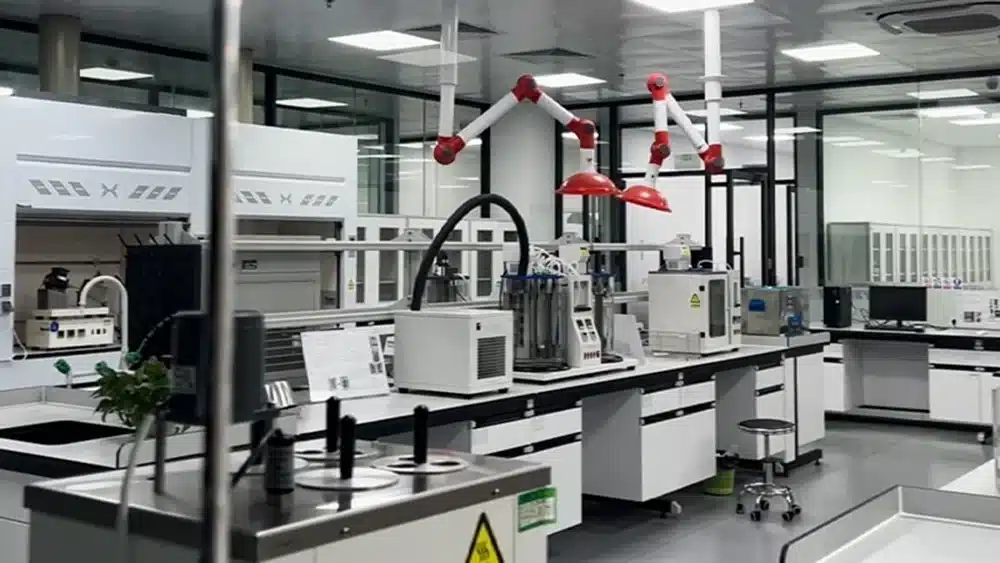
Labs use rigorous tests as part of quality control in lubricants in order to determine engine oil protection. The Four-Ball Wear Test (ASTM D4172 ) is a pressure test, which involves measurements of scar diameter as an indicator of the anti-wear performance. Viscosity Index (ASTM D2270) is a chart which shows the temperature stability and Pour Point (ASTM D97) is a test which evaluates the cold flow.
TBN (Total Base Number) is a measure of detergent reserves relative to acids and TAN (Total Acid Number) a measure of degradation. These are predictive of field behavior- API SP oils, e.g., are extended sequences of low-speed pre-ignition resistance. In my experience in quality laboratories, the tests are directly proportional to actual in-service durability, and these tests are used to determine formulations.
The Evolution of Lubrication Technology
Lubrication emerged with simple mineral oils and it has now developed to synthetic oils with nano-additives. The blends used in early 20th century were enough to support simple engines, whereas the modern requirements such as the need to downsize turbos necessitate the use of esters to stabilize the thermal conditions and moly to reduce friction.
The low-viscosity efficiency standards such as SAE & API standards (API SP, ILSAC GF-6 and ACEA C5) focus on protection without compromising on efficiency. Cutting emission, nano-particles boosts boundary films. This development through tribology study brings 15,000+ mile lasting oil, which revolutionizes maintenance.
Final Reflections — Why the Science Matters
Lubrication science is a fragile equation of mechanical concepts and chemical creativity, in which viscosity, additives and film strength meet to protect engines against destruction. The understanding of this, how a microscopic layer of oil prevents disaster, makes the innovation in each quart meaningful.This science guarantees the high levels of protection in climates and use to manufacturers such as YEFE which is determined to superior protection through their advanced formulations and tedious lab testing. Explore further with Industrial Hydraulic Oil: Key Performance Properties Explained, Quality Control in Lubricants: Testing and Traceability or How to Choose the Right Engine Oil Grade for Hot and Cold Climates. Traceability or How to Select the Proper Grade of Engine Oil in Hot and Cold Climates.