The Opportunity — Why Launching Your Own Lubricant Brand Makes Sense
In the current highly lucrative automotive and industrial industry, constructing your own brand of lubricant is not just a dream, but it is a strategic action that can shoot your profits and market share skyhigh. As the world lubricant consumption is expected to reach up to 200 billion dollars by the year 2030, distributors and entrepreneurs are seeking the services of the OEM lubricant companies to develop their own branded engine oils and other products, which will meet the local demands. This method will allow you to charge more, distinguish, and gain more margins- sometimes 30-50 per cent of what you resell generics.
The benefits are obvious: the ability to be flexible in formulas regarding certain climates, enhanced customer loyalty due to individual packaging, and repeat purchasing by the company due to the presence of repeat customers such as auto shops or fleets. You do not have to spend millions to open up a factory; OEM manufacturing will do the work, and you can work on sales. Use regional success stories- distributors in Southeast Asia have already introduced custom motorcycle lubricant brands, that have developed into small importers and then the market leaders. Fuel station chains in Africa have employed the use of their own label oils to create the confidence towards dusty hot conditions. On how to commence a lubricant brand, OEM is the effective way to go merging the knowledge with your vision.
Where to Begin — Define Your Market and Product Focus

A good start to successful branding of lubricants is to nail down your market niche before getting into production. Question yourself: Who are your clients? Carm lovers that require high-performance engine oil? In need of hydraulic fluids by industrial operators? Or maritime users along the coast? It is a good idea to address a specific segment, such as heavy-duty trucks in hot weather.
Competitors in the study: Compare their prices, packaging, and weaknesses–they may not consider green alternatives or affordable synthetics. Will it be distributed through retail shelves or online stores or B2B wholesale? In the case of the emerging markets, emphasize on price and dependability. Being an industry insider and mentor of dozens of startups, I suggest being small: Select 2-3 core products, such as 10W-40 engine oil and ATF, which would be API SN or CK-4 standards. This transparency makes your process of producing OEM lubricants simplified and makes your brand a solution.
From Concept to Product — The OEM Manufacturing Journey

OEM lubricant business start-up guide is reduced to a well-organised process which brings ideas into shelf-ready product. This is simple by collaborating with a confident private label engine oil producer in China or any other country, and the process follows as follows.
Step 1 — Technical Consultation & Product Specification
Get started with a consultation: Explain your vision, what types of products you offer (engine oil, gear oil, coolant), what specs of the products (viscosity grade: SAE 5W-30) or standards of performance (API SP with modern engines). Talk about climate adaptations-greater oxidation resistance to areas of the world characterized by high temperatures. A quality manufacturer offers professional guidance, where the quotes are made based on volumes and personalizations. The stage is about establishing trust and streamlining your plan.
Step 2 — Formula Selection & Sample Testing
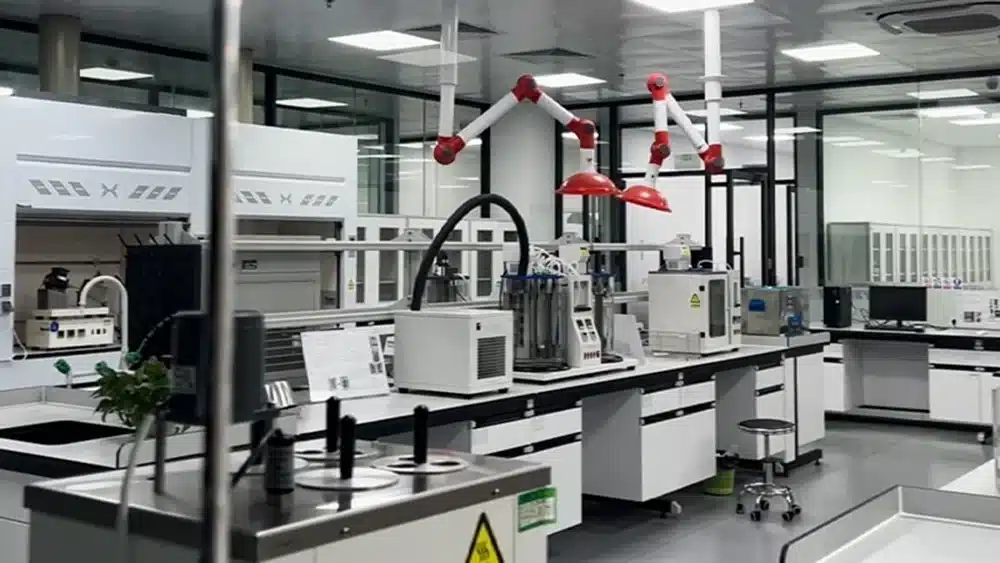
The second step will be to choose or create formulas based on base oils (mineral, synthetic), and anti-wear, detergents, and antioxidant additives. Laboratory samples of viscosity, color stability, and real performance- of critical importance to make your oil withstand fourth world performance. Only give approval after ensuring it satisfies your market requirements such as low pour points in cold start. This measure eliminates expensive revisions in the future.
Step 3 — Packaging & Label Design
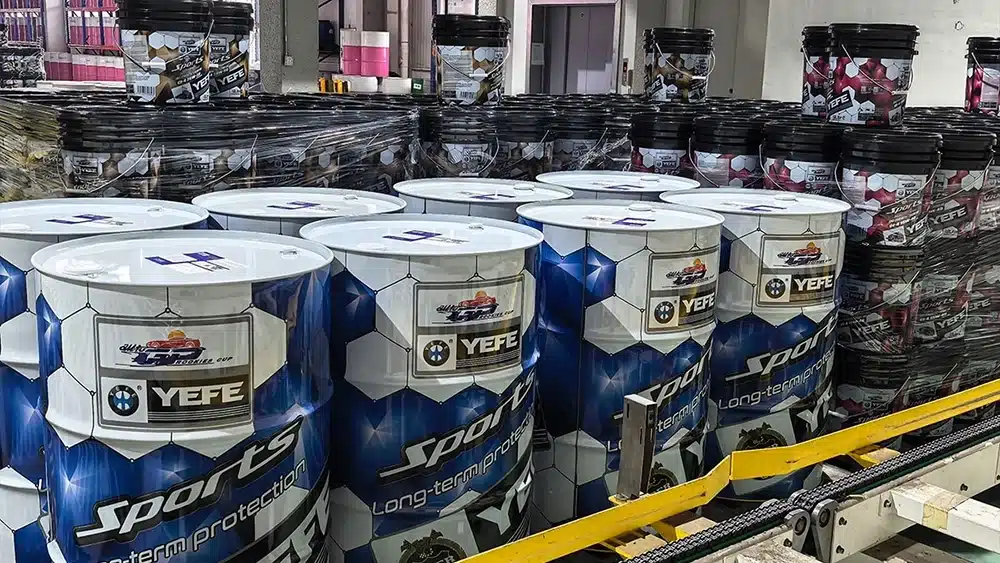
Lubricant packaging design How? It is bridging the gap between engineering and marketing. Select sizes (1L bottles in retail, 200L drums in bulk), and materials (HDPE to be durable, metal to be premium feel). Label it with your brand, color palette (e.g. blue to be trusted), and compliance marks such as warning signs. The designers are used professionally to make sure that their oil resistant adhesives and catchy layouts – consider bold claims such as Superior Engine Protection to capture the buyers.
Step 4 — Production & Quality Control
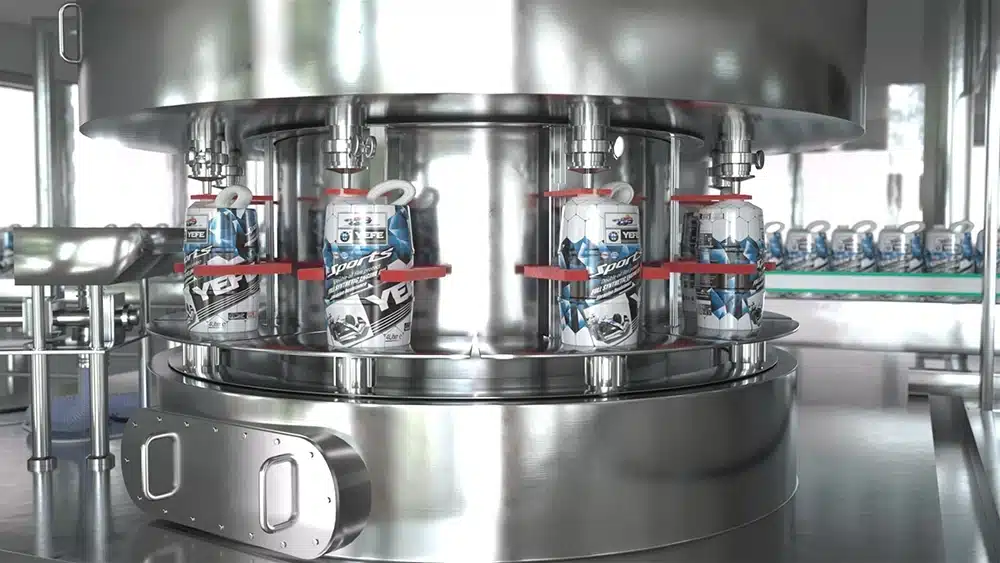
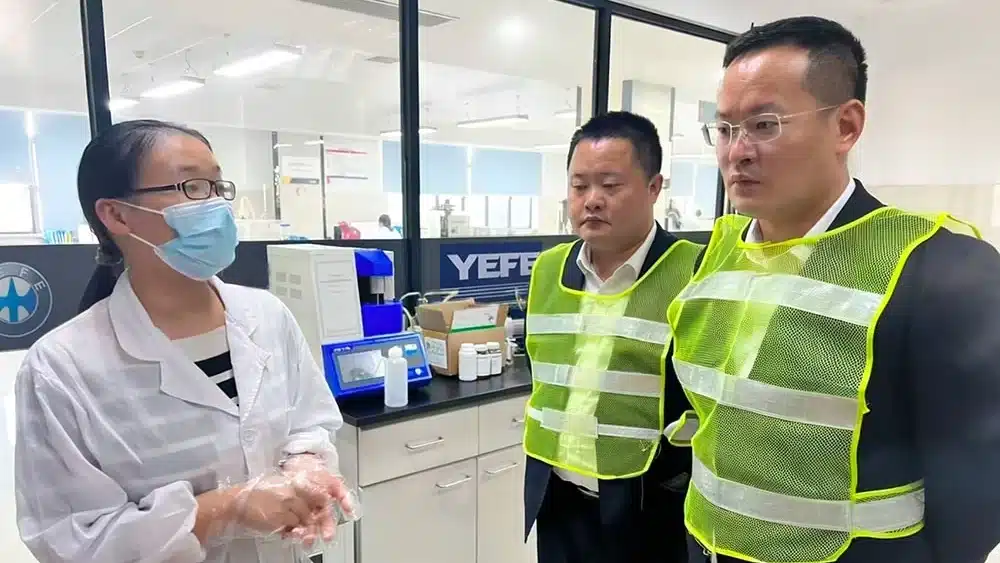
The serious increase in production: Additives are added to blends, which is followed by the filtration of mixtures. Strict tests investigate the oxidation stability, TBN, viscosity, and pour point by spectrometers and viscometers. Traceability is used to guarantee all the batches are ISO-compliant, such as SAE or API. For full details on these processes, see our guide to Quality Control in Lubricants: Testing, Traceability & Compliance. This ensures quality in the process that is crucial in reputation building of a brand.
Step 5 — Export Documentation & Logistics
Document with paperwork: COA, MSDS and customs papers to allow easy shipping. Safe packaging will avoid the leakages during transportation -bottled pallets, reinforced crates on drums. Check local conformance, such as language labels to export markets.
| OEM Stage | Key Activity | Typical Duration |
| Consultation | Requirements & quotation | 3–5 days |
| Formula & Design | Customization & approval | 10–15 days |
| Production | Blending, filling, QC | 20–25 days |
| Shipment | Export & delivery | 30–40 days |
This timeline keeps your launch on track, from concept to market in under three months.
Real Costs and Minimum Order Quantities

The role of budgeting is important in the production of custom lubricants. Understanding MOQs and lead times for private label engine oil is also key — they are usually 1,000-2,000L per SKU or 2,000 bottles, which can be increased to pilots. Unit costs are between $1 and $3 per liter basic, more when it comes to synthetics or new designs- including additives, packaging and branding.
Add freight (ocean is less expensive) and import duties to your calculations. Ask them to provide detailed quotes of all; there should never be any surprises. In the case of startups, it can start with smaller MOQs to start with and increase as the sales increase. Smart budgeting, in my case, is making initial investments pay out in the first year as profit.
Branding and Market Positioning
Good branding would make generic oil a brand that is trusted. Select a catchy brand name that would signify dependability as in the case of EnduroLube which means endurance. Create a logo and a tagline with a focus on the benefits like Engineered to the Extreme Conditions.
Market hints: Brag business certifications on labels to gain trust. Design promotional materials- posters, banners and samples to mechanics. Introduce local campaigns: in hot areas, emphasize on heat resistance; in cold areas, flow. Visibility is a result of digital marketing such as SEO-optimized sites. Status as a price leader- cheap and premium to take away some market of giants.
Avoiding common mistakes to avoid when outsourcing lubricant manufacturing
The first mistake that newcomers make usually is neglecting climate-specific formulations- hot-market oils in cold markets destroy confidence. There are leakages that come with skimping of packaging; use quality materials all the time. Incompatible label stickers result in peeling which is defaming your image.
The underestimation of the lead times postpones launches-plan buffers on approvals. Hurrying without samples is a threat of substandard products.
Pro Tip: Do not assume that packaging is compatible the incorrect cap or label glue may cause leakage or peeling during export.
Scaling Up — From First Order to Regional Brand
After launch, scale by collecting feedback- Survey mechanics on performance to fine tune formulas. Constant supply creates loyalty; strive to order quarterly. Expand lines: Add greases or coolants upon demand.
Go local: Sell to localities with differentiated branding. Measure growth by tracking measures such as repeat orders. This iterative method has helped many of the startups that I have advised to hit six figures within the second year.
Building Long-Term Partnerships with Manufacturers
Partnerships are the key to success, and you need to find an OEM that is transparent, has R&D, and exhibits uniform quality. They must provide consistent formulae, lab documentation, and intelligence such as the trends on packaging.
Such a company is YEFE (Shenzhen) Lubricating Oil Co., Ltd., a Chinese manufacturer of lubricants: the company offers full-scale OEMs, including individualization and distribution, to enable its international distributors to succeed in the market.
Final Insights — Turning an Idea into a Brand
Lessons learned: Find market gaps, find partners and invest in branding. Great brand of lubricant is not created in one day- however, when it is done correctly in the process of OEM, it lasts.
To find out more, visit our OEM & Private Label Lubricants: Complete Buyer’s Guide, Quality Control in Lubricants: Testing, Traceability and Compliance or Top Export Markets of Chinese Lubricant Manufacturers in 2026.