Why Quality Control Defines the Reputation of Every Lubricant Brand

Quality control is not merely a procedure in the lubricant business, but it is the lifeline that safeguards engines, equipment and good names. A single bad lot may result in faster wear, overheating or even disastrous failures that undermine customer trust in the middle of the night. This is why there can be no compromise with the quality control of lubricants: it means that every single drop will be able to offer reliable service, whether it is a cold start on a freezing winter day or high loads in the blazing deserts.
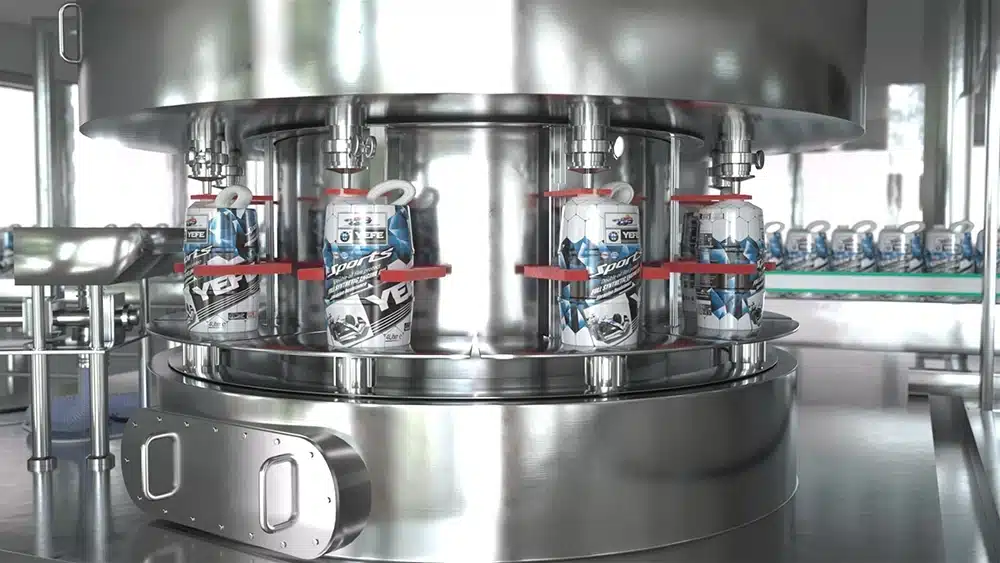
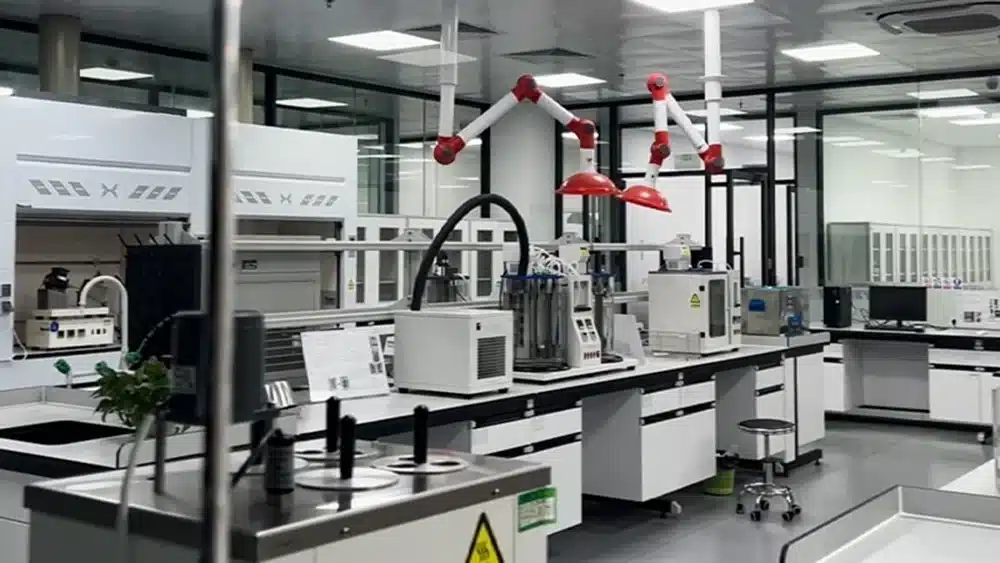
In the case of professional manufacturers such as YEFE, we combine automated production lines and certified labs in order to attain this consistency and test each raw material or finished product. The result? Global standards of lubricants, which are superior to international standards, developing long term relations with distributors on the international level. Quality is not an added value, but a part of each process, all the way through formulation to shipment, ensuring safety, efficiency and longevity to end users.
Inside the Lab — How Lubricants Are Tested
Stage 1 — Raw Material Testing
Quality does not even start with the blending process. To ensure purity and performance potential, we test base oils on the basis of viscosity index, color and density. Additives are examined on chemical composition and compatibility and they will not separate or become unsuitable.
Popular ones are ASTM D445 of viscosity, ASTM D97 of pour point and ASTM D92 of flash point. During my lab experience, I would identify contaminants in the early stages, such as the presence of too much sulfur in the base stocks, reduce the later stages of contamination, thereby saving valuable time and resources, with no compromises in lubricant testing standards.
Stage 2 Blending Process Control.
Real-time temperature, mixing time and ratios of additives are observed during blending to ensure uniformity. In-process sampling is done using automated systems to ensure viscosity and homogeneity to prevent stratification.
This step prevents deviations before compounding, such as irregular distribution of detergent, which may cause sludge. It is a proactive strategy, which combines technology and expertise to achieve a perfect fit of every batch to specifications.
Stage 3 Finished Product Evaluation.
Final testing compares the performance benchmarks of the lubricant. Major tests are the kinematic viscosity of 40 o C and 100 o C, viscosity index through ASTM D2270, acid control through TBN/TAN, oxidation stability, foam stability, air release and corrosion resistance according to ASTM D665.
Findings have to exceed SAE and API limits prior to release. The testing of quality of lubricants in this case is done through manual skill, as well as automated equipment to ensure that the lubricant is ready to handle the actual needs of the field.
Testing Parameters Explained — What Each Value Means
The interpretation of these metrics simplifies the processes of lubricant lab tests. Viscosity is a measure of the resistance to the flow so that the protective film against the load is not caused undue drag. TBN shows the ability to neutralize acid and TAN monitors the deterioration in the course of time.
Flash point measures the safety of ignition in hot places. Pour point determines low temperature flow, which is important when starting in cold weather. Resistance to breakdown predicts oxidation stability which maintains engines to be clean.
| Parameter | Test Method | Importance |
| Viscosity @40°C/100°C | ASTM D445 | Determines flow & film strength |
| VI (Viscosity Index) | ASTM D2270 | Stability across temperatures |
| Flash Point | ASTM D92 | Safety against ignition |
| Pour Point | ASTM D97 | Cold-weather operability |
| TBN | ASTM D2896 | Neutralization ability |
| Rust Prevention | ASTM D665 | Corrosion protection |
These are not abstract values but they have a direct effect on engine life and efficiency.
Batch Traceability — The Backbone of Quality Assurance
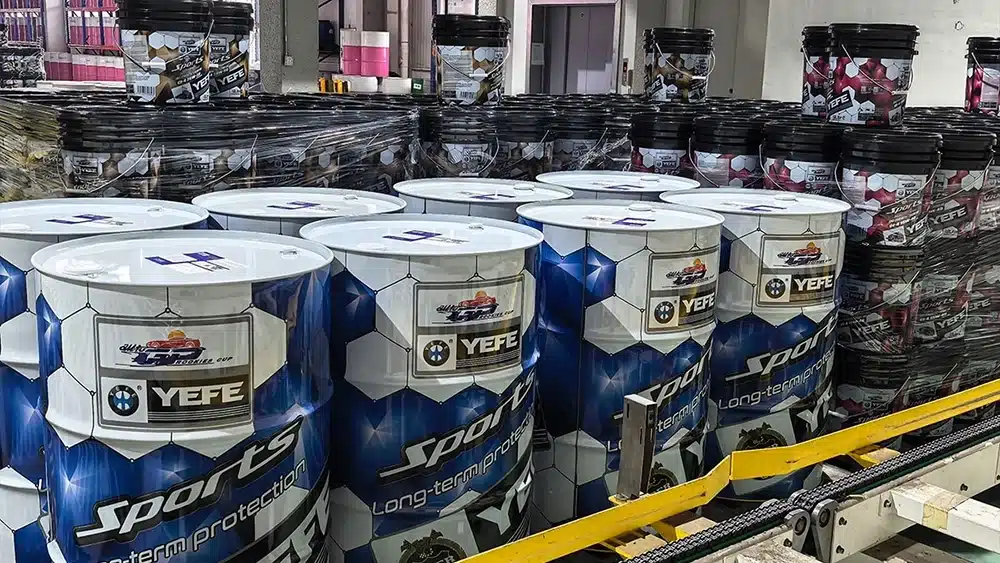
In oil manufacturing, the concept of batch traceability can be considered to denote the connections of all containers such as bottles, drums, or IBCs, to their sources such as raw materials, blending information, and testing information. We implement ERP systems and barcode to manage all these digitally forming an impeccable chain of supplier and shelf.
This allows quick recalls in case required, data analysis to improve and evidence of compliance in case of audit. Should we have a field problem such as low lubricity we can trace it back immediately so we can identify the cause- maybe a slight additive variation. Practically, complete traceability fosters confidence in the distributors, who are sure that every shipment can be checked and that it is of a consistent nature.
Compliance and Certification — Meeting Global Standards
Lubricant compliance standards make products safe in the global environment. The categories of APIs, such as SN, which is used by gasoline engines, and CK-4, which is used by diesels, establish performance benchmarks, whereas the ACEA specification is European-oriented and deals with emissions and durability.
Quality management is regulated by ISO 9001, environmental practices by ISO 14001, and such regulations as REACH/ROHS manage the chemical safety of the export. The certified facilities are audited by third parties, which present MSDS and COAs to each batch.
This structure is not bureaucracy–this is a must in terms of credibility. I have been an R&D manager and have witnessed the fact that by achieving these standards, opportunities to enter into markets such as Middle East or Europe have presented themselves with non compliance leading to loss of business.
Continuous Improvement — Beyond Routine Testing
Quality develops based on statistical process control (SPC) where trends are monitored in order to forecast deviation before it arises. Our high technology equipment includes: FTIR spectrometer to analyze chemical fingerprints, auto-viscometers to measure viscometric precision and Karl Fischer titration to identify moisture.
Systems are kept sharp through staff training, equipment calibration and preventive maintenance. Lubricant inspection and certification are further developed and include predictive analytics, which refinements of the formula are performed using historical data.
Pro Tip: System discipline is how to achieve consistency–not merely by passing a test. Internal audits guarantee that we are ahead of any problem.
Case Study Insight — From Factory to Field
At YEFE, we combine laboratory standards with practice. As an example, our engine oils are tested in the laboratories replicating extreme conditions, and then in the field with distributor partners in tropical Southeast Asia or desert Africa. Wear protection or thermal stability feedback is used to optimize formulations, such as increasing antioxidants in hot areas.
This cycle, automated blending to customer insights, will make our products perform optimally across different climates, transforming information into sustainable solutions. It is a way of keeping ISO and API standards and adjusting to world demands.
Final Reflection — Quality as a Promise, Not a Process

Quality control is the unspoken guarantee of all products in the lubricant world, to guarantee safety, performance, and a promise of trust with each batch. Manufacturers protect both reputations and engines with stringent testing, uncompromising traceability and uncompromising compliance.
YEFE is maintaining this with 100 percent batch testing in ISO certified laboratories, API compliant formulations, and complete export traceability. Quality is not merely measured in every single drop of oil, but is constructed, which helps in creating long-lasting partnerships.