The Hidden Risks — Why Choosing the Wrong OEM Partner Can Hurt Your Brand

Contracting the production of lubricants can revolutionize your company since you will be able to grow without huge initial investments in machinery or knowledge. Being a distributor or a private label buyer, an OEM lubricant supplier will allow you to concentrate on marketing and sales as well as having access to advanced lubricant formulations of engine oils, gear oils or hydraulic fluids.This will speed up market penetration, increase your product line and increase profits- particularly in rising markets such as Southeast Asia or Africa.
However, the twist to the matter is this: these advantages can be destroyed by the frequent errors that are committed in the OEM lubricant projects. Poor selection of suppliers causes problems in quality of the manufacturing of the private labels which may be in the form of complaints or recalls by customers or loss of confidence. The process of lubricant production is one that requires accuracy in chemistry, regulatory decisions, and supply chain dependability, a single error, such as inconsistent viscosity, or non-compliant additives, will destroy your brand name. In my experience of advising projects that occur in different parts of the globe, I have realized that points on how to avoid the traps of outsourcing lubricants can transform threats into certain growth. We can decompose the five commonest mistakes and how to avoid them.
Mistake #1 — Focusing Only on Price, Not Quality
A large number of purchasers plunge themselves into the outsourcing of lubricant production by taking the lowest quote without looking at the cost implications of poor products in the long term. Low-price bids can be seen as corners being cut on high-quality additives, recycled base oils were used, or the anti-wear agent economised on, resulting in such variability as a loss of viscosity stability or early oxidation.
The impact? Your own brand oil could fail on the streets, and the customers would wear out their engines and that is not a good reputation. I have been consulted on cases where cheap batches were causing warranties, which cost more than the savings themselves.
Solution: Use quality as a priority by ensuring API/SAE compliance using independent audits. Request Certificate of Analysis (COA) specification on such properties as the purity of the base oil and the amount of additives before authorizing mass runs. What is the way to select a lubricant manufacturer? Search those that have their own laboratory and established formulations.
Pro tip: The most affordable batch may turn you into your own brand today and cost you your whole entire brand tomorrow- invest into samples to prove the actual performance.
Mistake #2 — Ignoring Lab Testing and Batch Traceability
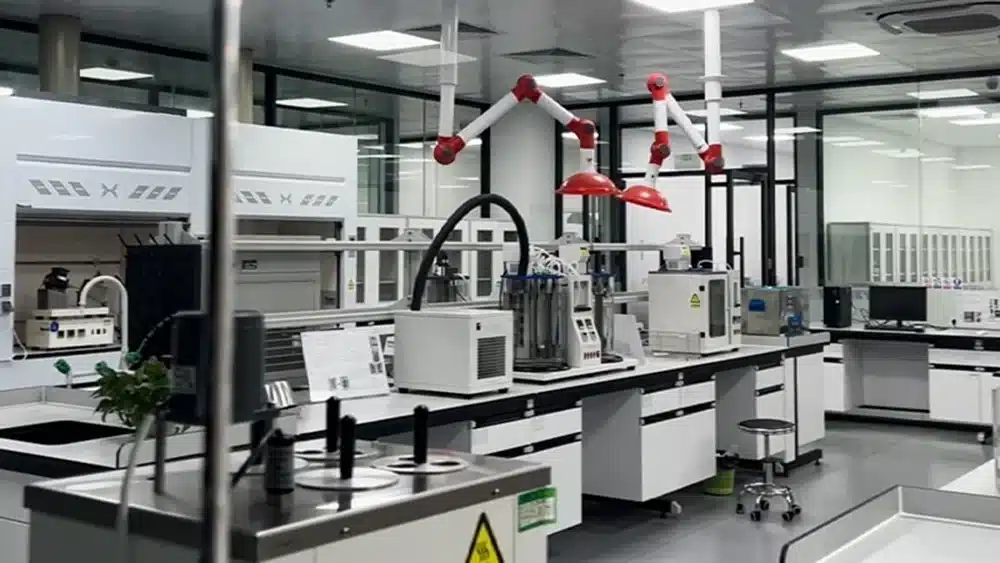
Another typical error made in lubricant manufacturing is not following a rigorous lab testing and traceability, particularly when dealing with fast-paced OEM projects. Trustworthy suppliers check at each level: raw material incoming checks are done to check contamination, mid-blend tests are used to check uniformity, and final tests are done to check key metrics. In the absence of this, you stand a chance of having batches of varying quality, resulting in unpredictable field results.
Batch traceability – The connection of every lot with the materials used, test data, and manufacturing records is necessary in order to troubleshoot. I have witnessed untraceable shipments to create headaches in case of audit or complaints, sluggish resolution to the problem and loss of buyer confidence.
To prevent this, the following demand detailed lab reports of viscosity at 40degC and 100degC, Total Base Number (TBN) of acid resistance, cold flow (pour point), and oxidation stability (ASTM tests). The tips of OEM supplier quality control are the selection of the partner with ISO 9001 certification and digital tracking systems to ensure transparency.
Mistake #3 — Overlooking Communication and Technical Support
Outsourcing is not a one-time affair; therefore, ignoring the fact that, it requires a high level of communication renders any possible form of partnership as a nightmare. Bad communication results in irrelevant specifications–you have ordered 10W-40 formula but it has been sent with an incompatible additive, or the labelling is not in conformity with local standards.
Through experience in facilitating cross-border projects I have observed that, unless such projects are supported at a technical level then even problems such as formula adjustments to suit humid weather are not addressed leading to delays in launching. The result? Unproductive time, unnecessary expenditure and products which do not perform well in your market.
Improve on: Find an English-speaking supplier of OEM lubricants that has a well-defined update system, such as weekly progress reports. Create feedback loops–enthusiastic suppliers ought to alert incompatibilities at an early stage, e.g., base oil reactions with some detergents. This guarantees congruency and harmonious implementation.
Real Case: When a distributor in the Middle East was informed by the supplier about additive changes to make their product stable in high heat, the supplier averted disaster when the product started to degrade too soon in the desert climate.
Mistake #4 — Underestimating Packaging and Label Compliance
Packaging is not only a container, but a very important element that ensures the integrity of the product and meets the regulations and many fail to put this into consideration in the pitfalls of outsourcing lubricants. Poor quality bottles or caps may literature without regulation, poor labels may fade, peel, or do not have the necessary hazard signs, and there is a fine or retail refusal of such.
Here quality problems in the production of the private label may arise: Thin HDPE may get a crack due to pressure, adhesive cannot resist the effects of oil, which affects the shelf life and brand image.
Solve this by testing small batches in terms of durability. Demand international standards such as GHS of hazards, recycling codes and batch numbering. Collaborate with suppliers of custom design, which balances the aesthetics and functionality.
Checklist for Packaging Success:
- Check impact resistance thickness of HDPE material.
- Adhesion of labels on checks upon exposure to oil in 24 hours.
- Affirm UV and solvent resistance to avoid fading.
- Make sure that there are tamper-evident caps and multi-lingual compliance to export.
Mistake #5 — Not Evaluating Long-Term Partnership Potential
This is a shortsighted mistake of taking OEM suppliers as a one-off vendor, leaving opportunities of growth over the long run. Short term deals result in unconstitutional formula of orders that are interruptive to your product line and customer expectations.
Long-term partnerships, on the contrary, allow refinements in the formula, quicker reorders, and even R&D-type modifications: modifying greases in new equipment. I have recommended clients who have been changing suppliers on an annual basis only to experience quality lapses, the ones who have had a consistent partner have continued to expand into other categories without any hassles.
Assess early possibilities: Seek elastic MOQs, monthly audits and joint market knowledge. Arrange review meetings to coordinate on innovations so that your brand develops in a consistent way.
Lessons from the Field — How to Get It Right
Based on actual OEM alliances, success is reduced to initiatives. Begin with sample validation: Conduct small scale campaigns within local circumstances to verify performance before locating the scale. Ensure open communication through special project managers to solve problems fast.
Always look at COA and QC reports at the end of each shipment, checking such metrics as shear stability. Collaborate with suppliers that will provide the end-to-end service-formula modification to labeling design and export documentation to facilitate the operations.
A comparison highlights the difference:
| Aspect | Poor Outsourcing Looks Like | Professional OEM Provides |
| Quality Control | Spotty testing, no COA | Full lab reports, traceability |
| Communication | Delayed responses | Proactive updates, tech support |
| Packaging | Generic, prone to leaks | Custom, compliant designs |
| Partnership | Transactional | Long-term collaboration, R&D |
The practices transform the usual errors committed in OEM lubricant ventures into advantages, creating strong brands.
Expert Recommendations for Buyers

In conclusion, pay attention to the following lessons: Select suppliers that have export experience in your target markets to have a smooth logistics. Check laboratory testing and certifications such as the ISO or API to ensure uniformity. Put the long-term potential in the first position rather than short term savings- dependable partners make you save your headaches in the future.
YEFE being a professional manufacturer of OEM lubricants integrates high quality lab testing, automated mixing, and export documentation in order to deliver quality, stable lubricants to its world wide clients. To be more instructive, read the works OEM & Private Label Lubricants: Complete Buyer’s Guide, How to Build Your Own Lubricant Brand: Step-by-Step OEM Process, or Quality Control in Lubricants: Testing, Traceability and Compliance..