Engine oil does not go out of use in storage? The answer to this is yes, it can, and the answer to the question is not yes the same way that food or medicine expires but yes, it can degenerate over time in poor conditions. Most individuals assume that engine oil that is not used does not expire and can sit in a shelf forever. Although engine oil is much more stable when it is sealed and untouched as compared to that circulating in a hot, contaminated engine, poor conditions of engine oil can make it lose the traits of its performance even when it has never been applied in an engine.
The major distinction is in the storage of the oil. The correct storage will maintain the base oils and additive package many years but when left unattended, subtle yet significant changes will occur that on the later use of the oil which is supposed to be used, protection will be compromised.
Comparing their formulations, explore our engine oil product category to see the range of mineral, semi-synthetic, and fully synthetic options available.
What Is the Typical Shelf Life of Engine Oil?
With good conditions and conditions, i.e. sealed original containers, moderate stable temperature, and shielded against direct light, most of the modern engine oils can maintain acceptable performance over a period of several years.
This is a useful rule which is founded on actual storage experience:
| Oil Type | Typical Shelf Life (Sealed) | Storage Sensitivity |
| Mineral oil | 3–5 years | Moderate |
| Semi-synthetic | 4–5 years | Moderate |
| Fully synthetic | 5+ years | Lower |
Oils which are entirely synthetic are typically the most stable in the long-term since they are more uniform in their molecular structure and are less susceptible to oxidation. Nevertheless, even the highest quality synthetics cannot resist that degradation as long as they are exposed to warmth, moisture or air.
Why Engine Oil Degrades Differently in Storage vs in an Engine
The environment of engine oil in the storage is a totally different phenomenon compared to the environment when it is in service. Oil in an operating engine must undergo high levels of heat (up to 150 180 0 C in the hot spots), combustion by-products, fuel dilution, soot, and mechanical shearing continuously. Such violent environments are the main aggressors of in-service oil degradation.
Enemies of storage are relatively watered down: slow oxidation due to exposure of oxygen, wetness, and fluctuating temperatures occasionally. Combustion acids do not exist, soot loading is absent, an almost complete absence of thermal stress exists. That is the reason engineers can have unused engine oil stored long before scheduled drainage on an engine.
Key Factors That Affect Engine Oil Shelf Life
The four significant elements that cause stored engine oil to deteriorate gradually are temperature, moisture, air and light.
| Factor | Impact on Oil Quality | Risk Level |
| Heat | Accelerates oxidation | High |
| Moisture | Favors additive decaying and corrosion. | High |
| Air exposure | Causes slow oxidation | Medium |
| Dirt contamination | When used causes abrasive wear. | Medium |
Excessive exposure to temperature that is over 30-35 o C causes oxidation reactions to get very fast even in containerized conditions. Other moist environments caused by high humidity allow the seals to be gradually penetrated by moisture, particularly on partially used drums or poorly capped bottles.
Best Practices for Storing Engine Oil Safely
The most vital principle to observe to the engine oil shelf life is the consistent and strictly moderate environment and the absence of contact with the elements.
Store oil in a dry, clean warehouse/garage with temperature ideally 10 o C-25 o C (50 o F-77 o F). Containers should not be left close to heaters, boilers, and direct sunlight. Always keep original sealed containers where possible and it is so much more dangerous to pour the oil into unlabeled or poor containers.
Introduce a FIFO (First In, First Out) system to rotation of the inventory, control the labeling of each container or pallet with the manufacturing date or batch number printed on it. To discuss the storage conditions in the production and distribution in more detail, see our article on engine oil storage conditions.
How to Tell If Stored Engine Oil Is No Longer Suitable for Use

It is a visual check only as most of the degraded oils appear normal. Nevertheless, it has a few important signals that should be checked:
- Very heavy, rancid or unusually acutely odored (not the usual slight petroleum smell)
- Observable silt or mud in the bottom of the container after protracted storage.
- Critical darkness or obscurity (excessively so in plain bottles)
- Chocolated look (means water pollution)
Should any of these indications be observed, or should the oil have been in storage longer than 67 years under unknown conditions, then it is time to send a sample, to be analysed by any simple laboratory means (viscosity, TAN, water content, and additive depletion) and then determine its usage in critical equipment.
Common Myths About Engine Oil Shelf Life
The problem is that several common myths may result in making poor decisions:
- Myth: Oiled umbrellas do last indefinitely. Reality: Oil engine: Engine oil is a slow oxidizing organic substance prone to slow additive depletion although very stable.
- If the oil is not turning color, it is a myth that the oil is fine. Reality: Color is not the accurate measure of oxidation or satisfactory health conditions, many oils have been damaged, though, of yellow or golden hue.
- Infobunk: “Synthetic oil does not degrade with storage. Reality: Synthetics are resistant to a greater degree, however, they oxidize and absorb moisture through the course of time.
For more on this topic, read our detailed guide: separating facts from myths about engine oil.
Storage Considerations for Distributors and Bulk Oil Users
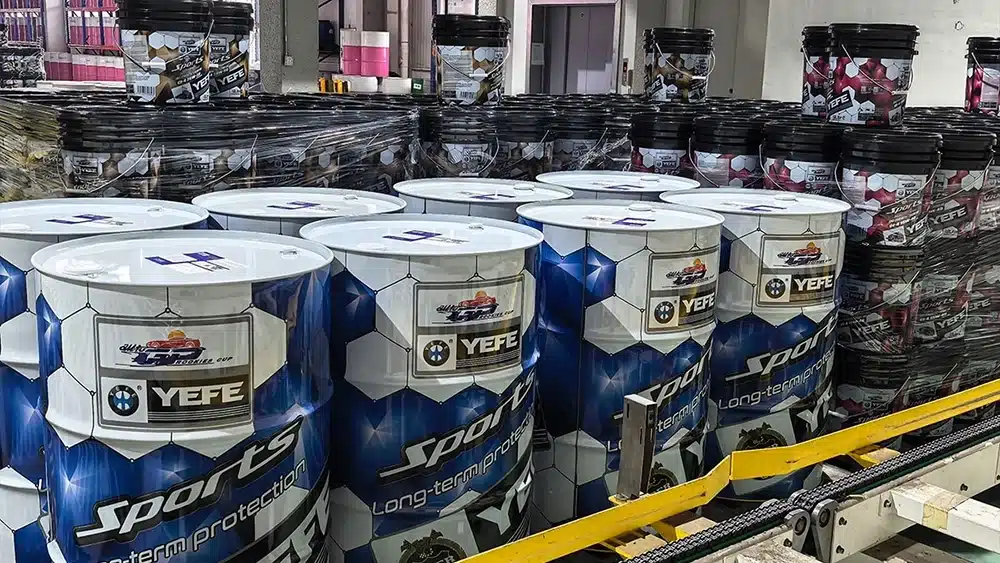
Additional challenges are experienced by the distributors and fleet operators who have to deal with drums, IBC totes or bulk tanks. Controlling of the temperature in the warehouse occurs imperative – preferably maintaining a cooler area at less than 30C throughout the year. Drums are supposed to be placed on racks in horizontal position (bung up) in order to reduce pools of water accumulated on the top seals.
Drum-top inspection, bulk tank desiccant breathers and periodical turning of old stocks are some of the ways of controlling risk. Where stocks are not avoided as long-term, go ahead and make use of them as long term inventory unless it takes more than 4-5 years.
Conclusion — Shelf Life Depends on Storage Discipline
Finally, there is no unalterable duration of engine oil storage that is determined by the manner in which it is well guarded against heat, moisture, air and pollution. Most of the current engine oils can last 4–7 of the years or even longer when gaps are kept in a disciplined manner.
The most effective precaution that will secure your investment is by following what is appropriate with fresh merchandise that should be cool, dry, dark, and closed; your stored oil should have the same guidelines. Regular storage practice is the key to the continuity of the lubricating performance.