
GL-4 and GL-5 gear oils are not made to work universally and their difference lies in the load condition they have to work under. Most individuals think that GL-5 is merely some stronger form or upgrade of GL-4 and this is a general misconception that can cause severe consequences. It is not just a question of increased protection, but one of particular formulation chemistry depending on the type of gear and environment in which it is used.
Selecting an API GL specification that is incorrect will result in either premature wear, corrosion or failure of the transmission. Specifically, a GL-5 oil where GL-4 is indicated is likely to act counterproductively on yellow metal constituents (such as brass synchronizers), whereas the opposite can cause existing hypoid gears to be unprotected when operating in heavy loads.
As a trusted automotive gear oil supplier, we have been experiencing a lot of such confusion in the workshop and with fleets operators. The knowledge of the API GL standards will prevent a high cost of repair and provide safe operation.
What Do API GL-4 and GL-5 Standards Mean?
The American Petroleum Institute standards of API GL system are used to set performance standards of gear lubricants by the severity of the operating conditions.
The baseline of API GL ratings is the capacity of a lubricant to defend the extreme pressure (EP) as well as sliding contact of gears and the consideration of friction antecedent of a lubricant to some applications. GL-1 to GL-3 include less severe conditions with only a little EP requirements, whereas GL-4 and GL-5 are concerned with more demanding conditions. GL-4 is designed to work with the moderates loads with a preference to the balances protection and compatibility, and GL-5 is designed to work with severe loads that require high EP performance. There are several levels since the design of gears differs, spur or helical gears in transmissions do not act as hypoid ones in differentials.
The Key Difference — Extreme Pressure Additive Levels
The only specific difference between GL-4 and GL-5 is the amount and the nature of extreme pressure additives.
Both specification involve the use of sulfur-phosphorus EP additives to create a protective film in high pressure and high temperatures on the gear surfaces to prevent contact and scuffing between metals. GL-5 formulations however have much larger amounts of active sulfur-phosphorus compounds to support heavier shock and sliding loads. This high EP content enhances load carrying capacity by enormous levels and therefore GL-5 can be used in situations where gears have high levels of boundary lubrication.
To find out more about the effect of these additives on overall performance, see our guide to extreme pressure additives.
Typical Applications for GL-4 Gear Oil
GL-4 gear oil has found application in many manual transmissions and transaxles.
They are lubricants that would maintain reasonable protection of the spur, helical and some spiral-bevel gears that have moderate or heavy loads and do not experience severe shock. Med-EP additive level provides a good compatibility with the synchronizers, and it could be shifted without any difficulties. Passenger cars, light trucks, and some off-road vehicles most of their synchronized manual gearboxes specify GL-4 since it offers good wear protection at the same time as providing the friction characteristics required in a good synchro engagement.
Typical Applications for GL-5 Gear Oil
GL-5 gear oil is good in heavily loaded systems and having high sliding contact.
It is optimally designed to suit gears of differentials and axles with a high torque, low-speed operation, and large offset between axes of gears, which creates harsh operational conditions. Differentials of rear-wheel drive, super heavy-duty truck axles, and certain four-wheel-drive transfer cases normally need GL-5 to stop pitting, scuffing, and collapsing of its shock loading. The increased EP content gives the strong film strength required in such applications.
GL-4 vs GL-5 — Side-by-Side Comparison
An overlay comparison of the differences, in real-world terms, is as follows:
| Aspect | API GL-4 | API GL-5 |
| EP additive level | Moderate | High |
| Load capacity | Medium | Very high |
| Yellow metal compatibility | Good | Potential risk |
| Typical use | Manual transmissions, transaxles | Differentials, hypoid axles |
This table highlights why direct substitution is rarely appropriate.
Yellow Metal Compatibility and Corrosion Risk
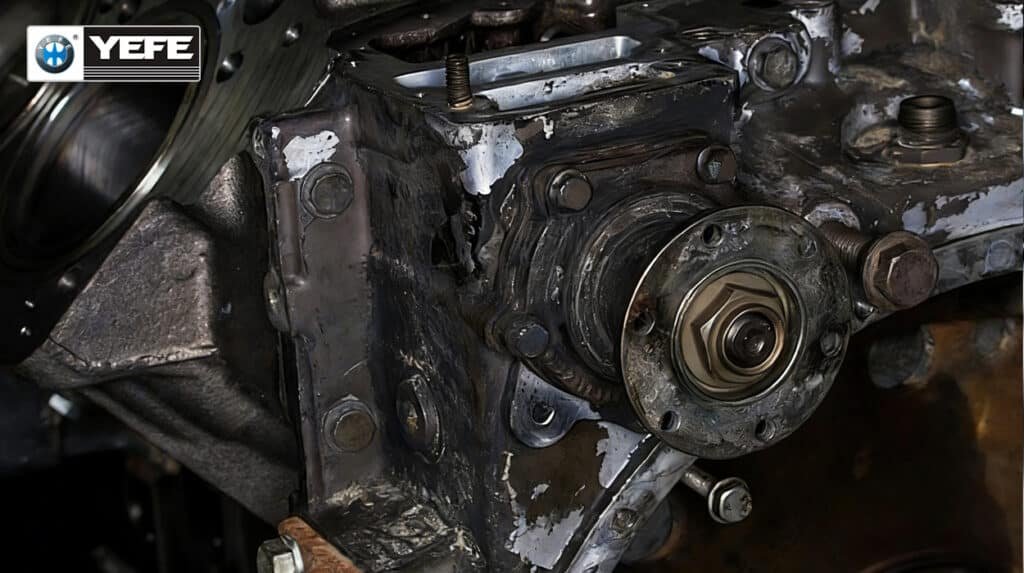
Brass and bronze (yellow metals) are used in numerous synchronizers rings and bushings and must be taken care about the choice of lubricants.
The increased amount of active sulfur in the traditional GL-5 oils has the potential to chemically react with these weaker metals, causing corrosion, etching or rapid wear. Gradually, this impairs the performance of the synchronizer resulting in harsh shifting or even breaking down. GL-4 oils have lower concentration of additives and this risk is reduced thereby maintaining integrity of components in transmissions. Although some of the GL-5 formulations are safe (typically being added to the formulation as buffers or modifiers to make them less corrosive), not all are safe at all times). To learn how to avoid such problems use gear corrosion from sulfur additives.
How Viscosity and GL Grade Work Together
GL grade and SAE viscosity grade are concerned with different parts of the lubrication and both have to be the same application.
GL classification regulates EP protection and additive chemistry to control load and compatibility and SAE numbers (such as 75W-90 or 85W-140) control low- and high-temperature flow behaviour. High GL-5 rating is no substitute of incorrect viscosity – too thin an oil might not stand up to heat in the film, whereas too thick one results in drag and cold shifting poorly. Never combine two specifications to operating temperatures, design of gear and duty cycle. See our discussion of SAE gear oil grades.
How to Choose Between GL-4 and GL-5 Correctly
To choose the appropriate specification choose the following steps:
- Discuss check OEMs first – The car or equipment manual presents the official GL rating.
- Test gearbox design Synchronized manuals The GL-4 is generally required; that of hypoid differentials uses GL-5.
- Assess operating load and operating duty cycle -Moderate loads and frequent shifting are well adapted to GL-4; heavy hauling or high torque conditions are well adapted to GL-5.
- Take into account component materials – GL-4 should take precedence over GL-5 unless the maker of the component metals is certain that this material is compatible with GL-5.
- Check dual rating where required – It is possible that some applications (such as transaxles with a built-in differentials) will accept GL-4/GL-5 dual purpose oils, and, in that case, specific confirmation should be made.
One grade does not replace the other and therefore should not be assumed.
Common Misunderstandings About GL-4 and GL-5 Gear Oils
- “GL-5 is better always —GL-5 is preferable to GL-4 use but is excessively harsh and dangerous in great hypoid service.
- Replacement GL-4 may replace GL-5 is not necessarily safe, there is a risk of corrosion of yellow metal and change of friction which influences shifting.
- the additives do not have an impact on the compatibility of metals Sulfur phosphorus EP additives may be hostile to brass and bronze unless designed specifically.
These are a few of the assumptions that result in numerous failures that could be prevented.
Conclusion — Correct GL Specification Matters More Than Assumed
The API GL-4 and GM 5 gear oils have specialized applications and generalization of the two gear oils is a poor use of the crucially important divergent properties of additive chemistry and the application requirements. Specifying properly depending on the type of gear, load, and material that is compatible are much better protection against component failure than selecting the more powerful approach.
Selection is always better than assumptions where there is an application specified. To get more in-depth information about formulation or ask any other question, browse our materials on gear oil performance and problem causes.