

China also continues to be among the most important centers of engine oil production in the world; it provides a large number of blending plants, access to raw materials at reasonable price, and the ability to manufacture at will. When distributors and importers seek to access the new markets of South America, Southeast Asia, the Middle East and Africa, it is commonplace that they turn to the Chinese suppliers to gain a better margin and still cover the demand. Nevertheless, the financial benefits may conceal some serious risks in operations.
Existence of process and compliance risks (neglected) causes most failures to source engine oil, rather than the actual formulation of the product. The unit price is the most common aspect in the sourcing process of engine oil in China, which usually results in quality, compliance, and reputational risks. Sophisticated customers are aware that systemic problems, like the lack of quality control and paper trails or mismatched expectations, were likely to reveal themselves after the initial shipment and become in the long term cost.
Why Engine Oil Sourcing from China Requires a Different Approach
The sourcing of the engine oil in China requires even more vigilance than buying volumes of the oil in the well-established suppliers in the West. Chinese market of lubricants has a thousand and more manufacturers with large scale automated plant to small scale blending plants. It is also typical of ability gaps: there are factories that have been raised on high volume commodity grades whereas others have a hard time with repeat additive blending, or even conforming to international API/ACEA requirements.
Transparency of processes becomes necessary. By not being able to clearly see the base oil sourcing, additive packages and batch testing protocols, the distributors have a lack of predictability. These differences can be underestimated even by more experienced importers that think that suppliers are the same. Such a systematic process as beginning with comprehensive specifications, followed by tested samples, assists in bringing the expectations into line with reality and mitigating surprises.
Mistake #1 — Evaluating Suppliers Based on Price Alone
The most common mistake distributors commit is focusing on the lowest unit price as a priority to all. Very low competitive bids frequently indicate the corner cut on the quality of raw materials, specified additive scarce level, or low laboratory testing. Although they may seem like appealing measures of initial savings, such decisions often result in end-user performance complaints, warranty problems or product recalls.
Cost implications in the expansion take time to pile up. The erosion of margins is carried out either by rework or extra testing, or lost relationships with a distributor. A batch of engine oil which apparently was inexpensive but does not pass tests in terms of oxidation stability or ability to remain viscous may harm a brand reputation much more than the initial price disparity. Competitive partners consider total value where they seek protection and stability in supply as compared to competing only on costs.
Mistake #2 — Assuming All Engine Oil Quality Is the Same
Most distributors suppose that the engine oils of the same specification, according to API SN or CK-4, will work the same, independent of the supplier. As a matter of fact, the quality differs very widely based on the differences in the groups of base oils (Group I-V), additive chemistry, and manufacturing accuracy. Base stocks of lower grade or intermittent additive package may lead to poor wear protection, development of sludges or reduced intervals between drains.
The other challenge is batch consistency. As the inconsistency between shipments is not detected through severity testing in the lab, problems of inconsistency in the fields are only discovered once the field problem is found. The paramount parameters such as kinematic viscosity, the total number of base, and the elemental analysis should be verified independently. To understand better the tactics of evaluation, see our guide on how engine oil quality is tested.
Mistake #3 — Ignoring MOQ, Packaging, and Execution Constraints
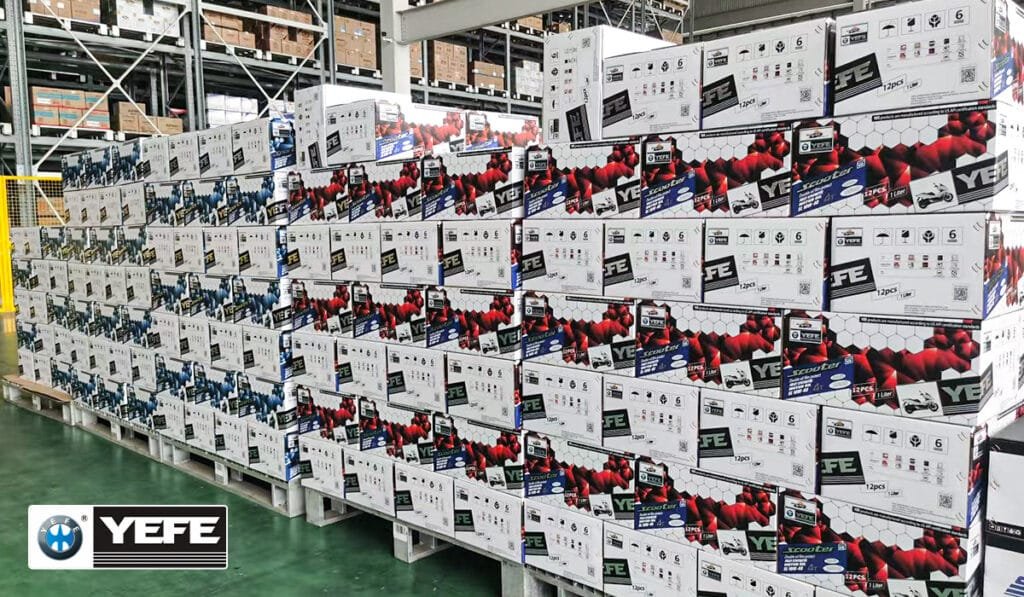
Distributors often fail to consider minimum order quantities (MOQs), scheduling of packaging, and actual production scheduling. A supplier with a good price quote will have high MOQs that can demand high cash flow or storage capacity among minor importers. Packaging, be it in 1L bottles, 4L jugs or 200L drums, may require more time to get a custom mold, label or filling line repositioned.
Poorly aligned expectations in the areas of execution will cause delays, part delivery or production rush thereby affecting quality. Avoiding these traps in operations is made possible by clear communication on the volume commitments and specifications of the packaging at an early stage of the discussion. To learn more on getting these factors in balance in their projects with the use of private labels, explore our article covering common engine oil sourcing mistakes.
Mistake #4 — Weak Quality Verification and Documentation Control
Another common practice is to use a Certificate of Analysis (COA) obtained by a supplier and not to verify it independently. COAs either can represent perfect conditions or can be batches chosen, rather than actual production. There are minimal checks in the factory through audits which are often shallow or even predetermined do not provide insight into reality about process controls, storage methods or even traceability.
Full traceability, since the base oil delivery up to the final filling, ensures against possibilities of contamination or replacement. Distributors ought to demand test reports on batches, holding of samples and periodic third party check up. Removing these gaps assists in preventing unpleasant surprises; learn more about quality verification risks.
Mistake #5 — Overlooking Labeling and Regulatory Compliance
Mistakes made in labeling and compliance are common reasons leading to either customs detention, market rejections, or recall costs. Requirements that depend on the market are usually undervalued; these include language requirements, hazard symbols, API/ILSAC license marks, or geographical environmental requirements. Wrong or missing labels may result in delays or penalties of borders.
Most countries have customs officers that examine imports of lubricants on their proper declaration and conformity. Failure to comply will lead to detention of products or damage to reputation. Analysis of the target market laws such as packaging recyclability and performance claims should be checked thoroughly. To get specific guidance, review our post on labeling and compliance issues.
Mistake #6 — Treating OEM Projects as One-Time Transactions
Considering the real production of the engine oil as a solitary purchase is a mistake, as long-term cooperation is worthwhile. Preliminary orders can be successful with the aid of additional monitoring, whereas in the long term, mutual knowledge, experimenting with formulas, and feedback mechanisms are needed. Suppliers who are transactional have no motivation to invest into process improvements and quick issue resolution.
The long term relationships would build experience regarding market specific requirements, climatic adjustments as well as performance adjustments. This will provide a stable supply and a lack of hiccups in the long run.
How Distributors Can Reduce Sourcing Risks Effectively
The process of minimizing the supply of engine oil begins with organised supplier assessment. Establish well-defined technical specifications, such as base oil requirements, level of additives treatment, and performance standards. Ask several samples of production each lot to be sent independent samples before volume is made a commitment.
Introduce documentation provisions: demand complete records of traces, certificates of raw materials, and lab report on batches. Begin with pilot orders to check execution of all activities including packaging, labelling, delivery schedules, etc. and expand. Introduce consistent feedback and performance appraisals in order to identify problems in time.
What Reliable Engine Oil OEM Partners Do Differently
Good OEMs put emphasis on transparency of processes as opposed to non-transparent pricing gambles. They have specific laboratories where the laboratories are present to continue with the process of oxidation, wear, and viscosity testing, they are open with the batch data and have regularized the blending procedures. Open communication: specific schedules, change alerts, proactive communication, etc., create trust.
These vendors regard quality as something they will never compromise on and they invest in automated filling lines, traceable inventory systems, and knowledge of compliance. They continue to focus on the provision of consistent performance that can be used by distributors to achieve success in the competitive markets engine oil portfolio.
Conclusion — Successful Sourcing Is Built on Process, Not Price

Chinese sourcing of engine oil does not represent a far-fetched idea, but the strategy must be risk-first based to succeed. Distributors moving beyond focus on lowest price to focus on effective processes verification, documentation, compliance, collaboration are in a better place to get more predictable results and grow stronger market positions.
A long-term consistency is based on years of experience of manoeuvring through these complexities and not on the need to seek short-term gains. Having resolved the systemic risks early reduces the risk to brand protection, less rework, and develops long term supply relationships that provide stable value to end-users.