


The perception among most drivers is that full synthetic engine oil is always the best option in the modern vehicles and that semi-synthetic oils are the concession or inferior. The fact is that both of them are designed answers to various running needs and none of them is inherently better unless one refers to the practice-based engine design, driving habits, and environment.
The decision to use full synthetic and semi-synthetic engine oil needs oil performance attributes to be matched to the engine needs and driving conditions. The real issue here is not what is the best oil compared to the rest but what is the best oil with regards to offering the correct degree of protection, longevity, and affordability to a given job. Being a lubrication professional responsible on some formulations and real-world testing, the main trick is to know how the base oils and additives perform during stress and not doing what was marketed.
For a wide selection of synthetic and semi-synthetic engine oil that fulfill different levels of API requirements and SAE grade, one should look through manufacturer specifications together with the needs of the vehicle.
What Is Fully Synthetic Engine Oil?
Fully synthetic engine oils are produced out of highly refined or chemically synthesized base stocks (polyalphaolefins (PAO) or other high-technology Group III+ or Group IV/V base oils) with a well-balanced additive package.
These base oils are designed at the molecular scale to be uniform leading to fewer impurities and more predictability in a broad temperature range. The additive system, which typically contains detergents, dispersants, anti-wear and antioxidants, is very stable and does not break down even when subjected to a long run of high-heat operation or heavy load.
The common performance attributes are superior low-temperature fluidity to allow a rapid cold-start, high thermal and oxidation degradation resistance, low volatility to reduce the use of oil, and stable viscosity at shear, among other attributes. This renders the full synthetic oil especially dependable in the harsh conditions whereby the engine parts are subjected to extreme conditions.
What Is Semi-Synthetic Engine Oil?
Semi-synthetic engine oil, also known as synthetic blend, is a hybrid formulation of conventional mineral base oils (usually Group II) with synthetic base stocks (Group III or higher) in a large percentage.
This is a better combination of performance than pure conventional mineral oil with a lower price point. The synthetic element complements important characteristics such as thermal stability and oxidation capability whereas the mineral component serves to maintain costs low and offer congruence with a wide scope of engines.
The product is a balanced profile that has enhanced shear stability, less sludge formation, and flow as compared to conventional oils without going to the extremes of complete synthetics. Semi-synthetic oils receive a good application due to the fact that they offer significant increment in normal driving situations where extreme conditions are not always observed.
Key Performance Differences Between Fully and Semi-Synthetic Oils
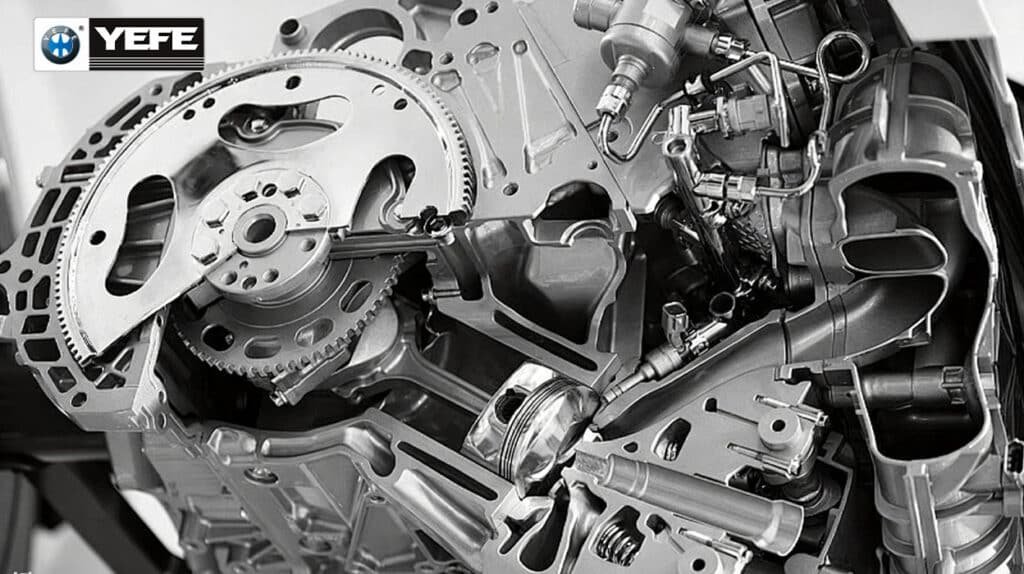
The actual comparison between fully synthetic and semi-synthetic engine oils can only be seen in their reaction to heat and cold, mechanical strain, and service life.
| Performance Aspect | Fully Synthetic Oil | Semi-Synthetic Oil |
| Temperature stability | Very high | Moderate to high |
| Oxidation resistance | Strong | Moderate |
| Cold-start performance | Excellent | Good |
| Shear stability | Excellent | Good to very good |
| Volatility (oil consumption) | Low | Moderate |
| Cost level | Higher | More economical |
Synthetic oils are also superior to the conventional typical oils as they have been shown to retain molecular integrity even at harsh conditions hence reducing viscosity deterioration and deposition over time. Semi-synthetic oils are satisfactory in moderate to challenging service as many of them fill in much of the difference between full synthetics in the typical passenger car service.
Which Oil Type Performs Better Under Different Driving Conditions?
Whether the fully synthetic engine oil is suitable or semi-synthetic engine oil is dependent on the actual usage.
| Driving Condition | More Suitable Oil Type | Reasoning |
| Frequent cold starts | Fully synthetic | Superior low-temperature flow reduces wear during initial startup. |
| Mixed city/highway | Semi-synthetic | Adequate protection for typical stop-and-go plus occasional longer runs. |
| High-load or high-heat | Fully synthetic | Better resistance to thermal breakdown in towing, hot climates, or heavy traffic. |
| Moderate daily driving | Semi-synthetic | Cost-effective performance without excessive stress on the oil. |
| Short-trip usage | Semi-synthetic or full | Full synthetic helps combat condensation buildup; semi works for lighter patterns. |
Semi-synthetic oils tend to provide a good protection in the case of urban stop-and-go driving that is not excessive in protection. To ensure long, high-speed highway performance, extreme heat, or high and heavy loads, fully synthetic oil coats the film more reliably.
How Engine Design Influences Oil Type Selection
The architecture of the engine is decisive in the choice of oil.
Contemporary turbocharged motors place much more heat on the engine and operate under more load, and the completely synthetic oil is the choice of the day in ensuring lubrication in clearance and to ensure coking or wear to the turbo bearings. In normal vehicles with a naturally aspirated engine it is common that semi-synthetic oil will perform well since their working load rarely extends to the limits that a properly made blend can perform.
The advantages of fully synthetic oils are especially seen in tight-tolerance designs used in most newer passenger cars, where fully synthetic oils are better than paraffin-based oils in their ability to flow and remain stable, particularly in low-viscosity oils such as 0W-20 or 5W-30. Engines that have reached old age or whose seals are not resistant to aggressive cleaning agents, older engines, or engines with looser tolerances, may perform more reliably when using a semi-synthetic formulation which provides a smoother transition and yet offers better protection than traditional oils.
The recommendation of the vehicle manufacturer is always to be considered because most of the modern engines require full synthetic within warranty requirements.
Cost, Oil Change Intervals, and Practical Considerations
Full synthetic engine oils normally have a high initial cost since they possess sophisticated base stocks and additive packages. Nevertheless, in appropriate applications, they are more stable, which can compensate the cost in the form of lower frequency of maintenance.
Semi-synthetic oils are a compromise between the traditional oils and the fully synthetic oils, they are more durable and less expensive in comparison to their fully synthetic counterparts. Practically, the time interval of oil change should be based on the manufacturer recommendations, severity of driving, and monitoring the condition of the oil and not making the assumption that extended time interval of drains can be automatically used.
The balance on the ground is the cost of ownership level: level of protection required against the frequency of modifications and engine wear that could save.
Choosing Between Synthetic and Semi-Synthetic Oils in Practice
The decision making process begins with the knowledge of what is needed in your car, the normal conditions of operating, and the way it is maintained.
Start with the OEM specification most modern engines are now requiring full synthetic with some permitting blends. Next we evaluate actual use: shorter distance and colder spurring are more readily served by synthetics; regular moderate commuting is served well by semi-synthetics. Figure in climate and heavy usage – extreme weather conditions or high usage swing the balance to full synthetic.
After all, it is the correct decision, which safeguards the engine without causing excessive cost.
Conclusion — “Better” Depends on Suitability, Not Oil Type
Semi-synthetic engine oils and fully synthetic engine oils are made to meet various performance needs. Fully synthetic offers excellent stability and protection in hard-duty situations and semi-synthetic offers reliable operation and value in daily situations.The knowledge of the behaviour of each type of oil under actual operating loads is used to make sure of the proper oil selection that can guarantee long-term engine security and dependability. Oil is not the most costly or the most advertising-researched, it is the one that fits the engine and the driving habits of the driver best of all.