
The Transformation — Lubricants Enter a Decade of Change
Sustainability, automation and innovation are no longer a few terms that characterized the global lubricant industry but now; they are the drivers of this industry. With the growing need to electrify the automotive industry, grow industry, and create more environments with stricter regulations, the market is expected to reach over 180 billion by 2026. Among the most important drivers are the necessity to achieve a net-zero emission, the emergence of EVs that use special e-fluids, and the digital technologies that have transformed the production.
Major manufacturers are changing their ways and include green chemistry in their formulations and smart factories to be efficient. It is not only a regulatory change, it is also a change in competition, where consumers and governments prefer lubricants that are eco-friendly. In the case of such companies as YEFE, it is the integration of high-tech synthetics with eco-friendly activities to satisfy the demands of the global market. The trends in the lubricant manufacturing 2026 reflect to the future that nothing is optional in the sphere of innovation, this is the main condition of survival and further development in the fast-evolving environment.
Sustainability as the New Competitive Advantage

Sustainability in the manufacture of lubricants has ceased to be a compliance box, but rather a key differentiator, and 2026 is a tipping point of difference with eco-friendly brands gaining market share. Manufacturers are aiming at reducing carbon footprint by means of renewable sourcing, energy efficiency, and minimizing wastage. As an example, recycled base oils and bio-derived additives are becoming the norm and help to decrease the use of fossil fuels without compromising performance.
Efforts such as carbon-neutral lubricants which are made possible through offsets and green refining and biodegradable lubricating oils used in sensitive sites are on the rise. Closed loop systems recycle the packaging and re-refine the used oils and reduce the emission by as much as 30. At YEFE, we are very attached to such practices, and solar-powered blending facilities are used to meet the global ESG targets.
Did You Know? According to the industry projections, more than 40 percent of the new lubricant formulations will contain renewable or low-emission components by 2026.
Green Chemistry — The Rise of Bio-Based and Synthetic Formulations
Lubricants Green chemistry is transforming the industry, with a more emphasis on safer more efficient molecules that do not impact the environment as much as protection is compromised.
Bio-Based Base Oils (Esters, PAOs, PAGs)

Explosive growth will be experienced in bio-based lubricants 2026, which will be spearheaded by plant oils and synthetic PAOs (polyalphaolefins) esters. These renewables are more biodegradable (as high as 90 percent in a few instances) and less volatile, which can be used in a marine situation or an agricultural one, where spills are more of an issue. They also offer very good oxidation resistance and the drain life is increased by 20-30%.
These alternatives are the future of the lubricant industry as they will decrease reliance on crude during the fluctuating oil prices. YEFE uses the synthetics that are of an ester type in our eco-line, which is designed to meet the requirements of high-biodegradability in Europe and Southeast Asia.
Additive Innovation for Cleaner Performance
Additive packages are moving towards sulfur-free and low-Sulfur-Aspirin (Sulfated Ash, Phosphorus, Sulfur) packages, which meet the Euro 7 and Stage VI emissions. No phosphorus antioxidants ensure that catalysts are not poisoned and bio-derived detergents ensure cleanliness.
Such a new technology makes it compatible with a sophisticated system of downstream treatment, such as particulate filters. The R&D of YEFE is based on these, combining aminic and phenolic antioxidants to work together in heavy duty formulations.
Circular Formulation Design
Circular design recycles used oils into base stock through state-of-the-art re-refining, completing the circle on waste. With the help of AI, this can happen much faster, as stability is predicted without at least a number of tests. By 2026, anticipate one in four lubricants around the world to consist of recycled material, fueled by such governmental measures as the Circular Economy Action Plan implemented by the EU.
Smart Manufacturing — Automation Meets Precision
Oil-blending factories are already getting smart and Industry 4.0 technologies will take over by 2026.
Industry 4.0 Integration
Real time monitoring of blending, temperature, flow, and energy consumption is done by IoT sensors and PLCs (Programmable Logic Controllers). Digital twins Virtual models of production lines can be used to simulate optimizations, reducing downtime by 15-20%. Machine learning predictive maintenance raises concerns concerning failures before they occur, providing continuous output.
This can be seen in the facilities of YEFE, which relies on cloud platforms to provide seamless scaling in orders at the global level.
Data-Driven Quality Control
Laboratories with AI evaluate history in viscosity, oxidation and contamination in real-time, notifying anomalies immediately. This replaces the reactive with proactive QC, and algorithms forecast stability of batches. The system of YEFE records per container data that helps to improve the traceability of OEM clients.
Robotics & Process Efficiency
Robotics are used to fill, label and palletize, increase the accuracy, and cut the labor by 30%. This gives it the flexibility to customize small batches to private labels without compromising on speed, which suits the emerging markets.
Packaging & Supply Chain Innovation
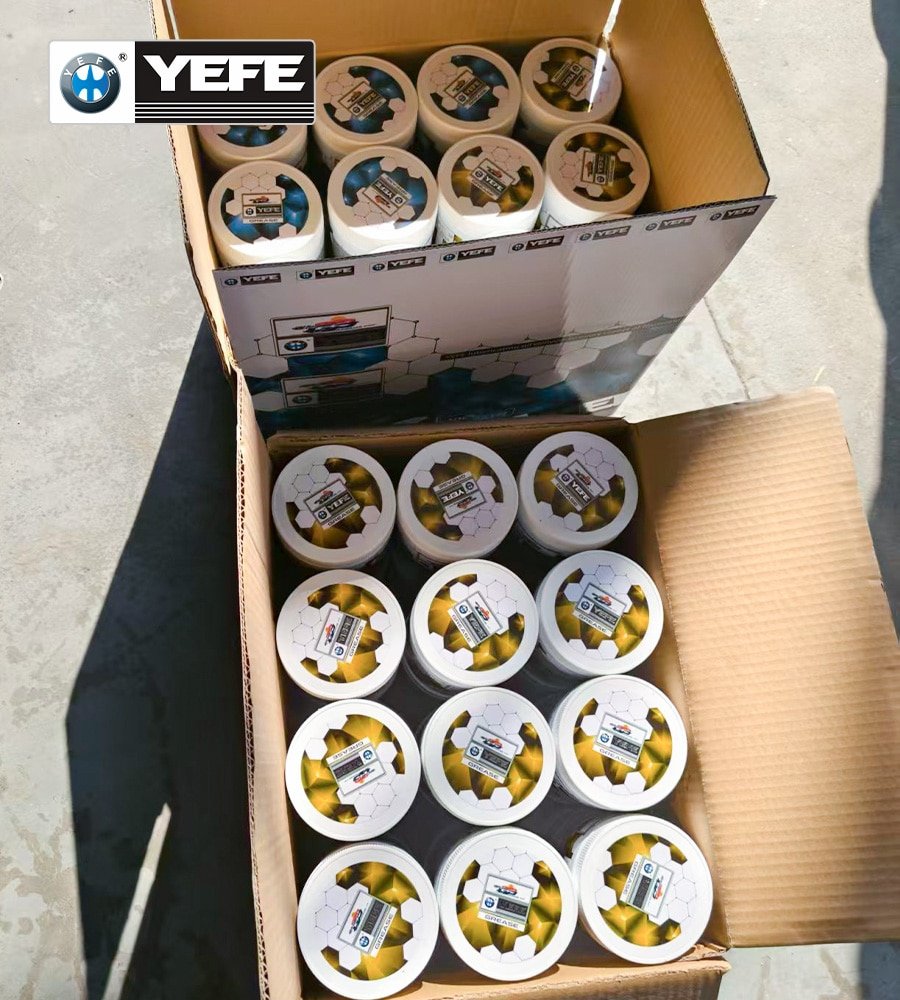
Trends in packaging go green: Recyclable HDPE using 30 cm of post-consumer recyclable material and biodegradable additives reduce plastic waste. Lightweight drums decrease the freight emissions by 10-15 percent and the smart QR labels allow tracking the factory to the user.
Supply chains incorporate blockchain to have a transparent track and reduce fraud within the territories such as Africa. YEFE provides shipment ready eco-packaging, namely, tamper-proof seals and labels in more than one language, simplifying logistics worldwide.
Market Shifts — Regional Demand Patterns for 2026
The regional differences influence the development of lubricants as the largest volume is expected to grow at 5-7% CAGR in Asia-Pacific due to industrialisation in China, India and the ASEAN. There is a boom in the demand of OEM private labels in motorcycles and EVs.
Europe underlines carbon-neutral formulations in Green Deal with half of sales being eco-certified. Synthetic oil and gas heat resistant is targeted in the Middle East whilst African region is targeting infrastructure lubricants through distributor deals. In the Americas, EV fluids and automation oils used in industries are predominant.
| Region | Growth Focus | Dominant Trend |
| Asia-Pacific | Volume growth | OEM private label expansion |
| Europe | Regulation | Carbon-neutral formulations |
| Middle East | Climate adaptation | Heat-resistant synthetics |
| Africa | Infrastructure | Distribution & training |
| Americas | EV transition | E-fluids & synthetics |
The EV & & Electrification Impact
The increased EVs lead to the increased demand of high thermal conductivity and dielectric stability e-fluids as an alternative to old engine oils. In 2026, EV lubricants may have taken 15 percent of the market, with the target being gear oils and battery cooling coolants.
Multi-functional oils fill the gap between hybrids and multi-purpose oils. YEFE has diversified to these, developing low-viscosity synthetics to lower drag and have longer life cycle on electrified systems.
Innovation Ecosystem — Partnerships and R&D Collaboration
The power of cooperation: Lubricant companies connect with additive suppliers, and nanotechnology wear resistance institute. Artificial intelligence platforms accelerate the development, simulating formulas in a matter of days.
The promotion of eco-innovation is enhanced by the incentives provided by governments such as green subsidies in China. YEFE is focused on the joint ventures where they come up with bio-based prototypes that are sustainable in the market.
Strategic Insights — How Manufacturers Can Stay Ahead
To succeed, invest in digital transformation of agile production and adaptive formulations R&D. Embracing ESG measures-measuring emissions every quarter. Develop adaptable OEM programs to do localized branding, and educate distributors on eco-benefits.
Pro Tip: it is not just chemistry that matters in innovation, but rather, it is about linking sustainability, technology, and market knowledge as a single ecosystem. Pay attention to collaborations to co-create solutions region-specific.
Future Outlook — The Decade of Smart & Sustainable Lubricants
In 2026, the lubricant industry will be vastly different in many ways, including cleaner, smarter, and more interconnected. EVs are changing the portfolio and sustainability is making decisions and therefore manufacturers who adopt these trends will be at the forefront.YEFE brings itself forward to the frontline with smart QC and sustainable base oil as well as eco-packaging to international partners. Sustainability is not only the future of lubrication but it is the pillar of performance.