
The issue of long-term engine protection is much more significant than the first-impression performance results since engines become worn compared to tens of thousands of kilometers. Where short-term tests guarantee that a given oil has met the minimum requirement in new-engine specifications, the ultimate test is the real-life durability of the protection in relation to its performance under the conditions of heat, load, contamination, and long usage.
Most users are of the understanding that as long as there is no difference in the viscosity grade and API rating of two oils, they must offer the same protection in the long-term. As a matter of fact, long-term protection of engine is based on stability of the formulation, rather than adherence to minimum standards. Variations in base oil quality, additives in selection and the overall balance result in high level of variation in the performance. Our choice of engine oil solution in different vehicles is designed to help you locate those lubricants that match your engine type and operation specifications. explore our engine oil solutions for different vehicles.
What Engine Oil Formulation Really Includes
Engine oil formulation refers to the careful mixing of a base oil with a combination of a performance additive package which together with the base oil is mixed in relatively specific proportions to produce desired property characteristics.
The base oil (usually 70-90% of the end product) is the main carrier that provides base lubrication. The remaining percentage is formed by additives, which add or inhibit some attribute: anti-wear agents create protective coating, antioxidants slow-down corrosion, detergents keep surfaces clean and dispersants keep the contaminants in suspension.
The ability of formulations to interact and become stable over time is what distinguishes high-performing formulations not the presence of these elements per se. Lack of balance causes a quick additive wear off or breakdown of base oil whereas optimized formulations retain protective properties within the service interval.
The Role of Base Oils in Long-Term Engine Protection
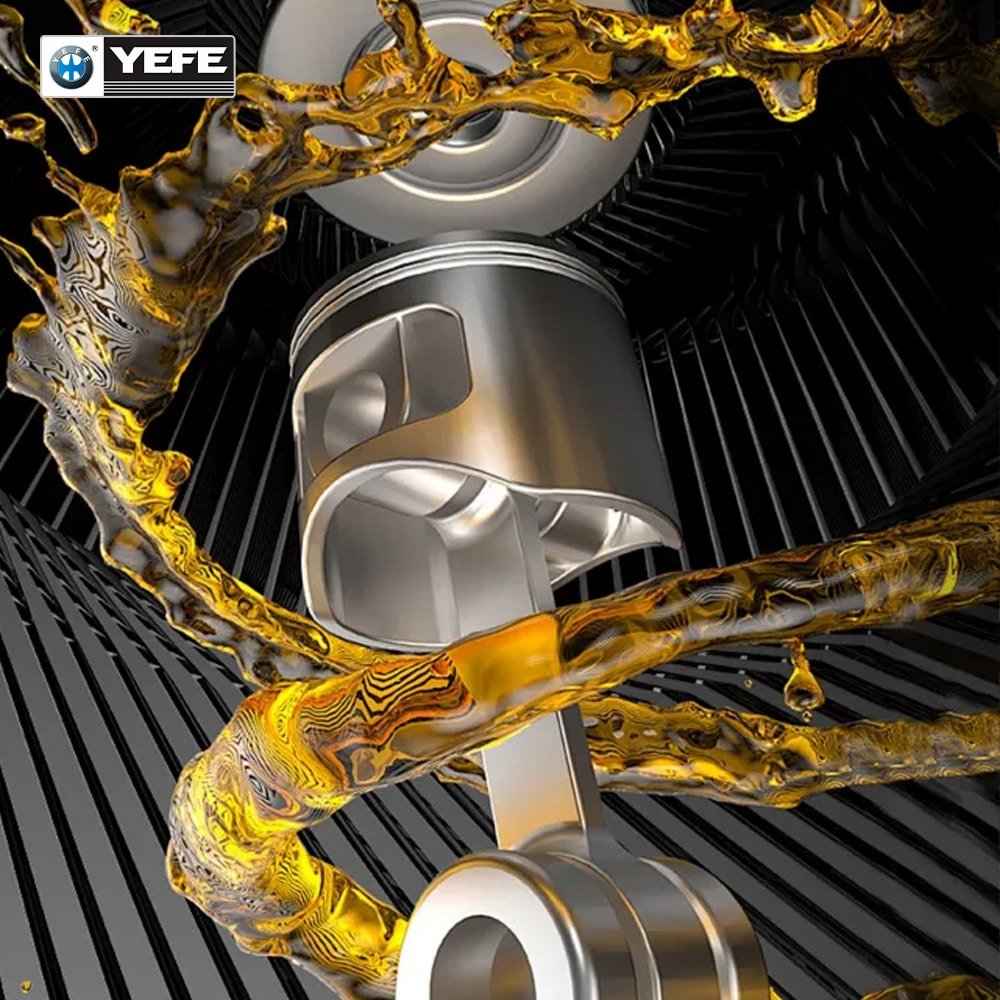
The quality base oil is the system cornerstones of the longevity of engine protection since it is a direct measure of the stability of the molecules to thermal and oxidative effects.
The better quality of base oils and especially that with consistent molecular structures (such as the advanced synthetics) are of lower volatility thus there is reduced evaporative loss at high temperatures. They are also less resistible to oxidation and this lowers the development of acids, sludge and varnish that may degrade the lubrication as time progresses.
Base oils with high intrinsic lubricity and shear resistance are useful in film strength, which is the property of base oils to protect a film between the parts in motion. Poor base stocks can thin away or form weak films as molecules disintegrate faster when operating in long mode.see our guide to base oil categories.
How Additive Chemistry Supports Long-Term Wear Protection
Additive chemistry offers the active defense processes that will push engine life much further than base oils could when used on its own.
Boundary lubrication conditions address the problem of wear by reacting anti-wear additives, which include zinc dialkyldithiophosphate (ZDDP), with metal surfaces to form low-friction phosphate coatings to avoid direct contact and decreases wear. Antioxidants counteract free radicals that are generated upon the oxidation process, postponing the process of chain reactions leading to the thickening of the oil and the formation of deposits.
These additives wear off slowly on executing their duties. The package of the well-made oil is balanced to the projected service life duration so that protection is offered up to the next change. In weaker systems, stricter depletion exposes the surfaces particularly in high-heat or polluted circumstances. In order to learn more about these processes, read about why additive chemistry matters for engine protection.
Formulation Balance and Its Impact on Oil Degradation
A test of a formulation is how base oil and the additives will combine with each other to resist degradation under realistic working conditions.
Heat increases oxidation rate and acceleration, shear forces degrade viscosity modifiers and contaminants, such as soot or water, promote breakdown. Balanced formulation has the stability of viscosity, acid accumulation and deposition even during worsening conditions. There are trade-offs: stress on extreme wear protection may harm oxidation resistance unless this is regulated.
When interrelated parts are involved, the oil is still able to lubricate, cool and clean during the long periods without much build-up of wear.
Why Some Engine Oils Fail Prematurely Despite Meeting Standards
Even the oils that pass the API or other specification tests may degrade at a rate that is lower than anticipated since test conditions are usually not a complete replication of the harsh conditions in the real world.
Oxidation hardens oil and creates varnish; shear decreases the viscosity and strength of the film, contamination leads to the introduction of abrasives or acids that saturate the reserves of the additives. Low-margin formulae, which are only compiled to satisfy minimum criteria, are not as robust as high temperatures or long drains, or dusty conditions. To understand such failure modes, see how engine oil formulation affects wear protection.
Comparing Long-Term Protection Across Different Formulation Strategies
The emphasis of the strategies of formulation differs and results in an apparent divergence in the durability.
| Formulation Focus | Short-Term Performance | Long-Term Protection | Typical Cost Level |
| Cost-optimized | Meets basic specs quickly | Faster degradation, earlier wear | Low |
| Balanced formulation | Stable initial performance | Consistent protection over interval | Medium |
| Durability-focused | Strong across tests | Extended protection, minimal breakdown | Higher |
Cost-optimized oils focus on certification passing being on the lowest cost and can lead to thinner additive margins and faster property loss. Symmetrical techniques provide dependable life cycle of service life on the majority of applications. Formulations based on durability make the investment in high-quality base stocks and powerful additive systems, which maintain the production of protection significantly longer in harsh conditions.
Why Long-Term Protection Matters More for Modern Engines
Engineering trends particularly increase the amount of stress on lubricants that is demanded by modern engines as a form of long-term protection.
Reduced tolerances in parts such as bearings, pistons and variable valve timing systems provide reduced scope of lubrication error – any drop in film strength would lead to instant destruction. Turbocharging and downsizing increase operating temperatures, which in turn increases the rate of oxidation and the use up of the additives. More recommended drain periods demand oils in order to sustain performance without frequent replacement.
It is necessary because of the following factors: oils should not become thickened, sheared, and should not deposit during the long service of the precision component so that wear becomes accelerated.
Common Misunderstandings About Engine Oil Formulation
A number of common assumptions are causing inefficient oil decisions.
The theory of Higher viscosity equals better protection ignores that a modern engine is built to run on a distinct set of viscosity values of its lubricant-thicker lubricants cost more and promote pumping loss, cannot flow through tight clearances-through sure means that lubricant circulation in the engine is phased out.
Additives last infinite is an optimistic theory about depletion: anti-wear and antioxidant packages both use up resources as they are used and once no longer available, they are getting less and less protection.
The slogan of guaranteeing durability, by API and its equivalents, does not mean the minimum performance in new oil, but rather its behavior in different conditions over a long period.
Conclusion — Formulation Quality Defines Engine Protection Over Time
Finally, the quality of engine oil formulation, rather than the viscosity grade or specification compliance, defines the degree to which an engine is prevented against wear, deposits and corrosion over the service period. Formulations often create uniform protection despite the incursion of challenging conditions by making stability of base oils, additive durability, and balanced interactions important as conditions are considered difficult to prevent.
The engine longevity differences are easier to explain by this formulation-first point of view and lead to more rational choices regarding the choice of oil and the period of its use. It also preconditions the knowledge of the degradation processes and the importance of regular oil analysis to lengthenet the persistence under the components.