
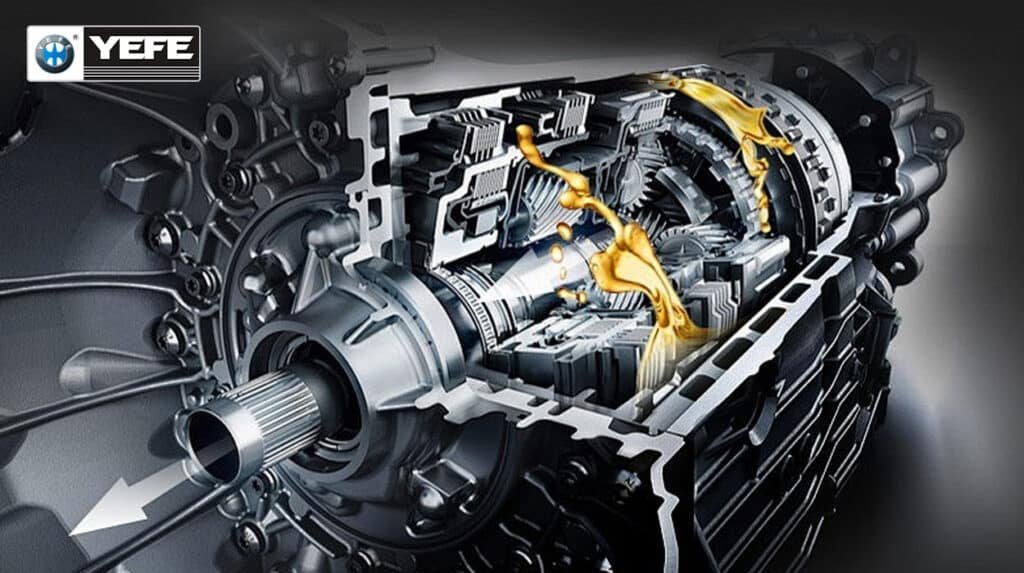
People think that any engine oil that passes through API or SAE specifications will automatically give high performance and durability. Companies often give higher protection claim labels and claims but the specifications are established to meet minimum levels in order to be approved. In fact, engine oil quality is not only confirmed by standardized laboratory tests but equally by standardized performance tests that are used to determine the behavior of oil under normal operational conditions. This testing reveals frailties that mere compliance may conceal and is concentrating on the accuracy of viscosity and oxidation stability, as well as wear protection – the three pillars that define both whether an oil actually protects an engine under extended usage.
It is how engine oil passes standardized tests of viscosity, oxidation and wear protection which identifies the quality of an engine oil rather than labeling and claims. Passing a specification shows that it meets the baseline but that real testing shows uniformity, reproducibility, and that it can withstand degradation. To the distributors, importers and OEM buyers analyzing the suppliers, these evaluation techniques give them the clarity about long term reliability beyond documentations.
What Engine Oil Quality Testing Actually Evaluates
True quality testing exceeds compliance checks to determine actual performance under real required stress. Specifications are used to assure that a given oil has minimum requirements in such categories as API SN or SP but do not assure consistent behavior with batches or extended use.
The testing puts more emphasis on repeatability i.e. they should be reproducible in certified laboratories and the mechanisms of failure i.e. thickening, deposit formation, and surface breakdown. These tests can be used to isolate oils that only pass through the test and separate those with long-lasting protection by keeping the engine conditions realistic.
To users wishing to test various formulations, reliable automotive engine oil solutions often undergo extensive validation to confirm performance across viscosity grades.
Viscosity Accuracy Testing — Ensuring Proper Oil Flow
The bottom of the lubrication is the correctness of viscosity because improper flow will result in poor film strength or high drag. The tests ensure that the oil does not change the desired grade under different temperatures and shear.
Kinematic viscosity through ASTM D445 ascertains the flow resistance at 40-o C and 100-o C, which defines the SAE grade (e.g., the 30 in 5W-30). Low-temperature dynamic viscosity The Cold Cranking Simulator (ASTM D5293) is used to simulate cold-start operations when assessing dynamic viscosity, whereas high-temperature high-shear (HTHS) viscosity (ASTM D4683 or D5481) is used when evaluating behavior under operating conditions.
Oils should remain within narrow ranges to avoid such problems as low pumpability or film ruptures. Any deviations are an indication of formulation inconsistencies or issues with the quality of the base oils.
To understand further how to keep the best flow within the range of temperatures, refer to this context of viscosity accuracy.
Oxidation Stability Testing — Measuring Oil Life Under Heat
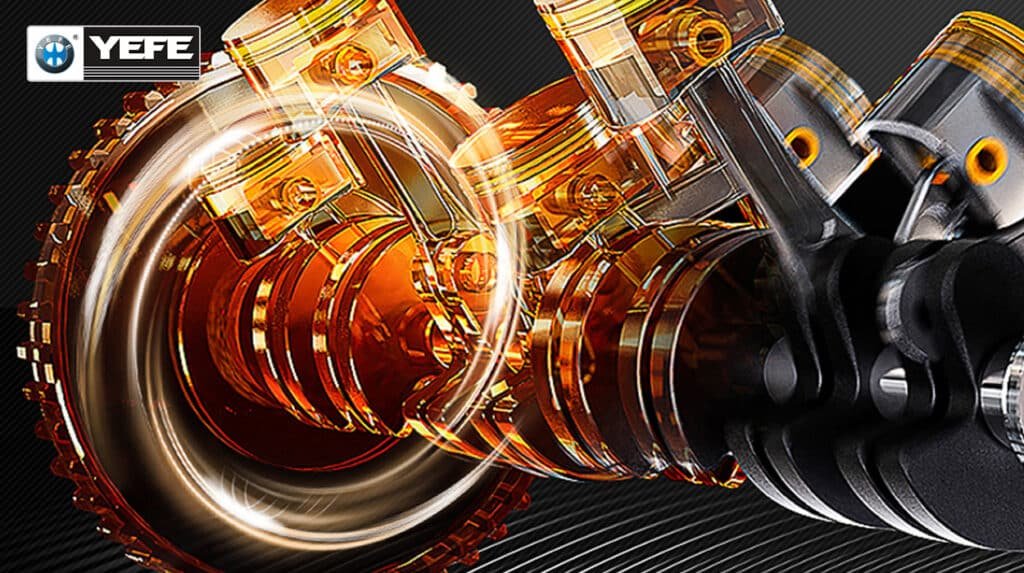
Oxidation stability is used in determining the length affected to the oil against thermal and oxidative disintegration, which forms acids, sludge, and varnish that reduce engine life.
Heat increases oxidation and is depleting additives and thickening the oil. They are simulated by accelerated tests, such as the Rotating Pressure Vessel Oxidation Test (RPVOT, ASTM D2272), which pressurized oil with oxygen and measured the time to pressure drop, and Turbine Oil Stability Test (TOST, ASTM D943), which bubbles oxygen into samples with water and metals and monitored the increase in acid number.
Such techniques measure degradation resistance or the stronger the result, the higher the quality of antioxidant packages and the base stock. The poor stability results in deposits and corrosion throughout the longer drain intervals.
To learn more about this critical part, read why oxidation stability testing directly impacts long-term reliability.
Wear Protection Testing — Evaluating Surface Protection
Wear protection is used to avoid metal contact in boundary lubrication regimes, loads are beyond full-film but are not quite full-contact. Anti-wear tests determine the efficacy of anti-wear additives in surface damage inhibition.
The Four-Ball Wear Test (ASTM D4172) spins a loaded ball on three motionless ones, and records the scar diameter post sliding contact- smaller scars prioritize to excellent film strength. Engine sequence testing Engine sequence testing such as Sequence IIIH or IVB assesses real-world loads on such components as camshafts and valvetrain during high load.
Good oils do not form pits despite altered conditions, where reduced scoring and longer component life is achieved.
The information about the base oils that would affect this outcome can be found in this summary wear protection performance tests for engine oil.
How Engine Oil Quality Is Tested in Practice
Quality testing is done in certified laboratories under controlled conditions by means of precise repeatable protocols.
ASTM and other standards control calibration of equipment, preparation of samples and interpretation of results. Repeated trials also guarantee statistical assurance, whereas blind testing removes bias. Outcomes are checked against limits but trends are significant, small deviations can be an indicator of batch variability.
Data interpretation does not come in isolation: successful outcome in one of the tests should be congruent with similar data to make a comprehensive judgment.
In this discussion of how engine oil quality is tested, practical knowledge is provided on sourcing issues, are covered in this discussion on how engine oil quality is tested.
Connecting Test Results to Real-World Engine Protection
Correlations Laboratory results have been found to have very strong correlations with their field performance when they are operating conditions that reflect all the operating capacities of the engines, yet a single bench test does not correspond to all the engines.
A comprehensive analysis that incorporates several tests, such as viscosity and heat and oxygen oxidation, and wear under load gives an overview. Using a single measure would mean that they fail to bring weaknesses to attention, characterized by good cold flow, but quick thickening.
Existence in a variety of climates and duty cycles are better predicted when using holistic testing.
These results are directly related to the science of protecting surfaces read more in this article about engine oilon engine oil quality testing.
Testing Requirements for Private Label and OEM Engine Oils
The buyers in the private label/OEM purchasing segment require quality that is verifiable by subjecting suppliers to testing.
The concept of batch consistency has to be monitored constantly; and traceability of base stocks to the finished product must be complete. There are the certificates of analysis of major parameters such as viscosity, oxidation, and wear, which are documented.
Independent lab reports, and support audits should be provided by the suppliers as evidence of compliance.
This guide clarifies the engine oil viscosity and oxidation examination in the case of private labeling engine oil viscosity and oxidation testing in private labeling contexts.
Summary Table — Key Engine Oil Quality Tests and What They Measure
| Test Category | What It Measures | Why It Matters |
| Viscosity accuracy | Oil flow control at various temperatures and shear rates | Proper lubrication, pumpability, and efficiency without excessive drag or starvation |
| Oxidation stability | Resistance to breakdown from heat and oxygen | Extended oil life, reduced sludge/varnish, and maintained cleanliness |
| Wear protection | Surface protection under load and contact | Engine durability, minimized metal wear, and component longevity |
Common Misunderstandings About Engine Oil Quality Testing

Another common misperception is that to meet API or SAE specification is a guarantee of the highest quality. Minimums are specified; there are numerous oils that pass but differ greatly in reserve performance.
The other misjudgment presupposes that one test is in general excellence. Excessive viscosity test does not imply any resistance to oxidation or wear-full-testing is needed.
Last but not least, there are those who feel that lab tests have little similarity in real use. Not only according to acceleration, standardized procedures are supposed to make a correlation with field data by means of engine sequences and real-world validation.
Conclusion — Quality Is Proven Through Testing, Not Claims
The quality of engine oil is derived based on the evidence-based laboratory analysis in terms of viscosity, oxidation, and wear size. The standardized tests also give objective evidence of performance segregating sound formulations and those that are based on simple compliance.
The multi-dimensional measures provide a safeguard against typical failure modes, which aid the creation of improved sourcing and use decisions. With the changing engine requirements, testing is known to be the sure way to reliability and effectiveness.