
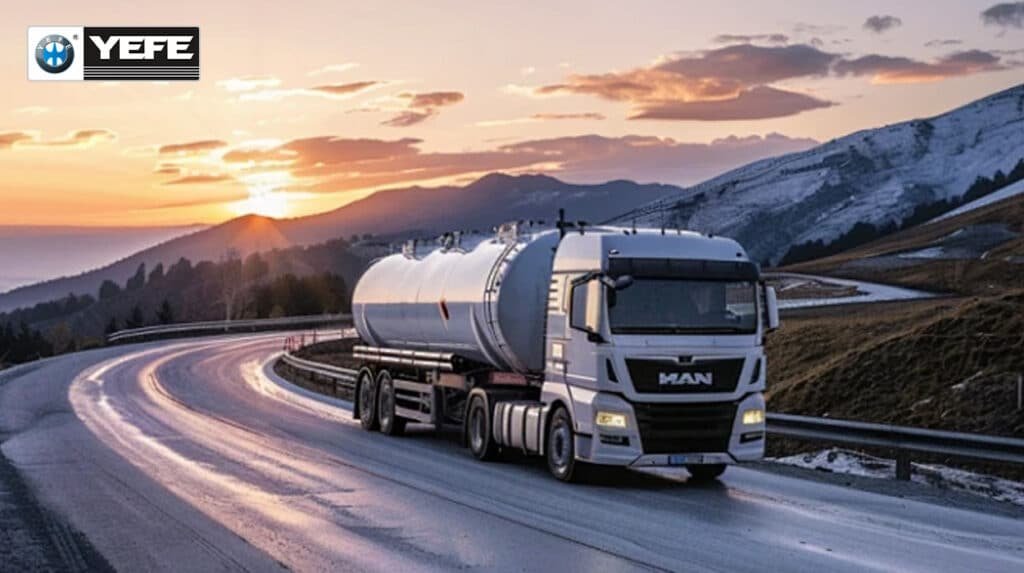
Commercial transportation is among the harshest in the operation of heavy-duty trucks. Their drive train and axles are used in extreme torque, payload and long duty cycles that create intense pressure, heat and shear forces. These systems are not controlled by the role of gear oil to reduce friction, but rather to ensure a protective shear at very high levels of boundary lubrication, withstand oxidation and wear of hypoid gears and bearings.
The wrong choice of gear oils may seriously reduce the life of axles and raise the maintenance expenses in the heavy-duty trucks. Most operators use any GL-5 type of gear oil and neglect consideration of other characteristics of viscosity, load carrying capacity, and duty cycle tend to occur, which sometimes results in premature failures such as pitting, scoring or bearing damage. To ensure a high-level of trustworthy work, heavy-load trucks demand gear oils, specially created to endure heavy workloads, prolonged workdays, as well as severe working environments.
The alternatives to consider when making this choice include known solutions heavy-duty gear oil designed for commercial vehicle applications.
Why Heavy-Duty Trucks Place Extreme Demands on Gear Oil
The streps of heavy-duty truck drivetrains are much bigger than in passenger cars or light trucks. The pressure on contacts in hypoid gears in between the forces of sliding and rolling can be many times greater than 20,000 pounds per axle.
The sustained operation over long distances causes a permanent accumulation of heat, whereas the frequent transient operation at full loads creates shock loading which may shear the lubricant film. These demands are further complicated in off-highway or construction hauling because other variables such as dust ingress and fluctuating speeds are involved. Gears will undergo micropitting, scuffing and premature wear in the absence of proper protection that incurs costly downtime and rebuilds.
Key Factors That Determine Gear Oil Selection for Trucks
The first step in the selection of gear oil is to know the particular stresses on the driveshaft. These are the load intensity, the operating temperature range and the type of duty cycle.
The intensity of the load directly proportions to the desirable extreme pressure (EP) performance, i.e., high gross vehicle weight involved in using oils of strong additive packages to avoid metal-to-metal contact. Viscosity is dependent on operation temperature: a too thin film at high temperature lowers its strength and causes high thick viscosity at low temperature, which hinders startup flowing and lubricating the required parts. The selection is further narrowed by duty cycle and speed, with flat road test and urban delivery at stop-and-go different to rocky road test and high frequency torque reversal.
The operators of the fleet ought to read OEM specification and compare the oil to the real world to align the oil with these variables.
Choosing the Correct Viscosity Grade for Heavy-Duty Trucks
The basis of the performance of gear oil under load is viscosity. It fixes the thickness of the film that should be high enough to support gear surfaces during high pressure operation without causing the drag which ultimately slows down efficiency.
Multi-grade oils have been used in heavy-duty applications to compromise cold-flow characteristics and high-temperature stability. A smaller number of the “W” (e.g 75W or 80W) will be guaranteed to be pumpable and protective in cold start then higher the second number (e.g. 90 or 140) will guarantee strength of the film at operating temperatures of 100-150CAC and above.
Excessively low viscosity may result in poor film behavior when heavily loaded causing wear, whereas excessively high viscosity may elevate fuel consumption and cause additional heat due to churning. The grade that produces the best film thickness to efficiency is the right grade response over a range of temperatures as anticipated.
To obtain more information on the usual varieties,see our guide to 80W-90 and 85W-140 gear oils.
API GL Performance Requirements for Heavy-Duty Truck Axles

The bulk of heavy-duty truck axles also use API GL-5 performance on the basis of the extreme sliding contact in hypoid gears at high torque and load.
GL-5 oils have larger amounts of EP additives (usually sulfur-phosphorus compounds) which create protective films on gear surfaces during boundary lubrication to inhibit welding and scoring. These additives imbue the load carrying ability needed to curb the failures in massive loaded differentials.
Though GL-4 oils are applicable to some synchronized transmissions with yellow metals, GL-5 is applied to truck axles in which thermal stability and oxidative stability is important. Always check the actual OEM specification, whether it uses ECU5074.1 or ECU5074.2 of some other standard, which might be that it has happier thermal life.
Compare the specifics of the differences in greater detail with our API GL-5 performance.
Common Gear Oil Grades Used in Heavy-Duty Trucks
The table given below is a summary of the commonly used grades and their common uses in heavy-duty trucking:
| Gear Oil Grade | Typical Application | Load Capacity |
| 80W-90 | Medium-duty trucks, some line-haul | High |
| 85W-140 | Heavy-duty axles, severe service | Very high |
| 75W-140 | Modern HD trucks, extended drains | Very high |
These multi-grades offer all-year-round performance and synthetic formulations are frequently chosen as being fuel-efficient and of longer life in extreme environments (75W-140).
Operating Conditions That Influence Gear Oil Choice
The base recommendation is usually modified by the real-world operating conditions.
Mountain paths and routes that have a long downhill stretch create excessive amounts of heat in engine braking and gear loading, which prefer higher viscosity or material thermal stability. Even the ambient temperatures (which are low in desert or tropical climates) cause faster oxidation hence oils with better additive reserves are selected.
Stop and go duty cycles also raise the amount of shear and contamination whereas continuous highway operation allows a little lower viscosities to be slightly more efficient. Never leave out seasonal differences and climate in the region when making final choices.
Service Intervals and Gear Oil Change Considerations
As time goes by, gear oil is degraded due to the oxidation, thermo-degradation, water or debris contamination, and wear traces.
In high-duty trucks, such causes as high temperatures of operations, aeration, and long idling reduce the useful period. Frequent evaluation of oil condition including checking of viscosity, additive wear and tear, and insoluble content would assist in deciding on the best drain periods as opposed to basing it on only mileage or hours.
Active modifications stop the formation of sludge and ensure safety. To obtain some practical advice, refer to our article on truck gear oil change intervals.
Signs That a Heavy-Duty Truck May Be Using the Wrong Gear Oil
Major failures can be avoided in the early stages of problem identification. Common indicators include:
- Over-gearing squeal or scream particularly when under a load indicating poor strength of films or EP protection.
- Covering up of overheats, which are humidly experienced as high costs of housing or detected through infrared systems.
- Metallic particles accelerate the wear exhibited by the oil itself or on magnetic plugs under drain conditions.
- Leakages or foaming of seals- owing to the incompatible additives.
These can be dealt with early by replacing the oil with a better suited one to resume operation and prevent unnecessary expenses on repairs.
Common Mistakes When Selecting Gear Oil for Heavy-Duty Trucks
There are multiple misconceptions which result in inoptimal decisions:
- It is safe to assume greater viscosity, which can only boost parasitic losses and heat without enhancing protection in a base formulation which does not have proper EP performance.
- Assuming that all GL-5 oils act the same- There is a wide difference in the quality of products based on the additives, the quality of base stock, and the shear stability.
- Ignoring the effect of gear oil on the fuel economy -poor grade heightens losses into churning impacting the overall operating cost in the long-haul fleet.
Correspondence of oil to the real world helps to evade such pitfalls.
Conclusion — Heavy-Duty Gear Oil Selection Is a Risk-Control Decision

The decision of gear oil in heavy-duty trucks is basically one of risk management. Application specific selection Application-optimized viscosity, API GL performance, load requirements, and operating environment have a direct impact on axle life/lasting operation, downtime and overall cost of ownership.
The operators of fleets that put these reasons on top of generic assumptions create their drivetrain that is more reliable and their long-term costs are lower. Developments in the formulations make it necessary to keep abreast of the performance characteristics to make the necessary decisions through maintenance.