

The labels launched on engine oils include vital technical information that has a direct impact on engine performance, protection and life. A wrong interpretation of these labels might cause the choice of an incompatible oil, which will lead to insufficient lubrication, wear, or even engine damage. Elements on the label are not all equally weighty, as some give standardized, critical specifications, whereas others are informational or marketing.
Most drivers are only interested in branding, colorful statements, or empty expressions such as premium or additional protection, but they do not pay much attention to the standardized technical details that actually constitute the appropriateness. The engine oil labels need to be read correctly according to specifications and standards but not according to the description on the surface.
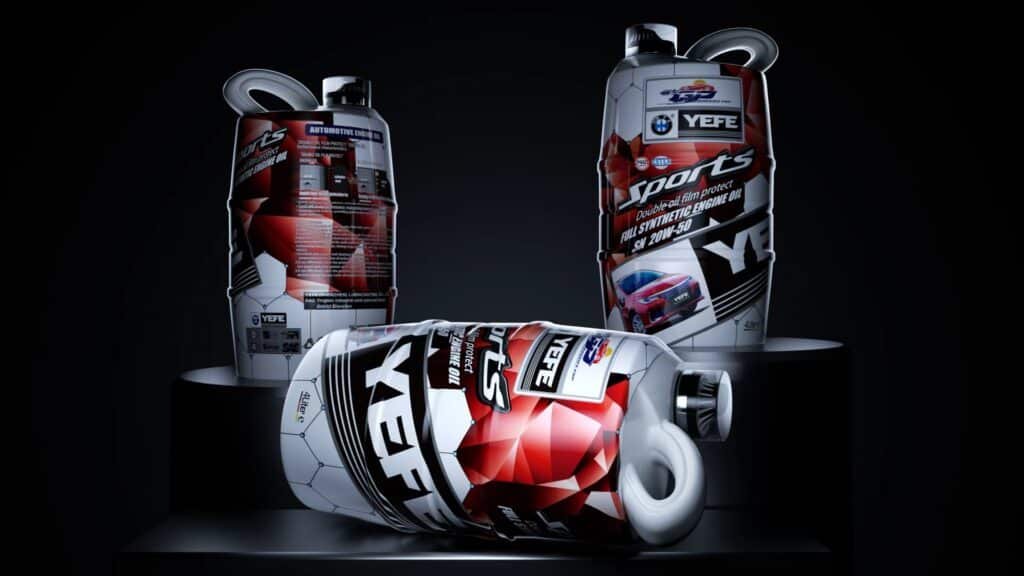
Key Information Typically Found on Engine Oil Labels
The labels on engine oils are a combination of the required technical requirements and additional information. The best information is the one adhering to the industry standards as stipulated by other bodies like SAE and API and thus is consistent across the manufacturers.
The main factors to be shown are as follows:
| Label Element | What It Indicates |
| Viscosity grade | Oil flow behavior across temperatures |
| Performance standards | Minimum performance requirements (e.g., API, ILSAC) |
| Oil type | Base oil classification (conventional, semi-synthetic, fully synthetic) |
| Application notes | Intended engine usage or vehicle types |
These are printed on either the front or the back of the container, usually in a standardized format, such as the API donut symbol or SAE viscosity notation. By knowing them, it is possible to distinguish between factual information and general descriptions.
Understanding Viscosity Grades on the Label
The most noticeable specification on an engine oil label is generally the viscosity grade, and is often written in large characters at the top or on the front of the label. This SAE (Society of Automotive Engineers) grade – 5W-30 or 0W-20 – is the description of the flow properties of the oil at low and high temperature.
The format is in a multi-grade format where the number before the W (winter) represents cold-temperature performance (lower numbers indicate improved flow on cold starts) and the number after the W represents viscosity at operating temperature (larger numbers indicate that the oil is thicker at operating temperatures). An example is that a low cold number enhances pumpability in low temperature winter weather resulting into less wear during the start up process and the hot viscosity helps to maintain enough film strength when the engine reaches normal operating temperatures.
Viscosity has a direct impact on engine compatibility. An excessively thin grade may affect functionality during load or heat conditions whereas an excessively thick grade may cause obstruction to flow, generate more fuel, or reduce the start-up speed of lubrication. Never exceed the viscosity to its specification in the owner of a vehicle manual.
Interpreting Performance Standards and Certifications

Performance standards and certifications offer objective measures of the oil that the oil is of minimum standards in protecting the engine, control of wear and compatibility. They are represented as codes as API SP, API CK-4, or ILSAC GF-6 (which sometimes appear within the usual API “donut symbol on the label.
These are standards of proven performance after undergoing strict tests and not excellence over other oils. They specify certain degrees of resistance to oxidation, deposits, wear, etc. with newer ones typically backward compatible (e.g., API SP satisfies or beyond the requirements of previous SN or SM).
| Standard Type | What It Communicates |
| API service category | Engine performance level (e.g., SP for gasoline, CK-4 for diesel) |
| Manufacturer approvals | Engine-specific compatibility (e.g., dexos, VW, MB) |
| Compliance markings | Regulatory alignment (e.g., ILSAC for fuel economy) |
Adhering to standard to engine requirements assures good operation, particularly in the modern engines having advanced emission systems or turbochargers. It is necessary to follow the category as advised in the vehicle manual.
What Label Claims Do — and Do Not — Mean
Engine oil labels have both marketing- based statements and technical specifications. By differentiating between them, it is possible to avoid misunderstanding.
Technical specifications (viscosity, API category, approvals) are standardized, tested and verifiable. Claims in marketing, however, tend to claim such things as maximum protection, longer engine life, or advanced formula, which do not occupy or supersede standards.
- Arguments over synthetic refer to type of base oil but it does not warrant performance that is not matched to the API/ILSAC standards.
- Titles such as high mileage or energy conserving will show formulation emphasis, but still have to conform to the performance category that it is supposed to.
- Slangs like premium or ultimate are non technical and are not used to refer to high level of protection or compatibility.
Check the wording- do not depend on description but on standardized codes.
For a wide selection of labeled engine oil products that clearly display these specifications, explore options tailored to various engine requirements.
Matching Label Information to Your Engine and Usage
When choosing the correct oil, it has to do with matching the information on the label to your particular engine design, conditions of use as well as environment.
Recent engines may indicate fuel efficiency and emission regulations using lower-viscosity grades, whereas older or high-load engines may have to use higher viscosity to ensure film strength. Oils that ensure stability during heavy duty, towing or extreme temperatures are required.
The climate is also important, colder climates have better winter grades to start, whereas hot climates or hard services have better grades that thin gradually. The pattern of driving (short trip, highway, stop-and-go) affects the needs too, as do such factors as turbocharging and direct injection that raise thermal and shear requirements.
Never just match the label with what the vehicle manufacturer recommends but check with it to be compatible and protecting.
Common Mistakes When Reading Engine Oil Labels
Poor interpretation labels are usually based on the importance of seeing superficial but less important factors compared to standardized specifications.
- Concentrating on branding or marketing statements, as opposed to the viscosity and performance specifications.
- Misinterpretation of viscosity values (e.g., having a higher value implies that the protection will be better no matter what the engine needs).
- Disregard or inappropriate performance guidelines, resulting in insufficient shielding in the emission systems or turbocharged engines.
- Using the assumption of suitability of synthetic only without API/ILSAC or OEM approvals.
- Ignoring backward compatibility Newer standards are at least as well-protected against older requirements.
To prevent these errors, it is necessary to put technical data above assumptions.
Conclusion — Engine Oil Labels Require Informed Interpretation

The labels on engine oil are intended to convey the necessary technical information. Proper interpretation guarantees compatibility of oil, dependable protection and knowledgeable decisions regarding maintenance.When users concentrate on the viscosity grades, performance criteria, and application specifications but not surface impressions, they would be able to make accurate choices that would help the engine to sustain its health under different conditions. Technical knowledge is the basis in good lubricant selection.