
To engine oil distributors, importers, and wholesalers, it is much more than a quality product or supplier relationship question of whether to source the OEM/private brand or continue using the established branded engine oils. It has a direct influence in the pricing authority, profit margin, potential in brand building and scale in competition markets. The issue is that many distributors continue this decision-making process basing it more on the price per unit or the availability in the first place and ignore the impact of the model of supply on their overall business direction.
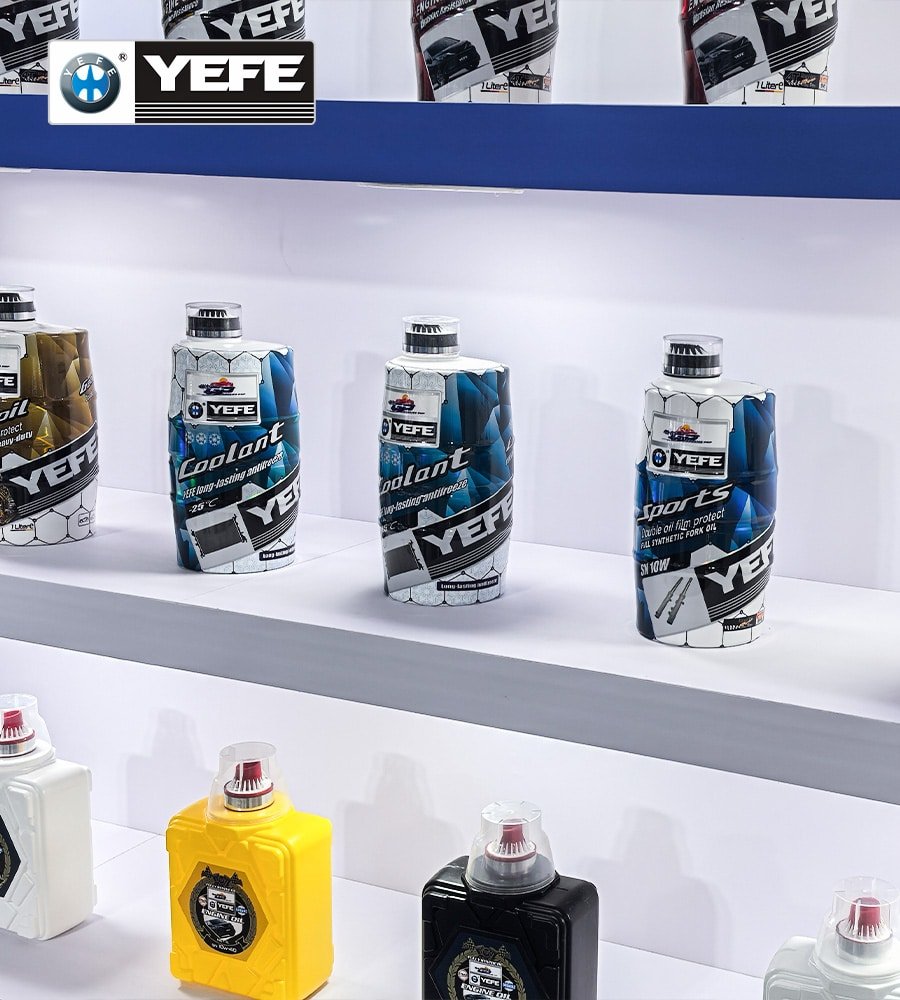
The wrong engine oil supply model may restrict a distributor in flexing prices, controlling the brand and being able to grow the long run in the market. An option consistent with this is either to take a venture to private label engine oil or to take advantage of branded lines, which are a beneficial sustainability of any product in terms of margin and customer loyalty to the product in different regions with different price sensitivities and brand preference.
Whether you are in the emerging markets in Southeast Asia, Africa, Middle East or in the more mature sectors, learning such models will save you the expensive repositioning of later. Distributors that come to look into our full range of engine oil products to see practical options that fit both approaches.
What Does OEM / Private Label Engine Oil Mean?
OEM (Original Equipment Manufacturer) is the term and condition of using lubricants that are manufactured by a manufacturer and retailed in the name of the distributor or the importers own brand.
Here, the manufacturer has the responsibility of formulation, blending, testing to API/ACEA standard, and filling, whereas the distributor manages branding, package design, labelling and positioning in the market. This makes the product story complete ownership whereby it can be customized to local climates, fleets of vehicles or price points. The producer is not the brand of the product but a production partner.
This approach is sought by many distributors as more differentiation and more independence, particularly in developing regional presence.
To get a more detailed specifications on the requirements to set it up, check our guide to private label engine oil.
What Defines a Branded Engine Oil Model?
A branded engine oil model refers to the sale of products produced and sold under the brand name of a renowned producer, e.g. the large world-known lubricants brands.
In this case, brand owner has place of control in the formulation, performance claims, marketing campaigns, packaging uniformity, as well as reputation on the international front. As most members of the channel, distributors are advantaged with established consumer and mechanic trust, national advertisements support and established specifications concomitant with popular vehicle warranty.
But this also comes with limitations: the prices are usually determined or influenced by the person owning the brand, the promotional contents are standard and the differentiation is subject to the full efforts of the manufacturer and not the local approach of the distributor.
OEM vs Branded Engine Oil — Key Differences Explained
A comparative analysis of the OEM/ private label and branded engine oil is best observed when considered at hedge business dimensions. It could be compared structurally as follows:
| Dimension | OEM / Private Label | Branded Engine Oil |
| Brand ownership | Distributor-owned | Manufacturer-owned |
| Pricing control | High (retail/wholesale sets retail) | It is limited (which is often controlled by the brand guidelines). |
| Margin structure | Flexible (greater potential following scale) | Fixed (determined tiers and break even) |
| Market differentiation | Experienced (catered to local demands, packaging) | Brand-dependent (depending on reputation in the world) |
| Scalability | Market-based (expand with brand development). | Brand-bound (linked to plan of manufacturers) |
Such distinctions contribute to the idea itself as to why numerous accomplished distributors opt to have long control over instant recognition. To gain a better idea of related questions see our discussion on the subject of private label vs branded engine oil.
Cost, Margin, and Control — What Distributors Often Overlook
Most distributors pay much attention to landed cost per liter and lose the larger financial structure of comparison of models.
In the case of OEM/private label, they involve initial costs of branding, package design and first MOQs, but higher gross margins are achieved below volumes that are already 20-40 percent higher than branded reselling, because of royalty fees eliminated by the middle layer. There are suppressed costs in branded supply like obligatory publicizing duties, limited discounting in promotions and reliance on the prices of the brand due to worldwide raw material fluctuation.
The pricing flexibility also enables the distributors of the private label to react more quickly to the local competition, cushion their margins in times of economic slowdown, and bundle related services without limitations of the brand.
Common Mistakes Distributors Make When Choosing OEM or Branded Oil

Among the most common mistakes is focusing on unit pricing in the short term instead of the total landed economics and strategic fit.
Distributors can sometimes leap into branded supply in order to get fast entry into the market only to experience margin compression once competitors undercut limitations or the brand increases prices. Others introduce their own brands prematurely without adequately testing them in the market hence slow inventory turnover and tied-up cash.
The other trap consists of under-estimating the costs of brand building-marketing, training the distributor, and point of sale material- as well as over-spinning on manufacturer support which may not be local. Overlooking such may drain profits at an unimaginable rate.
To have some real life examples of sourcing issues, read about distributor mistakes when importing engine oil.
How Market Maturity Affects the OEM vs Brand Decision
The issue of market maturity is a critical factor where either model works out better or not.
In new markets or where buyers are price-sensitive, preferring performance at price over prestige, such as some parts of Africa, south east Asia or Latin America, then the use of a private label brand will be quite competitive when confidence is built using a steady quality standard. Brand loyalty is not that strong and thus the distributors will benefit through customized viscosities and packages at affordable costs.
In the more developed markets with brands being highly brand conscious, branded oils result in better acceptance of the product and reduce the marketing risk, particularly when the entrants are new to the market or where the promotion budget is small.
Timing is important: too soon in a brand-loyal market, implementation of the private label will dilute adoption but in a price-driven one a delayed implementation would miss the window to increase margins. For regional guidance, explore understanding the trade-offs between OEM supply and branded engine oils.
When OEM / Private Label Engine Oil Makes More Sense
OEM/ private label luminaries are outstanding in areas where distributors would want to establish a long term equity in the market.
It is applicable to experienced importers who have existing customer bases (fuel stations, workshops, fleets) and would like to move out of their reseller role to a brand owner. Defensible positioning is provided through customization to the local conditions like high-heat stability in tropical climates or high-duty formulations in construction fleets.
In cases where growth goals consist of multi-country expansion or vertical integration (e.g. own retail stores), brand ownership will give the ability to set prices, aficionado schemes, and cushion against supplier changes.
When Branded Engine Oil Can Be the Improved Choice.
When Branded Engine Oil May Be the Better Option
New distributors, with limited capital to brand or in an industry with a very competitive mature segment enjoy instant credibility and minimum expenditure on marketing. Brand leverage is useful in getting huge fleet contracts or partnerships where the compliance on warranty and name recognition count.
It is also convenient in cases where the operational capacity revolves around distribution but not brand management and therefore a rapid scaling up of volumes can be achieved without a heavy initial investment.
How Distributors Should Evaluate Their Engine Oil Strategy
Always begin with a well-defined market analysis: price sensitivity, competitor environment, client categories (retail vs commercial), and growth outlook (1-3 years vs 5+).
Assess risk tolerance branded offers predictability but marginalized; private label has greater initial uncertainty but greater gains. Consistent with objectives: OEM is more appropriate than branded in terms of maximizing margins and offering brand control, whereas branded is more appropriate compared to OEM in terms of speed and low complexity.
Test small: a number of them start with a mix approach, combining both the approaches to collect data prior to making full commitment.
Conclusion — OEM vs Brand Is a Strategy Choice, Not a Product Choice
Finally, the difference between the OEM/private label and the branded engine oil decision is decided not by the fact one or another provides a better lubrication but by the way it suits better the company strategy. These two models would give good performance in situation where they are sourced by good manufacturers who observe good standards.
The correct direction is based on the market position, the resources, the appetite of risk as well as your growth vision. When distributors make this a business model decision and not a product preference, they stand themselves to be on the road to more sustainable performance in the long term.