
The distributor and regional branding Factory is also provided through private labelling engine oil which gives the distributors an opportunity to sell again under their own label which gives them a better margin than selling branded engine oils. It enables the management of positioning, pricing, and specific to the market formulations and applies the established manufacturing capabilities.
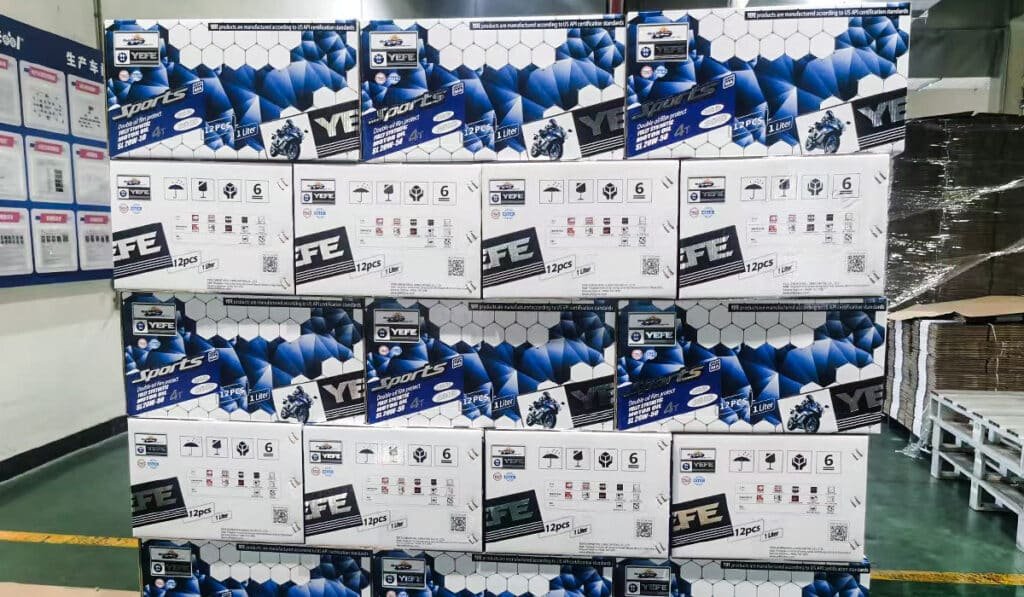
Most of the private label engine oil projects however, have been faced with setbacks or excess cost due to inadequately planned expectations related to the customisation, quantity of orders, and schedules on real world production limitations. Major issues coming with most of the private label engine oil are not the quality of the products, but the discrepancy in expectations on formulation, size of order, and time of production.
Successful projects involving the use of the private label engine oil are achieved when the beginning of the projects is marked with base decisions about the formula selection, MOQ planning, and the lead time expectations. This manual is based on real life experience in the implementation of OEMs to help shed some light on the process to enable distributors plan well and establish long-term relationships.
To see a compilation of the formulations that are available, see our engine oil product category.
What Private Label Engine Oil Actually Means
Antiprivate label engine oil: the lubricants produced by one company will be under the brand of another company, usually the distributor or importer.
Contrary to simple trading where the finished branded products are resold in their original form, the process of private label is characterized by the purchasing entity owning the brand name whilst the manufacturer undertakes the blending, filling, packing and in many instances, simple formulation modifications. The OEM partner assumes the responsibility of consistency and quality testing and batch tracking as well as ensuring that the product meets that specifications agreed upon, however the label design, marketing claims and market strategy belong to the buyer.
This division provides distributors with brand control and possible differentiation, but also introduces more participation in making decisions regarding base stocks, additive packages and packaging. refer to OEM engine oil sourcing for distributors.
Engine Oil Formula Options in Private Label Projects
A private label engine oil can and will go through a formula, which dictates the performance, conformance, and cost.
The majority of the projects begin with base formulations that are used to satisfy typical API (e.g., SN, SP, CK-4) and SAE viscosity grades (e.g., 5W-30, 10W-40, 15W-40). These include:
Mineral-Based Engine Oils
- Majority of refined crude base stocks were derived.
- Economical on general-purpose applications.
- Appropriate in the markets with the medium performance requirements or in older engines.
Semi-Synthetic Engine Oils
- Mineral and synthetic blend of base oils.
- Greater thermal stability and low temperature flow than full mineral.
- Usually in passenger automobiles and light commercial vehicles.
Full Synthetic Engine Oils

- Synthetic base stocks (PAO, esters, or Group III+) are used to construct them.
- High oxidation durability, longer drain times, and low temperature starting capabilities.
- Accepted in younger high output engines or luxury positioning.
Customization may involve additive (such as more shear in hot climates; more wear on motorcycles) or usage (e.g. easier handling). But serious reformulation is more expensive and time consuming and must be lab validated. To learn more about base oil variations,explore formula options and MOQ.
Understanding Minimum Order Quantity (MOQ) in OEM Engine Oil
The reason why MOQs exist is that production runs have set up costs of blending, filling lines, label change and quality checks. Small batches size hamper efficiency and accelerate the cost per unit highly.
Most MOQ variation is an outcome of packaging type:
| Packaging Type | Typical MOQ Range | Notes |
| Bottled engine oil | Increased MOQ (a.k.a., 5,000-10,000 and up bottles). | Separate filling requires special label printing, bottle moldingilation stipulated by a customer, and bottle labeling. |
| Drums | Medium MOQ (e.g., 1,000–5,000 liters or 4–20 drums) | Logistics-efficient for workshops or bulk resale; simpler labeling |
| Bulk oil | Reduced MOQ (e.g. minimum of 1,000 liters, frequently adjustable) | No packaging customization; suitable in the first test or huge fleet purchase. |
With art work approval, cap/seal compatibility and turnover time, bottled line is the line with the greatest MOQ. The solution lies in drums and IBCs, providing customers with a compromise, whereas bulk provides its buyers with their own filling capacity. Realistic MOQ planning will eliminate overcommitment at an early stage of a project.
Lead Time Breakdown for Private Label Engine Oil Projects
Lead times capture sequential movement between the agreement and shipment not only blending speed.
Formula Confirmation (1–4 weeks)
Review and accept base formula, as well as, additives and API/SAE specs; could include sample blending and lab testing.
Packaging and Label Approval (2–6 weeks)
The submission of designs, amendments to artwork, printing cylinder to be engraved, and regulations (e.g., language and hazard symbols).
Production Scheduling (2–8 weeks)
Insert manufacturing queue; is conditional upon existing orders and supply of raw materials.
Quality Testing and Release (1–3 weeks)
Complete batch testing of viscosity, flash point, oxidation stability and wear protection; issuance of certificates.
Export Documentation (1–2 weeks)
Make commercial invoice, packing list, placement of certificate of origin and any destination country requirements.
Total lead time First-time may range between 8-20 weeks depending on the complexity. Reorder of known formulae reduces dramatically. To understand the testing procedures that affect the release dates,, see lead time planning.
Common Misunderstandings About Private Label Engine Oil
A significant number of distributors believe that the operation of the private label is that of a off-the-shelf branded supply resulting in frustration.
- Private label of instant availability This implies New projects, where they are not ready-made.
- MOQ is never set in stone — Although there is some negotiation, basic production economics cannot allow quantity produced to be reduced without a corresponding increase in unit costs.
- only the speed of the factory matters Leader times can be caused by the buyer-side approvals, acquiring raw materials or the logistics of shipping.
To get real world advice on how not to fall into sourcing traps, review engine oil OEM and private label service.
How to Plan a Successful Private Label Engine Oil Project
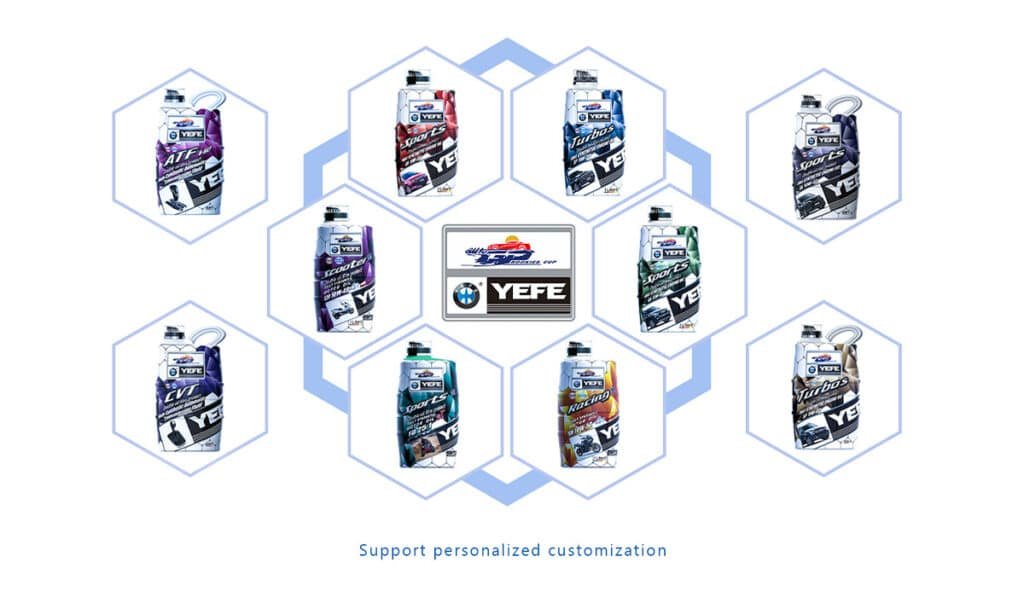
Realistic predictions and gradual promises are the key to success.
Firstly estimate preliminary demand, founded upon market experimentation – most of them start with drums or bulk, to confirm sales, prior to investing in bottled lines. Align MOQ to a pilot strategy: apply lower-MOQ formats to develop velocity data.
Add buffer time in the planning process: add 4 6 week approvals and 4 8 weeks ocean freight. Ensure free flow of information regarding formula adjustments and record keeping to avoid progressive delays.
Private Label vs Branded Engine Oil — Execution Differences
Owning a brand and having scalability in the long run, but compromising speed, is found in private label.
Branded oils have the shortest time-to-market and ready-to-use stock and certifications. The initial cost involved in setting up private label is minimal and allows customized positioning and possible increased margin with increased volume.
The main distinction is in execution: branded requires inventory of suppliers, and with the use of the private label, the control of the formulation, packaging, and logistics has to be properly organized.
Who Private Label Engine Oil Is Best Suited For
The distributors of the private label engine oil include those that know their market at the local level and are ready to invest in brand building.
It can be used with regional companies that want to differentiate, importers that have existing distribution channels and long-term players who have an ability to look at long-term planning and not to look at quick wins. Branded options tend to be more convenient to short-term traders or those who require shelf presence in the short term.
Conclusion — Private Label Success Depends on Planning, Not Promises
The success of the projects of manufacture of engine oil under private labels is based on a stern execution instead of dramatic assumptions. Shipment times can be minimized by concurring on formula decisions at an early stage, considering realistic MOQ, and adding buffer time to every production step that enables manufacturers to avoid risks and develop a baseline of repeatable orders.
The process also acknowledges transparency and planning: the clear specifications, approvals on time and proper adjustment of demand to anticipate demand makes an otherwise complicated task a stable supply system. The managerial aspect of it is what brings success, rather than anticipating shortcuts.