
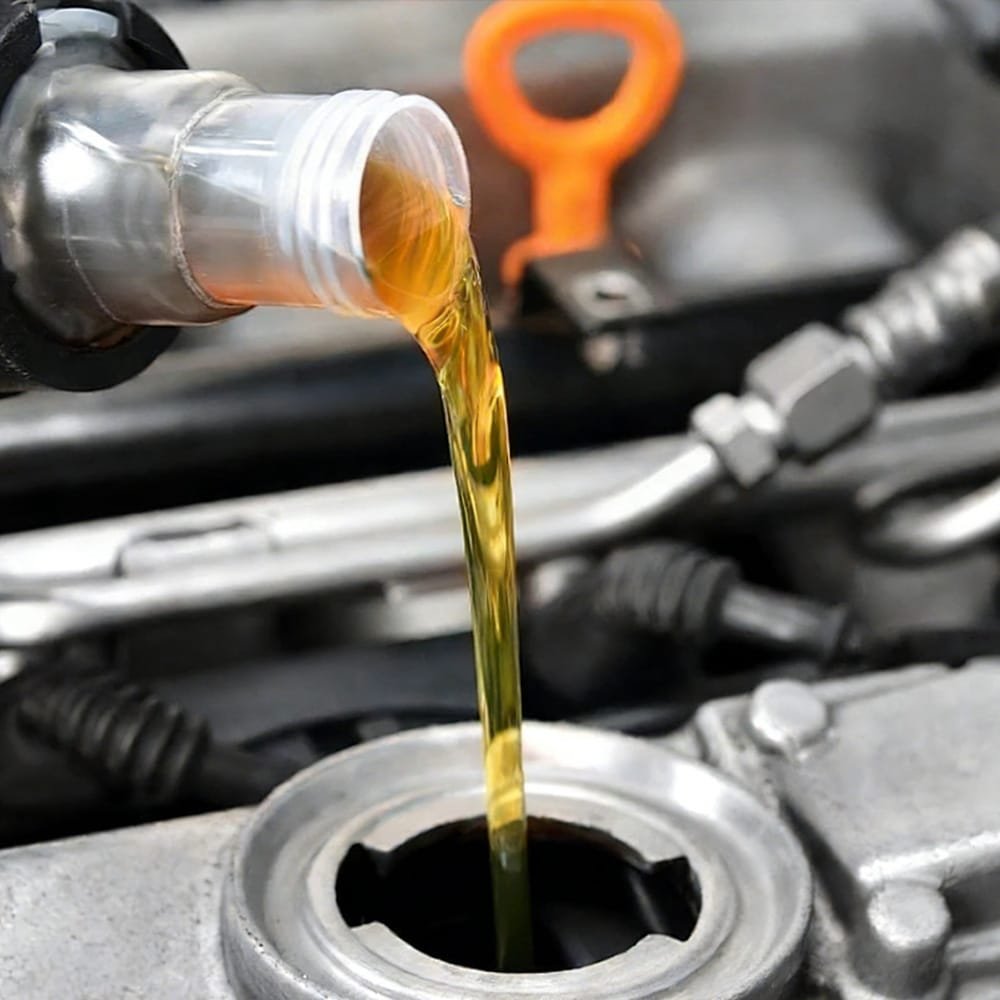
A cleanliness of its engines is required to provide performance that is reliable, efficient in heat transfer, and has a long life span. During combustion engines also produce pollutants as a by-products, namely soot, acidic by-products and partially burnt fuel leftovers. The blow by gases carry these substances into crank-case, and unless due checks are provided they are literally deposited in some mischievous form like varnish, carbon deposits and sludge.
The possibility to change the frequency of the changes of oil is the first effect of this problem that is assumed by the majority of people. The thing is, however, that the determining force of the effectiveness of the contaminants management is between changes additive chemistry, that is, balancing effect of detergents and dispensants. The engine oil would not assist in curbing the accumulation of the sludge and deposits even with frequent replacement of engine oil without quality detergent and dispersants.
The current engine oils rely on a superior addition package as means of fulfilling these needs to ensure that the impurities are suspended or neutralized as opposed to being deposited upon the crucial surfaces. To consume a range of high-quality products that have been produced as additives in terms of cleanliness, explore our engine oil products.
Why Engine Oil Cleanliness Is Critical for Engine Health
The quality of engine oil directly impacts the general well-being and the longevity of the engine. The deposits and contaminants disrupt some of the most significant functions.
First of all, they reduce heat transfer efficiency. Clean oil is free flowing and it is applied to evaporate the heat of hot components like piston and cylinder walls. What happens to these surfaces is the coating of varnish or sludge hence resulting in the build up of heat that contributes to wear and oxidation.
Second, restriction of flow rate of oil by small holes such as oil galleries and piston rings grooves and between valve trains starve sections of the lubrication. This leads to increased contact of metals, increased friction and premature destruction.
Finally, uncontrolled deposits promote howling wear and reduce the fuel save. Though even a coat of varnish increases the pumping loss; but heavy sludge can also prove an obstacle to filters and oil pick up screens, and set the country at the mercy of, and perhaps caused devastating starvation.
Sufficient additive chemistry that can sustain cleanliness is no luxury, and, therefore, is fundamental to engine reliability.
What Are Detergents in Engine Oil?
Detergents are the most essential engine oil cleanliness additives, and primarily they neutralize the acid and prevent formation of deposits over the metal surface.
Metal based detergent is normally a sulfonate, phenomenate or salicylate of calcium, magnesium or any other detergents. Their alkalinity reserve, as indicated by an oil Total Base number (TBN), can react and neutralize the products of combustion which are acidic including sulfuric and nitric acids produced by sulfur and nitrogen constituents of fuel.
Besides the neutralizing property of the acid, those detergents also work at the surface cleaning. Their polarized heads are stuck on metal surfaces and scrape the already laid down metals creating a film of protective layer that prevents the clinging of new varnish and carbon.
The most important features of them may be compared in the following way:
| Aspect | Detergents |
| Primary role | Neutralize acids |
| Action area | Metal surfaces |
| Main benefit | Prevent varnish and corrosion |
The combination of the two results in the fact that detergents are a necessity at high temperature spots that have the highest concentration of acids and surface deposits.
What Are Dispersants in Engine Oil?
In that insoluble contaminants are suspended in the bulk of oil, dispersants are applied to complement detergents because they cannot develop dangerous deposits.
Unlike detergents, dispersants do not have to be metallized but are typically ashy (metalless), polymeric (organic) and long-chained (polar heads and oleophilic (oil-soluble) tails). These polar heads are in between the soots, or oxidation products in resin, other smaller contaminants and the tails that the polar heads make sure that their particles are suspended within the oil.
Such a suspension is used especially in the management of soot in diesel and in some gasoline direct-injection engines, where soot is generated in high concentrations of up to 1 micron in diameter in combustion. Without the dispersants, the soot would cluster together and increase the viscosity causing low temperature sludge.
Their primary characteristics will be as follows:
| Aspect | Dispersants |
| Primary role | Suspend contaminants |
| Action area | Oil bulk |
| Main benefit | Prevent sludge formation |
This is due to the fact that the motor oil is kept in liquid form by the suspension of the soot and this prevents the blocking of the filters in case of prolonged use.
How Detergents and Dispersants Work Together
The dispersants and detergents are a complement force when managing the engine oil deposits and also when it comes to sludge prevention.
The utilization of detergents is used to address surface-level issues by neutralizing acids and cleaning metal parts, and dispersants to address the bulk issues by having them suspended. They are used altogether to form a complete clean system: the detergents are added to loosen or prevent the deposition and dispersants are also used to make sure that any discharged particles do not re-settle to a sludge.
Balance is crucial. Surplus of detergents leads to acid corrosion and Varnish, deficiency of dispersants leads to soot aggregation and increase of viscosity. The effect of unbalanced formulae may be a more rapid wear, see our guide to the additive package.
Cleanliness Additives and Long-Term Engine Protection
The engine oil cleanliness additives including detergents and the dispensers enable it to take longer time to drain in addition to providing protection of long life span.
These additives guarantee adequate heat dissipation, constant lubrication and constant viscosity, with time proving rules and regulations. They also even out the oxidation as uncontrolled pollutants advance the deterioration of base oil.
Well-formulated balanced detergent-dispersant oils reduce wear rates, improve compression and extend engine life in areas that are not merciful like heavy-duty diesel traffic or stop-and-go traffic.
Best yet, find out how this came to pass in our article about engine oil cleanliness additives.
Sludge and Deposit Formation Without Proper Additive Control
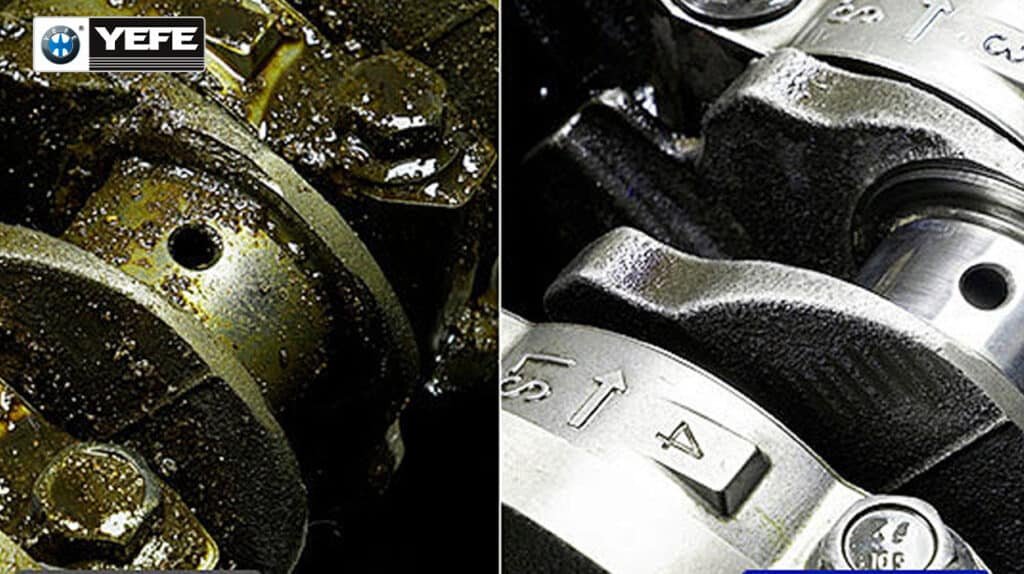
Sludge and Deposit Formation Relying on ineffective Additive Control.
Sludge and deposits are developed through degradation processes that take place when the appropriate detergents and dispersants are not applied.
The combustion by-products soot, acids and unrelease hydrocarbons find their way into the oil. Oxidation causes polar compounds that develop into varnish. The soot particles are agglomerated, and thus the particles are not suspended in the oil, but are gelled up (a gel), especially on warmer temperatures.
The bringing agents contamination are blow-by gases, fuels and moisture dilution. At the worst of cases, it leads to lugged passages, frozen rings or disastrous failures like bearing harm by constrained circulation.
Real world situations are said to be either those involving short distance travelling (moisture accumulation) or those involving situations where there is no significant strength of shields and therefore, resulting in thick sludge. Further information on types of failure modes of how in how detergents and dispersants help prevent sludge and deposits.
Common Misunderstandings About Engine Oil Cleanliness
There is an ordinary state that a black oil is an unclean engine. It is in fact a positive indication that the oil is working and in fact, the sight of the oil discoloured implies that the contaminants are in suspension, and the process involved in accomplishing the same is the detergents and dispersants. The oil can also show the poor cleaning standards.
Another myth also exists and holds that synthetic oil does not need detergents. These additives are highly beneficial to synthetics, high quality base stocks are used; these additives are combined with very strong detergent systems as well as good dispersant systems to attain high overall cleanliness.
Finally, those who consider that brief trips do not affect cleanliness can be found as well. The presence of moisture and fuel (induced by repeated cold start) produces low-temperature sludge in the situation of a weak additive.
These myths would refer to the fact that it is chemistry or the reality that brings about real cleanliness and not impressions or guesses.
Conclusion — Clean Engines Depend on Chemistry, Not Guesswork

The accurate dosing action of the detergents and dispersants should have brought about hundred percent cleanliness of the engines not the effect of a regular change or visual inspection. All these additives neutralize acids, clean, hang, stop sludge, and all these are united as a system to offer predictability cover in the operating condition.
This chemistry will be an insightful wisdom in the formulation of careful formula in achieving the sustaining engine health and performance in the long term.