
Global Outlook — China’s Rising Role in the Lubricant Export Industry

The international lubricant business is expected to experience a consistent growth in 2026, estimated to be more than 200 billion US dollars, due to the continued demand in the automotive sector, industrial segment, and the marine industry. Being one of the largest producers of base oils, additives, and finished lubricants in the world, China has established itself as a strong exporter, and its shipments are projected to increase by 8-10 percent per year. This wave can be contributed by the increased OEM and own labeling alliances, competitive prices due to efficient manufacturing and improved products in accordance with API, SAE, and ACEA.
The Chinese lubricant producers also enjoy a powerful supply chain system through which cost-efficient solutions can be offered that can be attractive to the emerging economies which rely on cheap and high performance lubricants. As the world demand on lubricants grows due to the increase in the number of vehicles and industrial activity, the already leading exports of China to the markets of Vietnam and Russia are likely to increase further. As a supplier, 2026 will be an excellent chance to ride the cyclical wave on the trends on the lubricant industry 2026 such as the movement to synthetics and environmentally friendly formulations that will put China at the centre of the world lubricant demand.
ReRegional Market Highlights for 2026
Southeast Asia nominal fastest growing neighbor market.
Southeast Asia will continue to be a force of Chinese lubricant exporters with 2026 projections stating that imports of Chinese lubricants will increase by 8-10 percent. This is led by the key countries such as Indonesia, Vietnam, Thailand, the Philippines and Malaysia due to motorcycle ownership booms -estimated to reach over 150 million units in the region- and fast industrialization in manufacturing and construction.
It monitors demand of motorcycle oils (10W-40, 20W-50), heavy equipment hydraulic oils and tropical climate coolants. Here Chinese engine oil exporters perform well because they have formulations that are compatible with high humidity and heat thus better in terms of oxidation stability. Working as an export manager, I have observed the ways, in which flexible packaging and private labeling assist in entering the regional markets. The climate-based blends like high-VI synthetics put YEFE in a good position to tap this demand, particularly by partnering with regional distributors under the OEM.
Africa Demand based on Infrastructure and Logistics Development.
In 2026, Africa will be one of the leading growth markets of Chinese lubricants, and the volumes of imports are likely to increase by 9 per cent with the boom in infrastructure. The major importers are Nigeria, Kenya, Ghana, South Africa and Tanzania and new road projects, mining developments and trucking fleets drive the demand of high performance engine oils (15W-40), greases and industrial lubricants.
The local issues such as the production of fake goods and the lack of blending capacity present opportunities to the use of trusted Chinese vendors that offer API-approved alternatives at affordable costs. The African market is emerging as a major consumer of lubricants and prefers to use synthetics that are cost-effective and that have a longer drain interval to meet the harsh conditions. The dominant share of YEFE export portfolio is attributed to Africa and this is because of our emphasis on durable formulations and export logistics whereby distributors fight falseness with traceable batches.
Middle East – Hot Performance Market.
Chinese lubricants will experience moderately yet consistent growth in the Middle East in 2026, and its exports to the Middle East countries such as the UAE, Saudi Arabia, Iraq, and Oman are likely to increase by an average of 6 percent. High-temperature synthetics, heavy-duty diesel oils, and compressor lubricants used in oil and gas and construction industries are required to operate in extreme temperatures and deserts.
The strategic benefits of China are that it has clear maritime access through its Belt and Road Initiative and trade agreements which guarantee uninterrupted supply. Global lubricant market outlook 2026 has revealed the demand pressure of the low-SAPS oil in the region in order to obtain approval of the emission standards. Chinese manufacturers have a chance to win by providing the heat-resistant formulas having good shear stability like YEFE provided with its desert-adapted product lines.
South America – Recovery and Localization of the brand.
The Chinese imports of lubricants in South America will be revived with an increase of 5 percent by 2026 dominated by Brazil, Peru, Colombia, and Chile. Commercial rebounds and mining investments push the industrial lubricants, gear oils and mining lubricants which are required.
Most of the distributors choose Chinese-made engine oils under their own label to localize the brand and use the cost advantage to offer competitive prices. The leading nations to which we sell lubricants in China in this case enjoy our vertical integration, which facilitates fast customization. YEFE promotes this by providing OEM services as it assists the brands to adapt to the local regulations and preferences such as bio-based additives to make mining sustainable.
Eastern Europe & CIS-Restoring Industrial Capacity.
The opportunity of Chinese lubricants in Eastern Europe and CIS markets, such as Russia, Kazakhstan, Ukraine, and Poland, are expected to provide 4% exports in 2026. Restoration of manufacturing and agriculture industries drives consistent consumption of hydraulic oils, gear oils as well as turbine lubricants.The sea routes lack a cost advantage over rail and container logistics delivered out of China. With the diversification of supply chains, the Chinese manufacturers will be able to occupy the voids with products that comply with the ACEA standards. The fact that YEFE is specialized in cold weather formulations, such as low-pour-point synthetics, is related to the harsh winters in the region, that the company can use to recover industry.
Product Segments Driving Export Growth

In 2026, engine oils will take over the lead in the Chinese lubricant exports, with multi-grade synthetics (5W-30, 15W-40) to gasoline and diesel engines (including 5W-30 and 15W-40) dominating over 50% of the exports as the rest of the world delays the electrification of vehicles. In its wake are industrial oils, hydraulic, compressor, gear, and turbine types; these are propelled by the manufacturing booms in Asia and Africa.
The need to meet the needs of tropical and heavy-duty zones increases the demand on coolants and greases, and environmentally friendly options become popular. Our integrated supply chain is also favorable to China because its markets in the export of lubricants can be customized in terms of formula mixing to labeling. This facilitates competitive advantages in high-VI synthetics to encourage energy efficiency to respond to the global lubricant demand of the 2026 world with the ability to provide longevity of protection.
Key Trends Shaping 2026 Export Dynamics
There will be a faster transition to synthetic and semi-synthetic oils and the focus will be on energy efficiency and longer life cycles, with synthetics expected to increase 3% CAGR to 2032. Low-SAPS and bio-based lubricants are in favor of eco-compliance trends and are congruent with increasingly tougher emissions in Europe and the Middle East.
OEM and private label growth is rampant because distributors develop brands through Chinese factories, sourcing through online platforms such as Alibaba. The innovations of the supply chain like sea-rail transport will be able to deliver more quickly. These trends are the opportunities of China lubricant export, and the manufacturers are going to be changed to digital trade and sustainable formulations.
Challenges Facing Exporters
Exporters should also have to deal with different importation regulations such as API certifications in the US or ACEA in Europe to prevent delays. It could affect timeframes due to growing freight prices and a lack of containers, enhanced by the world events. The currency variation and delays in receiving payments in the emerging markets augment risks.
The assurance of both MSDS and ISO compliance fosters trust, which is also ensured in batch traceability. The Chinese suppliers can counter these by ensuring strong QC and after sales services that ensures competitiveness in unstable markets.
Strategic Insights — How Exporters Can Win in 2026
To perform, diversify in the new and developed markets high-growth Asia and stable Middle East volumes. Research climate-specific lubricants, such as anti-oxidation mixtures in hot areas. Encourage local distributors to co-brand with local offers.
Use e-commerce as a source of leads and emphasize on digital marketing to bring out certifications.
Pro Tip: Customers in the new markets like to find a consistent quality and regular delivery, rather than extremely low prices. Focus on traceable, compliant products in order to create loyalty.
| Region | 2026 Forecast Growth | Key Product Demand | Opportunity for Chinese Exporters |
| Southeast Asia | +8–10% | Motorcycle & hydraulic oils | Local OEM branding |
| Africa | +9% | Engine oils, grease | Distributor partnerships |
| Middle East | +6% | Synthetic oils | Heat-resistant formulas |
| South America | +5% | Industrial lubricants | Local branding |
| Eastern Europe | +4% | Gear & hydraulic oils | Rail freight advantage |
Final Outlook — The World Is Ready for China’s Next Lubricant Wave
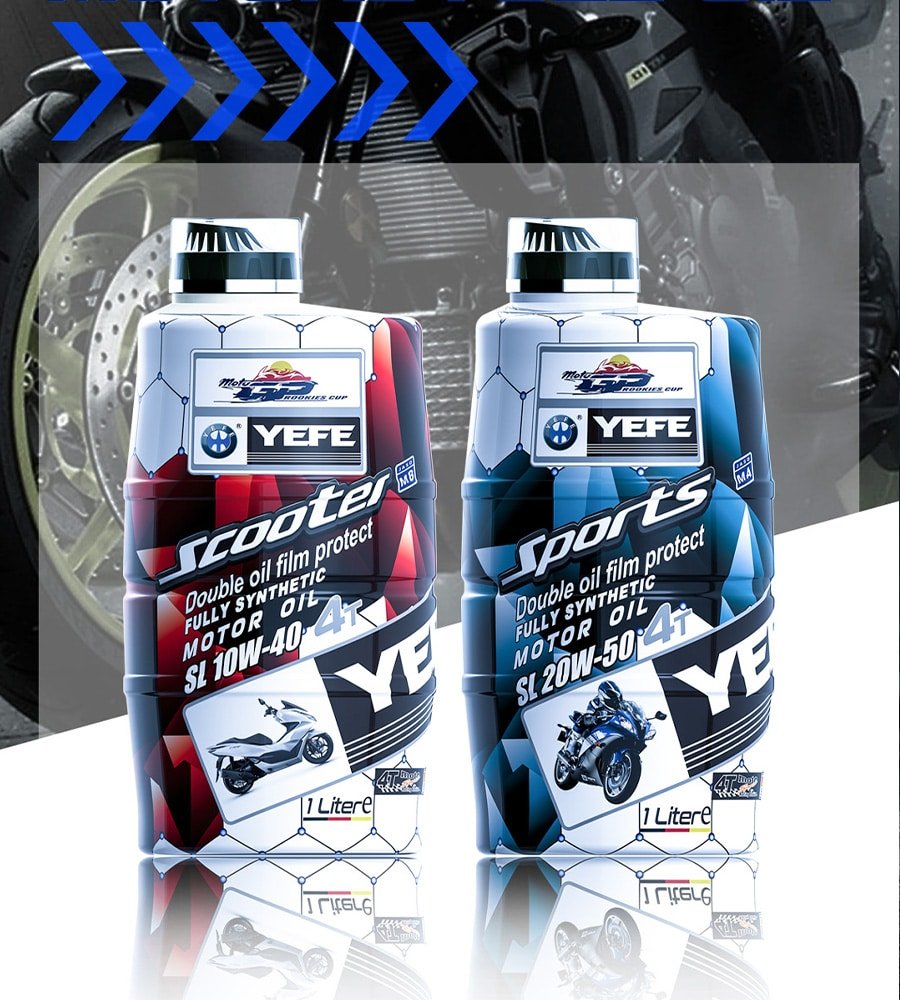
The coming 2026 will ensure the Chinese lubricant manufacturers keep the export momentum due to the global recovery and need to find efficient solutions. Suppliers such as YEFE are reinventing the supply of lubricants in the world-global, smooth in logistics, strict quality control and high production scale with high export capability.