
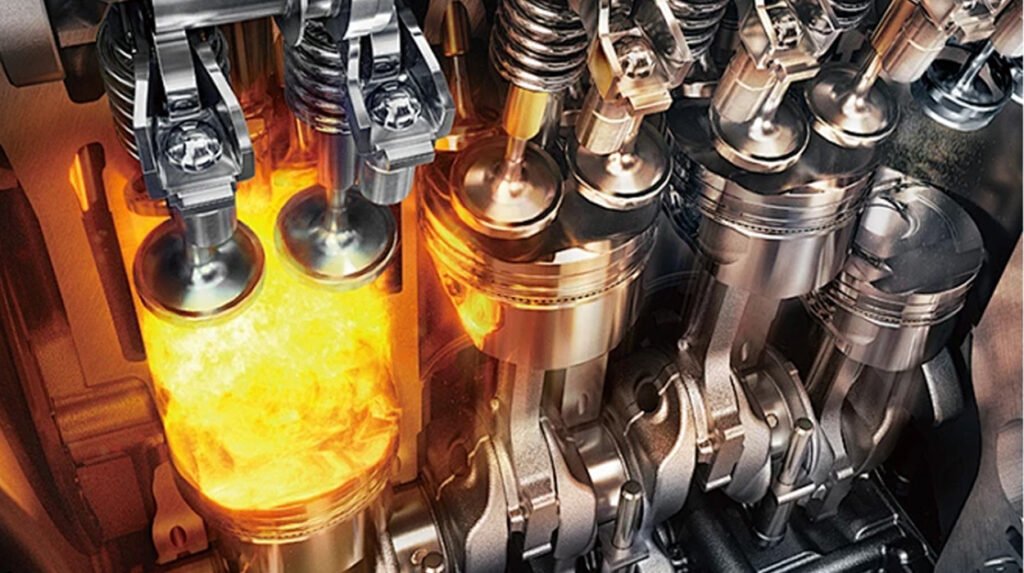
Contemporary engines are not only meant to deliver performance and durability but also to be utilized in conjunction with sophisticated engines after-treatment systems in order to lowers the gas emissions of poisonous contents released into the air. The existence of low-SAPS engine oil is specifically crafted so as to protect these systems against destruction at the expense of the byproducts of combustion whilst ensuring the lubrication that is required by the modern engine.
Most motorists believe that engine oil will majorly affect internal parts of the engine such as pistons, bearings, and camshafts. As a matter of fact, oil chemistry has a direct, direct and relevant effect on the longevity of the post-treatment of the emissions. Non-Low-SAPS engine oil in aftertreatment-equipped engines may also degrade the life of particulates filters and catalytic converter resulting in lower efficiency, greater number of regenerations, less maintenance costs and even system failure.
The low-SAPS engine oils are expected to safeguard the latest emissions aftertreatment system systems and still ensure that the engine remains durable in the face of stricter regulatory pressure.
To find all the automotive engine oil solutions that apply to various specifications and applications, automotive engine oil solutions tailored to different specifications and applications, explore our dedicated category.
What Does SAPS Mean in Engine Oil?
Sulfated Ash, Phosphorus and Sulfur- SAPS are some of the three elements whose contents of engine oil are tightly managed in modern day formulations.
They are mainly additives which are employed to improve performance (sulphated ash is furnished by metallic detergents and dispersants, phosphorus by anti-wear agents (including ZDDP) and sulfur by both base oils and some additives).
The levels of SAPS are measured and controlled in that they determine the behavior of oil during combustion and the residues that are released into the exhaust system.
Here’s a clear breakdown:
| SAPS Component | Primary Source | Potential Impact on Emissions Systems |
| Sulphated Ash | Metallic additives (detergents). | DPF and GPF ash accumulation, which causes clogging and backpressure. |
| Phosphorus | Anti-wear additives (e.g., ZDDP) | Poisoning of catalysts, and lowering the conversion efficiency. |
| Sulfur | Base oil contaminants, additives. | Immunosilicate degradation of the emissions systems, sulphate, and filter blockage. |
Reducing these components, Low-SAPS engine oils help to avoid the formation of harmful deposits without damage to the role of aftertreatment hardware.
Why Modern Engines Require Low-SAPS Formulations
The Low-SAPS formulations have been a result of stringent emissions rules around the globe. In Europe, including Euro 6 (and future Euro 7) standards (and equivalent API and ILSAC classifications such as SP on gasoline and CK-4 on diesel), the standards require the compatibility of the standard with highly sophisticated aftertreatment equipment.
It is a practice in modern engines on both diesel and gasoline to filter the soot in the air by a part of the engine known as Diesel Particulate Filters (DPF) or Gasoline Particulate Filters (GPF). In both diesel and gasoline, the engine relies on catalytic converters (with three-way catalyst and selective catalytic reduction systems) to cut NOx, CO and hydrocarbons.
These are very sensitive systems: any impalement of ash can build on filter pores raising backpressure which makes it necessary towholesale regeneration cycles, which burn more fuel. Phosphorus and sulfur may cover/poison catalyst surfaces, which decrease the effectiveness of catalyst conversion of pollutants.
Although conventional high-SAPS oils are found to be a good wear-protective choice where the level of additives is higher, they do pose unacceptable trade-offs in engines equipped with emissions. The movement to Low-SAPS is an essential and correct compromise between engine life and the environmental demands.
How Low-SAPS Engine Oils Protect Emissions Aftertreatment Systems

The Low-SAPS engine oils help to minimise the damages by ensuring that the quantity of harmful residues that get to the exhaust aftertreatment systems is low.
The lower the levels of sulphated ash, the less non-combustible matter will be deposited in DPF and GPF units and this increases the life of the filter and minimizes the number of active regeneration incidences. This translates into a decrease in the fuel consumption and thermal stress in the system.
Limiting phosphorus and sulfur issues aid in the conservation of catalysts efficiency by avoiding poisoning as well as keeping the catalyst in an active condition to allow chemical reactions. The outcome is long-term, which is low emissions during the service of the vehicle.
In order to discover further regarding the associated standards, see our detailed explanation of why low-SAPS oils matter for aftertreatment-equipped engines.
Low-SAPS Oils and Emissions Reduction Performance
Low-SAPS formulations assist in making the exhaust stream purer throughout its flow, by avoiding obstructions and ensuring continued efficiency of aftertreatment.
Less accumulation of ash and particles also means that filters are always permeable, which means that soot can be captured consistently without the undue pressure increase. Maintenance of catalyst activity helps in achieving good conversion of toxic gases, reducing tailpipe exhausts of particulates, NOx, and other polluting gases.
These oils are part of the overall strategy on emissions reduction, which would enable vehicles to operate within the realms of the regulations without affecting their performance. For insights into advanced formulations, explore our article on low-emission lubricants.
Balancing Engine Protection and Low-SAPS Requirements
The development of the Low-SAPS oils obliges the optimization of additive to provide a sufficient wear protection level in spite of the diminished concentration of traditional metallic and phosphorus-based compounds.
To reduce the occurrence of ash, engineers employ high-technology base stocks, substitute anti-wear substances, and improved detergents with limited ash production and deposit and oxidation control. It is difficult to attain the same film strength and boundary lubrication behavior in high loads and temperatures.
This is a tradeoff that is crucial: insufficiency in protection will lead to wear of the engine whereas the highest content of additives will ruin the compatibility of aftertreatment. Contemporary Low- SAPS oils are winning because of a good formulation science, as they deliver good engine consistency coupled with long life of the emissions system.
Common Misunderstandings About Low-SAPS Engine Oils
These formulations have a number of myths.
First, it is speculated that Low-SAPS oils will give less protection to the engine. As a matter of fact, well-designed Low-SAPS oils achieve or sometimes surpass performance objectives by having optimized chemistry, and are considered to offer equivalent or superior wear security in contemporary engines.
Second, there is a commonly accepted belief that Low-SAPS is limited to diesel engines. Although at first used by diesel engines powered by DPFs, gasoline engines powered by both GPFs and direct injection increasingly need Low-SAPS or mid-SAPS oils to save catalysts and filters.
Third, older engines are occasionally believed to be in need of low-SAPS oils. High-SAPS oils in most cases can still be used in pre-aftertreatment vehicles, but Low-SAPS cannot make difficulties with old engines, the inverse (high-SAPS in new engines) is much more difficult.
How to Know If Your Engine Requires a Low-SAPS Oil
The first step in determining whether or not you need Low-SAPS engine oil by checking the OEM specification of your vehicle.
Refer to owner manual suggested ACEA (e.g. C1 C6 Low MID SAPS requirements), API (SP CK-4) or manufacturer approval (VW 504.00/507.00, MB 229.51/229.52, etc.). These specifically state that they are compatible with the after treatment systems.
The age of the vehicle and the equipment are good hints: DPF, GPF, or modernized catalysts and have to be used in the regulated markets, most passenger cars and light trucks manufactured after the year 2008 2010 use Low-SAPS, mid-SAPS, or enhanced catalysts, and need Low-SAPS or mid-SAPS oils.
Local laws also affect demands – more emission-intensive zones (Europe, parts of Asia, North America) drive to Low-SAPS formulations.
Conclusion — Low-SAPS Oils Are a Design Requirement, Not an Option
The low-SAPS engine oils are the necessary change in accordance with the engineering reality of the present-day powertrain. The emissions aftertreatment systems are part of the engine design and the engine oil formula should not contradict with the purpose of such systems.
These oils manage the Sulphated ash, phosphorus, and sulfur; hence the running of particulate filters and catalysts works with Bravery and excellence in hundreds of thousands of kilometers. This is a system-wide safeguard that is necessitated by the requirements of regulation and basic engine architecture, making Low-SAPS an engine requirement, and not a sales decision.
With the ever-changing nature of emissions standards thus it is prudent to study them and be able to make the correct decision concerning the necessary lubrication to preserve the engine and maintenance of the aftertreatment.