
Premature engine oil failure is a condition when the service intervals are shorter than anticipated due to oxidation, contamination, or shear loss (Wetmore, 2016). Oil may not be able to resist the wear of critical parts of the engine even when it is being used in the right kind of viscosity grade and even when it is being used in the right kind of API or ACEA specification even though it is being used before the recommended drain interval. This causes more wear, poor performance and possible damage to the engine which would have been prevented by a better knowledge of the degradation mechanisms.
It is a common myth that engine oil can only break down and turn to be no use when it becomes black and dirty. On the one hand, engine oil frequently fails because of internal degradation processes when they can manifest themselves long before they are noticeable. Description is a mere portion of the success that happens in chemistry and in mechanical transformations without being recognized–changes of chemistry and changes of mechanics occur unseen, invading the viscosity, additive efficacy and film strength.
It can be important to pick good oil developed in the real world. In order to find out acceptable opportunities that can meet the performance of varying engines under varying conditions, consider how to choose the right engine oil….
What Premature Engine Oil Failure Really Means
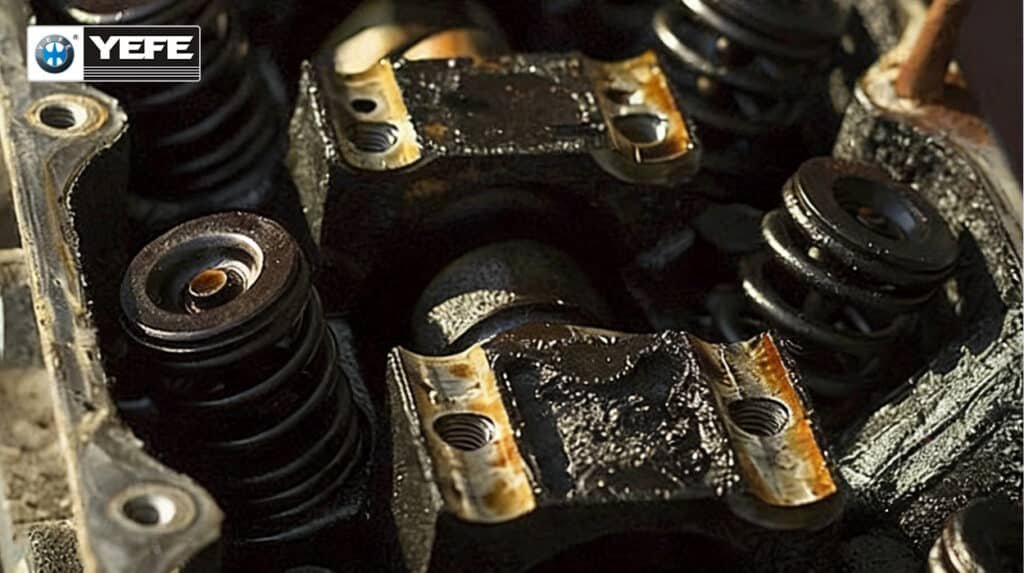
Having been in use before, even though the oil itself may look intact, the usability of the oil has expired, and it loses the protective qualities, which it possessed when it began usage. The main functions of the oil such as minimizing friction, heat dissipation, suspension of contaminants and neutralizing acids are affected and this results in faster wear of the components.
The common supposition is that failure is proportionate to observable contamination such as sludge or darkening. As a matter of fact, the decline in performance is usually a precursor to such manifestations. The viscosity can vary beyond the safe data, the additives may wear out or the base oil may chemically degrade. Outcome: oily films are either thinner or thicker, the detergency is poor, and the scoring, semiarcing, or sticking of piston rings are likely to occur.
Oxidation — The Primary Cause of Oil Degradation
Oxidation is the chemical process that prevails in the majority of operating conditions breaking down engine oil.
The presence of high temperature enhances the rate of reaction between oxygen and hydrocarbon molecules present in the base oil to produce peroxides, aldehydes, ketones and carboxylic acids. Such by-products are more acidic (quantified by TAN), loss of antioxidants, and are the polymer largest insoluble molecules. This result is a slow His return to viscosity, a layer of varnish on heated surfaces and a lot of sludge in the cooler regions such as the oil pan or rocker covers.
Sludge inhibits the flow of oil by passages and filters, whereas varnish affects the presence of valve train and the work of piston rings. Oxidation reduces the life of oils drastically with time particularly in high speed high load engines such as turbocharged engines or where one is operating on stop-start.
To gain a more profound understanding of the dependence of this process on the quality of antioxidants and base oils,oxidation stability and oil life.
Contamination — How External and Internal Pollutants Accelerate Failure
Contamination adds foreign elements that are catalysts or direct abrasives accelerating the degradation much faster than normal.
Boundary lubricants on cylinder walls are removed by fuel dilution that sometimes happens in direct-injection gasoline engines or diesel engines that are subjected to frequent regeneration cycles. Condensation water, coolant leakage, or short-trip driving mixes with oil thus favoring corrosion and additive deposition. Dust and soot come in through intake, blow-by, and metal particles through wear are used as oxidation catalysts.
These pollutants add to the issues: soot adjacent to the oil, accelerating it makes it more wormy and because of hydrolysis, and fuel makes the oil less viscous, and makes the oil film subject to tear. Combination effect has a tendency of reducing the effective oil life in severe service by half.
In an attempt to decipher better the implications of the sight of the oil about the extent of contamination, refer to our guide on causes of premature engine oil failure.
Shear Loss — When Oil Loses Its Protective Thickness
Loss of shear takes place when mechanical forces irrevocably decrease viscosity, especially in a multi-grade oil that is dependent on viscosity index improvers (VIIs).
VII polymers are long molecules that are used to sustain viscosity in hot oil by stretching. At high shear stress (bearings, cam lobes, gears, and piston ring zones etc) such chains fail, and thus irreversibly reduce viscosity on both sides of temperature. The oil is made thinner than the grade it is supposed to be and it reduces hydrodynamic film thickness and exposes the metal to metal contact to possible risks.
Shear is amplified by the use of modern engines with high-performance and tight clearances and high RPMs. In the event of high shear rate, the oil film strength reduces causing boundary lubrication failures, increased friction, and rapid wear.
The formation of oil and preserving this protective layer is the source of knowledge- discuss the science in our article on the lubrication film.
How These Failure Mechanisms Interact
The three mechanisms do not usually work alone, but they combine to create a vicious circle increasing the overall degradation.
Acids and polar compounds are products of oxidation and consequently these compounds attract water and soot thus aggravating the impacts of contamination. Toxins such as metal particles promote additional oxidation whereas oil is diluted or shear-thinned more readily through hot zones forming hot spots that make local temperatures and oxidation rates higher. Loss of shear decreases the film thickness to provide an increasing amount of metal contact and produce particles of wear which enhance contamination and oxidation.
This compounding supports the reason why there are oils that fail quick in the demanded service in spite of being specifications.
Recognizing Early Signs of Premature Oil Failure
Early prevention of degradation leads to the prevention of major problems. Look beyond dipstick color.
The occurrence of unusual darkening or milkiness before the interval is an indication of oxidation or water entry. Rapid oil consumption Rapid oil consumption Rapid oil consumption, in passenger vehicles over a quart per 1,000 2,000 miles, is often a sign of diluted oil or shear flow, which permits blow-by or burning. When there are knocks, ticking or grinding noises in the engine, it indicates insufficient film strength due to low viscosity. The poor lubrication can be traced to reduced performance, increased fuel consumption, or check- engine lights related to misfires.
Frequent used oil test gives objective information on viscosity, TAN, insolubles, and the level of fuel dilution prior to the onset of serious symptoms.
Storage and Handling Factors That Contribute to Oil Failure
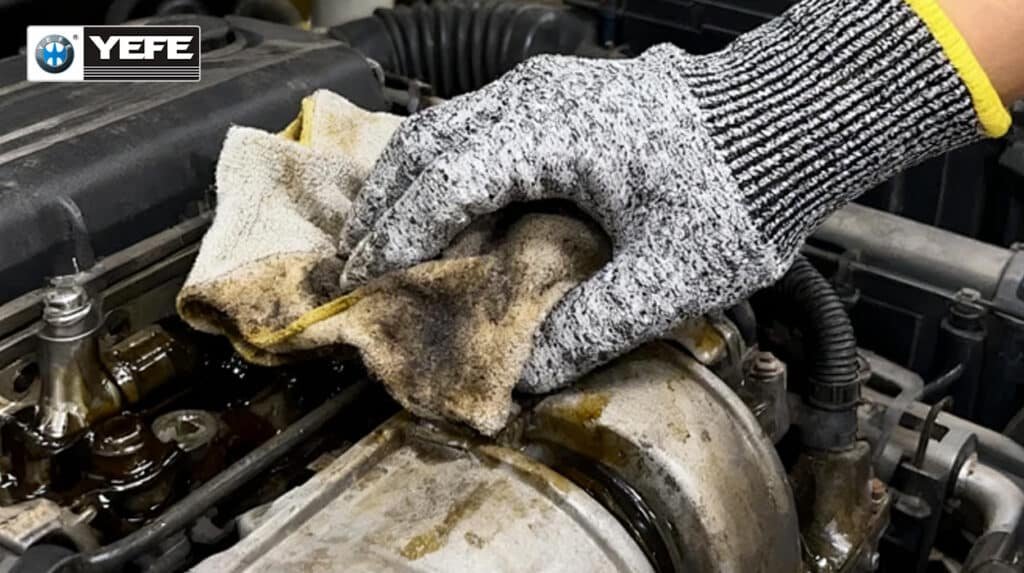
Containers are susceptible even when kept in the absence of proper storage.
Long-term presence of heat, humidity, or temperature variation in drums or bottles favor the scheduled condensation within the drums or bottles bringing with them moisture that encourages oxidation and hydrolysis. Ineffective sealing permits the entry of air into it, which further corrosion in long shelf life. Infected transfer gear contaminates the particulates.
Cool, dry storage, FIFO rotation, and sealed dispensing are recommended in order to reduce the risks.
To gain realistic ideas on the longest shelf life and still inhibit oxidation oxidation contamination and shear loss in engine oil, review our storage recommendations.
Summary Table — Causes of Premature Engine Oil Failure
| Failure Mechanism | Primary Cause | Resulting Risk |
| Oxidation | Heat & oxygen | Sludge, viscosity increase, varnish, acid buildup |
| Contamination | Fuel, water, debris, soot | Abrasive wear, corrosion, additive depletion |
| Shear loss | Mechanical stress | Weakness of films, boundary lubrication failure. |
Common Misunderstandings About Engine Oil Failure
“Dark oil means bad oil.” Not necessarily, they can be blackened by soot or other oxidation by-products and still be protective when the oil still contains clear oil, but then the oil can be most seriously sheared or even diluted.
There is no difference in the duration of all the oil. There is a great diversity in service conditions, driving patterns, and formulations quality, harsh service is halved.
Failures in advance are avoided by standards. The API/ACEA specification is a minimum, and in the real world, it can be governed by the quality of the base oils, additives packages, along with the effectiveness of additive packages in counteracting the three mechanisms we have discussed.
Conclusion — Preventing Premature Oil Failure Requires Understanding Mechanisms
The combination of oxidation, contamination and shear loss in engine oil is a cause of premature engine oil failure, which does not become visible until wear occurs faster. Understanding the conditions under which heat, contaminants, and mechanical stress cause these changes enables operators and technicians to make choices of formulation more appropriate to each particular situation, also to tune maintenance to match the real degradation and oil analysis to tell when.
This is a mechanism-oriented strategy based on proactive as opposed to reactive prevention, which extends the life of the engines and the reliability of the engines without necessarily using labels and assumptions.