
Majority of broken gears are related to problems caused by lubrication which can be identified and avoided before severe damages have taken place. Lubrication failures are common in industrial gearboxes, automotive differentials and heavy machinery drive trains, and also in gearboxes lacking externally measurable performance indicators, such as lubrication contacts and run time alarms. People use to assume that when the gear fails it was because the component was poorly made or that it was defective in its manufacturing, however in reality people often have lubrication issues that are the causal problem of the failure. Most devastating gear failures can be avoided when the problem of the gear oil is detected at an early stage.
Realizing the way in which the gear oil decays, wears out the protective qualities or become infected with the gears and applied improperly, the maintenance crews can become more proactive and be doing their reliability maintenance rather than mere repairs. The correct selection, monitoring and maintenance of gear oil will not only increase the life of the gears but will also minimize the time losses and replacement.
In the acquisition of sound products, gear oil manufacturer ensures formulations match application demands and operating conditions.
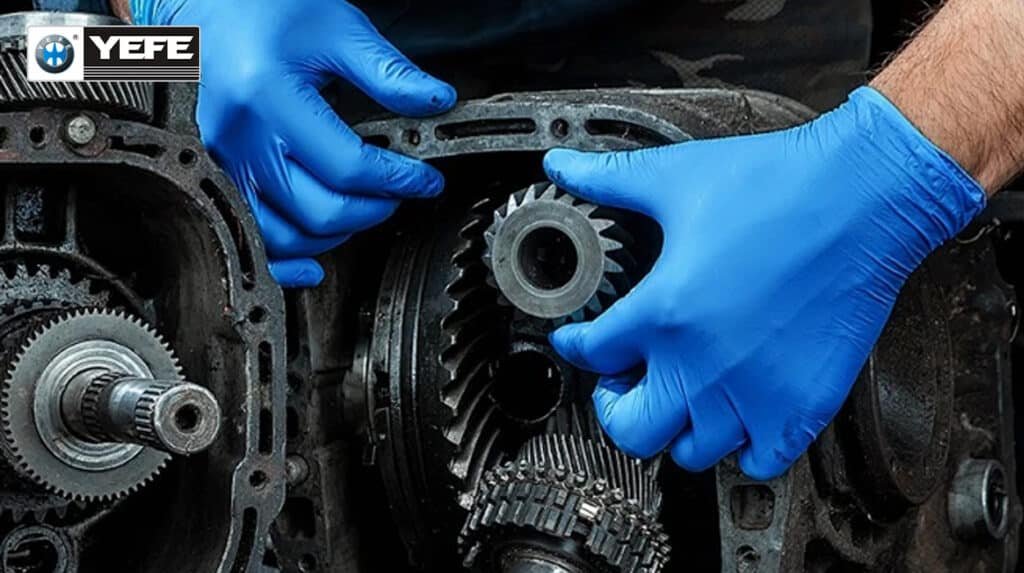
Problem #1 — Oil Degradation and Extended Service Intervals
The long service runs and lack of correct supervision of the service further enhances the process of degrading the gear oil, transforming the regular check into a major cause of failure.
Gear oil is oxidized over time; particularly when there are high temperature conditions and aeration. Oxidation contributes to the thickening of the oil, the sludge and varnish formation and the depletion of the additives that shield against wear and corrosion. The viscosity rises at first before fracture due to cracking of the base oil molecules resulting in low film strength.
The situation is aggravated by the fact that additive depletion: anti-wear agents, antioxidants, and corrosion inhibitors are used more intensively in demanding services, such as heavy-loaded reducer or high drive. The lack of the timely change of the oil contributes to the oil losing its separation ability of gears surfaces, and the contact between metals occurs.
Failure due to the overdue change of oil raises the failure risk to extreme levels because the oil that is contaminated, abrasive particles, and acids deposited in an oil change etch the tooth surfaces. Such changes are easily noticed at an early stage through the regular analysis of oil, but as a rule, but ignoring signs of old gear oil often leads to accelerated wear.
Problem #2 — Insufficient Wear Protection Under Load
Even fresh gear oil may not give sufficient wear protection in situations beyond its limit in regard to film strength.
Failure in the boundary lubrication arises when the coating of oil film is under extreme pressure and, as a result, the fatigue of asperities on the teeth of gears. This is typical in low speed high-torque applications where the hydrodynamic lift is small.
EPA (extreme pressure) additives are beneficial but have limitations since they can be used to provide sacrificial layers on the surfaces of metals. Excess loads above the activation threshold of the additive or the formulation contains inadequate anti-wear chemistry cause microscopic welding which results in scuffing or scoring.
A lack of wear protection also expressed in the form of shallow surface damages particularly in gearboxes functioning close to or above design specifications.
Problem #3 — Incorrect Lubrication Application or Oil Selection
The indicated use of incorrect gear oil or its application methods take place on the list of the most common but avoidable causes of early failure.
Oil and gearbox misfit is not uncommon: an industrial grade oil in an automotive enclosed gear might not contain the amount of EP additives needed or be shear-stable. Heavy industrial EP oils in lightly loaded transmissions on the other hand may lead to unnecessary corrosion or foaming.
Some specification mistakes are to pick a viscosity that is too low (poor film when starting), or too high (churning losses and heat excessive). Water or particulates that cause the wear is caused during contamination during filling or top-offs.
These gear box lubrication issues often trace back to unclear OEM recommendations or cross-referencing errors.
Problem #4 — Thermal Stress and Overheating
Excessive heat is a silent accelerator of gear oil breakdown and gear damage.
A high temperature is a silent cause of gear oil destruction and gear wear.
The heat production in meshing gears causes friction that causes viscosity of oil to be thin and minimize film thickness. Oxidation rate doubles with every 10C, due to the rapid depletion of additives, and the formation of acidic wastes in higher temperatures.
It is also an accelerator of thermal cracks in base oils, deposits of varnish on the flanks of the teeth, and speedy usage of additives. Burning The gearboxes are often overloaded, or poorly cooled or their flow of oil is limited leading to overheating.
Recognizing overheating gears by temperature observance enables the formation of action before it is too late.
Problem #5 — Using the Wrong Type of Gear Oil
Misunderstanding of the types of gears oil causes incompatible chemistry, and premature damage to the components.
Compared to automated transmission fluid (ATF) or manual transmission oil, gear oil (hypoid or EP gear lubricants) has different packages of the additives. In an ATF with a hypoid differential its usage creates the risk of poor EP and in a synchronized transmission gear oil can corrode yellow metals such as bronze synchronizers.
Additive incompatible systems lead to corrosion, foaming or sludge. An example is the presence of sulfur -phosphorus EP in gear oils which can cause destruction of copper alloys unless formulated properly.
Avoiding using the wrong oil type the wrong type of oil is not used is to maintain strict compliance to the specifications of the OEMs and labeling.
Common Gear Failure Modes Linked to Lubrication Problems
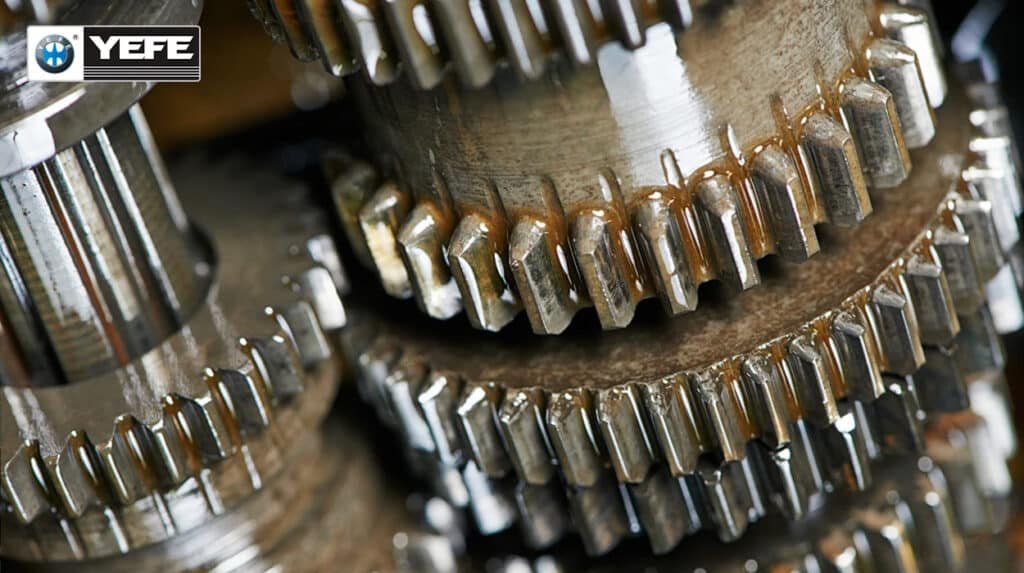
The deficiency of lubrication is a direct cause of some typical forms of gear failure.
- Scuffing – Intense adhesive wear due to breakage of the oil film under extreme loading/sliding: the surfaces exhibit torn metal bands of plastic deformation along the direction of sliding.
- Pitting – Surface fatigue Surface Cracks occur as part of repeated stress, which causes under-surface cracks, which develop into craters; it is usually associated with corrosive contaminants or poor film strength.
- Micropitting 1 Surface distress manifests itself at an early stage in the surface as frosty gray spots; small pits (less than 20 m (0.02 cm) in diameter) develop in mixed lubrication regimes due to asperity fatigue.
- Surface fatigue — Wider term which encompasses and includes both, macropitting and case crushing; caused by those Hertzian stresses which are raised by ineffective lubrication.
| Oil Problem | Linked Failure Mode | Typical Appearance/Effect |
| Oxidation & additive depletion | Pitting, micropitting | Craters, gray staining, progressive wear |
| Insufficient EP protection | Scuffing, scoring | Torn metal bands, matte rough texture |
| Viscosity too low/thermal thinning | Boundary failure, wear | Polishing, adhesive transfer |
| Contamination/particulates | Abrasive wear | Grooves, accelerated material removal |
| Wrong additive chemistry | Corrosion, pitting | Etching, reddish deposits on surfaces |
How to Prevent Gear Failure Through Proper Gear Oil Management
It begins with gear failure prevention by viewing the treatment of lubrication as a procedural approach that should be taken seriously rather than viewed as an after-thought.
Choose the right oil using OEM specifications, loading, speed, temperature and environment. Apply high quality additives with equal proportions.
Introduce routine check: he/she should observe the quantity of oil, color, odor, and debris during the regular inspections. Perform regular sample oil analyses to monitor the viscosity, metals of wear and additives, and contaminants.
Embrace such a condition monitoring equipment as vibration analysis, thermography and ferrography in order to identify early problems. Observate preventive maintenance schedules in switching of oil, filtration and breather.
Early Warning Signs That Gear Oil Problems Are Developing
Catching lubrication issues before failure requires attention to subtle indicators.
- Lubrication concerns should be monitored by taking care of minor signs that may indicate that lubrication is not working.
- Noise -Whining, grinding, or knocking indicate low film strength or abrasion debris.
- Increase in temperature -An increase in operating temperature indicates a thinning oil or a high rate of friction.
- Vibration The presence of variability of amplitude or frequency is a sign of misfit, wear or pitting imbalance.
- Oil discoloration and Darkening, milkiness (water), metallic sheen indicates oxidation, contamination or wear.
Sensory checks that are undertaken regularly with instrumentation is the best method of early detection.
Common Misconceptions About Gear Failure Causes
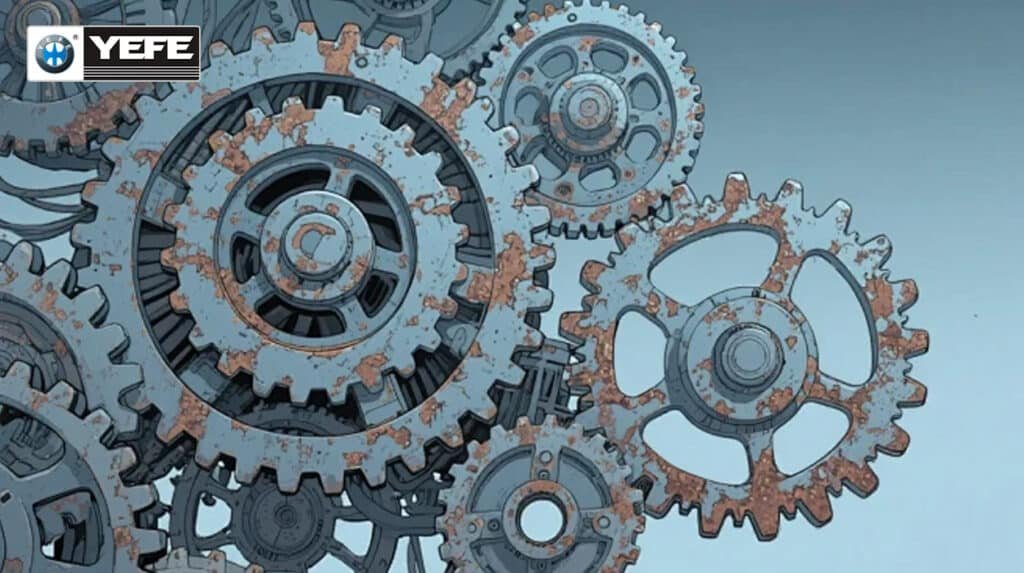
A number of these commonly held assumptions contribute to the unattended lubrication problems.
Gear failure is inevitable -Much of this breakage can be guarded against by carefully attending to the lubrication of gears.
Thicker oil never helps to wear- The greater Viscosity always raises churning, heat, and foaming to the detriment of film load combinedness.
Lubrication problems have direct symptoms at the early stages — Problems tend to go unnoticed until late; the only way to deal with them is proactive monitoring.
Conclusion — Gear Failure Prevention Starts With Lubrication Control
The preventive maintenance of gear focuses on the view of lubrication as a fundamental reliability aspect. The majority of outlined problems are related to the deterioration, improper choice, or improper monitoring, which could be resolved with the help of systematic practices.
Teams can prevent expensive downtime and increase the driving gear life through the use of early detection, proper choice of oil, and regular maintenance.