
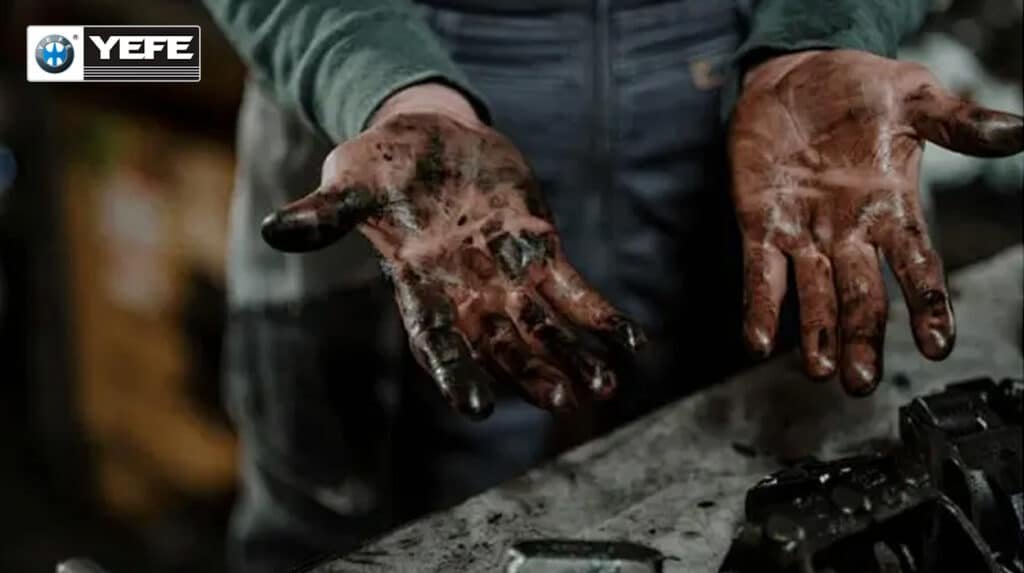
The majority of grease failures do not result from a bad quality of the products, it is due to improper choice, use, or circumstances of operation. Grease failures in industrial settings are not as rare as lubricant development. Such problems often result in the increased wear and tear, unexpected downtime, and increased maintenance expenses. The knowledge of grease failure modes is the key to preventing premature wear and equipment malfunction.
Through the fact that most issues are caused by the difference between the properly of greases and practical needs, instead of blaming poorer grease; the teams can transition to reactive maintenance regimes, and the proactive reliability.
What Is Considered a Grease Failure?
When the grease ceases to provide the necessary separation, i.e, the lubricant is no longer effective between the moving parts it causes a grease failure increasing friction, heat, and component damage. Grease is shiny coated so that it knows how to stay in one place, not to decompose, and preserves a protective coating during activity. On loss of these abilities, the system would have reached a failure stage way before it explodes.
Key Indicators of Grease Failure
| Failure Indicator | What It Means |
| Excessive wear | Lubrication film failure |
| Leakage or washout | Poor retention |
| Hardening or caking | Oxidation or aging |
| Bearing overheating | Inadequate lubrication |
These indications do not occur at once, and technicians who are keen enough have a chance to act and prevent serious damages.
Common Causes of Grease Failure
The causes of grease failure are in nearly all instances related to the application matters and not to the grease itself. Poor judgment (and erroneous beliefs of pervapidity) of individual equipment often results in recurrent problems in equipment fleets.
Primary Root Causes
| Cause | Description |
| Incorrect grease selection | Mismatch with load, speed, or temperature |
| Over-greasing | Increased heat and churning |
| Under-greasing | Insufficient lubrication film |
| Contamination | Dirt, water, or debris ingress |
| Incompatible grease mixing | Structural breakdown |
Examples include over-greasing which given excessive heat in the churning which leads to the quick separation of the oil and the thickener. Contact starvation can occur through under-greasing contact areas and contamination, particularly water or particulates, can quickly destroy performance.
Speaking of the right corrective measures or the methods of lubrication, the corrective measures should incorporate the application of the effective grease lubrication solutions, implementing effective grease lubrication solutions becomes essential for long-term reliability.
Recognizing Early Symptoms of Grease Failure
Numerous failures are self-proclaimed by minor alterations in the equipment operation or the appearance of greases long before machinery components would tend to seize or break.
Early Warning Symptoms
| Symptom | Possible Issue |
| Noise or vibration | Lubrication starvation |
| Elevated temperature | Excess friction |
| Visible leakage | Consistency loss |
| Discoloration | Oxidation or contamination |
Abnormal noise or vibration is a likely indication of poor film thickness where an increase in temperatures represents accumulation of friction caused by poor grease. Broadly, milky appearance is an indicator of water ingress and dark or burnt discoloration is an indicator of oxidation. These signs are early identified with regular visual examination and temperatures.
Practical Solutions to Prevent Grease Failure
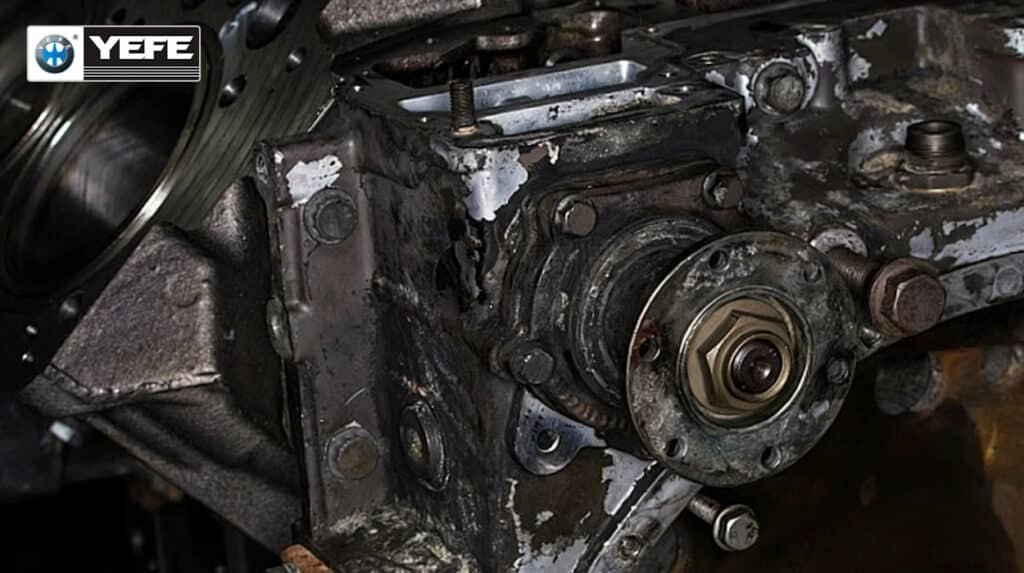
Eliminating grease failure can only be achieved through systematic management aiming at the matching of lubricant to the use-point, the control of application volume and frequency and the cleanliness. Minor process modifications also result in huge improvements in equipment uptimes.
Proven Preventive Measures
| Solution | Preventive Effect |
| Correct grease selection | Matches operating conditions |
| Proper re-lubrication intervals | Maintains film integrity |
| Clean application practices | Reduces contamination |
| Compatibility checks | Prevents structural breakdown |
The choice of grease depending on NLGI grade, base oil viscosity, and kind of thickener and the additives appreciating temperature, load, and environment is essential. Reducing under- and over-greasing: condition-based re-lubrication, which uses ultrasound, temperature, or vibration feedback, is established. Always wipe away with a rag when changing types and establish that they are compatible, failure to which hardening or liquefaction may occur.
How Operating Conditions Accelerate Grease Failure
Even greases that have been carefully chosen can be overwhelmed by the harsh operating conditions, and the slightest lack of fit can be converted into a major breakdown. These cause and effect relationships enable an engineer to predict problems.
Characteristics of high temperatures will lead to the evaporation of base oils and their oxidation that can result in a hard and ineffective residue. Boundary lubrication zones are also brought about by excessive loads or shock and in this case a rupture of a film is probable. Leading to corrosion and thickener degradation provided moisture ingress, which is typical of outdoor or washdown environments. Additives may be dissolved by chemical exposure caused by process fluids or consistency may change. Long service times permit the collection of contaminants and unchecked oxidation.
In each instance, the grease is driven outside of its performance range whereby it is essential to apply application-specific testing as opposed to generic assumptions made.
Common Mistakes That Lead to Repeated Grease Failures
Even advanced teams do go into such patterns that ensure generation of the same old problems. These pitfalls can be avoided when it comes to exercising discipline and awareness.
- It is an assumption that a single grease will do.
- Disregarding lubrication instructions issued by the manufacturer.
- Combining old oil with new unchecked.
- Until the system overheats, grease failure is treated as an acute event rather than as a red flag.
Such practices are usually caused by time constraint or inadequate root-cause analysis. One failure is enough to initiate investigation of the selection, storage, application technique, and operating data to stop the cycle.
Conclusion — Grease Failure Is a System Problem, Not Just a Product Issue
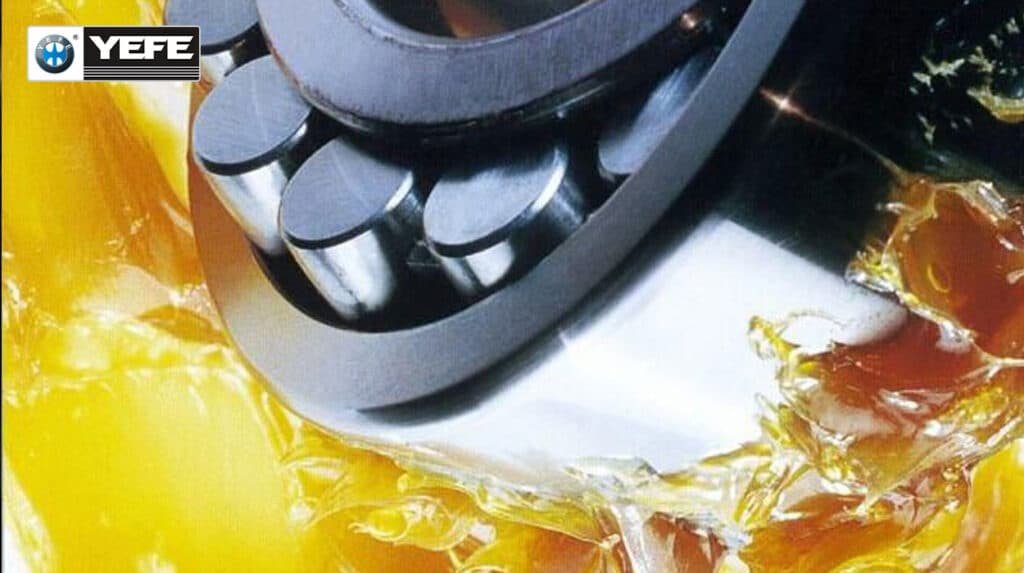
The majority of grease failures can be avoided provided that the root causes are known and that the early warnings are identified. In the provision of trustworthy lubrication, and extra service life of equipment, proper selection, controlled application, and regular maintenance practices are very vital.
Interpreting grease failure as an effect of higher system needs, and not as an individual product defect, moves us to the overall management of reliability. When the selection, contamination control and operating alignment are jointly addressed, premature failures become much more of an exception, and equipment can work within much of the designed potential.