
Bearing grease is not a generic choice but depends on speed, load and temperature requirements. Bearings are used in certain rates of rotation, loaded forces, and thermal conditions which directly influence the behaviour of grease. The wrong choice of grease is one of the most frequent factors that cause overheating of the bearing, its unreasonable wear, and its premature breakdowns.
The bearing grease should be chosen depending on the speed of operations, load, and temperatures to ensure a stable lubricant film and ensure that the bearings do not fail before long. Most users can believe that any universal grease can be used in bearings when it is important to note that bearing performance is vulnerable to grease properties. An unfitted grease will not be able to establish a sufficient oil film, resulting in metal-to-metal contact, higher friction, and quick deterioration.
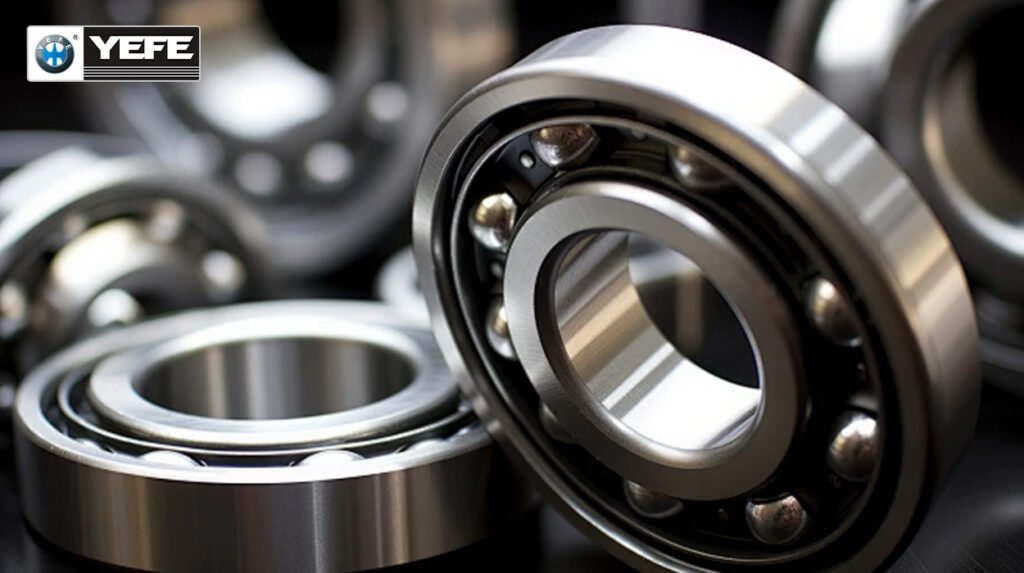
Why Bearings Require Application-Specific Grease
Bearings rely on lubrication films which are thin and consistent to ensure that rolling elements are separated by the raceways and friction is restricted. As opposed to an open gears or sliding surface, bearings are closed structures in that grease has to resist centrifugal forces, shear stresses, and restricted heat loss.
This grease is created in a movie of discharging base oil with the passage of time. During high velocities centrifugal force can cause grease to be thrown out (churning), whereas heavy loads will raise film pressure. High temperatures increase oxidation and evaporation of oil. All these render generic greases inappropriate in demanding sectors of bearing.
| Bearing Condition | Impact on Grease |
| High rotational speed | Causes grease churning and oil separation |
| Load pressure | Increases film stress and shear |
| Heat generation | Accelerates grease degradation and oxidation |
| Enclosed design | Limits heat dissipation and oil replenishment |
How Bearing Speed Influences Grease Selection
Bearing speed is an important factor of grease performance since it dictates the speed of mechanical stress and heat accumulation. The DN value (bearing bore diameter in mm/x RPM) or NDm value (pitch diameter/x RPM) is also a common practice as a practical measure of the severity of speed by engineers. Increased DN values also imply higher speeds on surfaces that also require grease that has regulated oil release to prevent unnecessary churning and heat.
The bearings traveling low speed can take harder greases with the base oil viscosity because they will produce less internal friction. The high-speed applications demand greases with a minimum drag and adequate film thickness that are not necessarily based on higher viscosity oils and do not channel.
| Bearing Speed | Grease Requirement |
| Low speed | Higher base oil viscosity, firmer consistency |
| Medium speed | Balanced consistency and oil release |
| High speed | Lower internal friction, controlled bleed |
Too viscous grease would result in overheating due to churning, whereas overly fluid a grease would not be able to maintain the film.
Load and Pressure: Choosing Grease for Bearing Stress
Loads – radial or axial, or both, have a direct effect on the pressure on the lubrication film. The film is subjected to heavy loads and this is more likely to cause boundary lubrication conditions where metal contact is taken place. At this point extreme pressure (EP) additives are needed because they create coating around stressed metal surfaces.
Standards greases are adequate when using light loads. Intermediate loads have the advantage of even-handed EP protection whereas heavy-load jobs require greases with a high load-bearing capacity, usually by means of greater viscosity base oils or increased EP packages.
| Load Condition | Grease Property Needed |
| Light load | Standard lubrication film |
| Moderate load | Balanced EP protection |
| Heavy load | High load-carrying capacity, EP additives |
In case there is a lack of consideration of load, it may lead to pitting, spalling, or wear that occurs faster than it should, despite the fact that the speed and temperature are within acceptable limits.
Temperature Effects on Bearing Grease Performance
Probably the most critical one is the temperature as it influences the base oil viscosity, thickener stability and rate of oxidation. Grease may be too hard to start, and may pose the risk of pumping insufficient oil. Intermediate temperature conditions permit normal performances, whereas higher temperatures cause a tremendous drop in viscosity, hasten oxidation and eventually decrease the duration of grease by evaporating and degrading it.
The life of grease may reduce by half with each 10-15 o C increase beyond the optimum temperature. High-temperature greases incorporate synthetics or complicated thickeners as base oils to retain film strength and inhibit degradation.
| Temperature Range | Grease Behavior |
| Low temperature | Increased resistance, higher startup torque |
| Moderate temperature | Stable performance and oil release |
| High temperature | Accelerated degradation and oxidation |
It is also a good idea to monitor the limitations of the grease as, dropping point and the temperatures at which it operates just to make sure that it is within a safe range of higher than the maximum bearer temperature.
To apply to practice in choosing the bearing grease under different conditions of industrial work, it is recommended to use special literature that correlates the properties of greases with the operating conditions in reality:bearing grease selection.
Matching Grease Properties to Bearing Operating Conditions
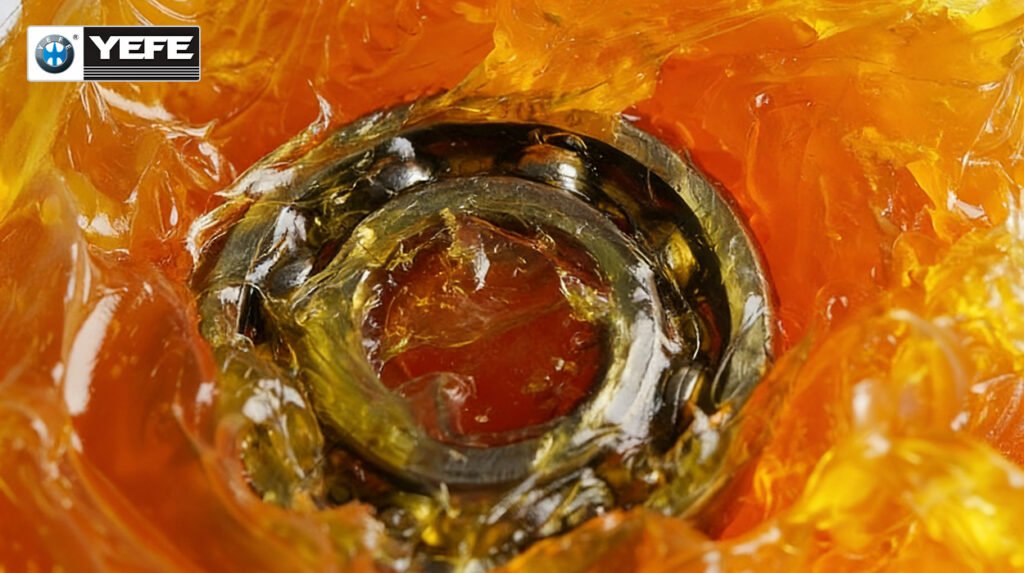
The choice of greases depends on successful selection of important properties in relation to the demand rate, load, and temperature.
- Base oil viscosity -Identifies film thickness; lower in high-speed ranges, and higher in heavy-load ranges.
- Type of thickener: Does affect mechanical stability, oil release and temperature resistance (e.g. lithium complex over large ranges, polyurea in high-speed electric motors).
- Mechanical stability – – This is a measure of shear resistance, essential in high-speed or vibrating environments.
- Resistance to oxidation -Prolongs grease life at high temperatures with antioxidants.
| Grease Property | Importance for Bearings |
| Base oil viscosity | Controls film thickness |
| Thickener system | Provides structural stability |
| Oxidation resistance | Determines grease life at high temperatures |
| Mechanical stability | Resistance to shear and breakdown |
Common Bearing Grease Selection Mistakes
Even technicians who have been working a long time commit mistakes that invalidate bearing reliability:
- Grease used in high-speed bearings is of high viscosity resulting in excessive churning and heat.
- Operating past temperature limits resulting in early oxidation and hardening.
- Combining uncompromising types of greases, which lead to their separation, harden, or leakage.
- Overspeeding or overspeeding bearings, either raising the drag/heat, or starving the starvation.
These errors are usually based on the habitual use as opposed to consideration of the real working conditions.
Conclusion — Bearing Grease Selection Is Condition-Driven
The choice of grease applied on bearings needs to comprehend the amount of interaction between speed, load, and temperature during the operation. All of the factors affect the grease behavior, including the film formation and oil releases, thermal stability, and load-carrying capacity. Correlating grease properties within these conditions adopt stable lubrication, less wear, and higher bearing service life.
The systematic assessment of DN values, load types, and temperature ranges are going to help avoid regular traps and eliminate failures that cause expensive downtime by maintenance workers. Proper selection does not mean selecting the best grease, rather it is selecting the appropriate grease to use in a certain application.