
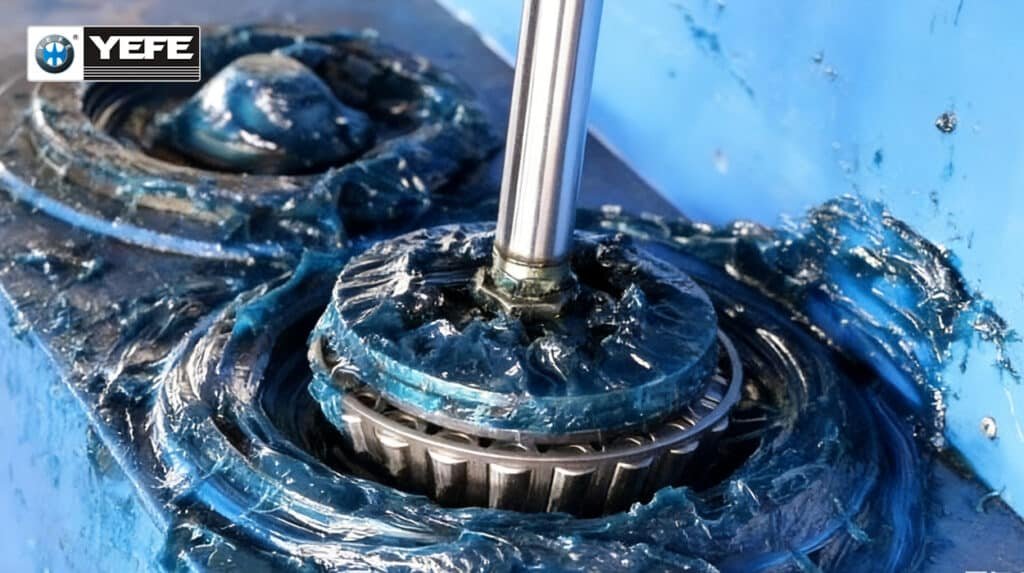
Having the correct and universal answer to the frequency of re-greasing equipment does not exist. The right re-greasing period varies with equipment type, operating conditions, and in the actions of grease themselves and not by some time based formula. Most of the maintenance schedules continue to be based on calendar time (after every month or after every quarter) but this method results in problems. In practical use, grease wears off, ruptures or gets contaminated at varying rates with regards to load, speed, temperature and surroundings.
Miscorrect re-greasing also ranks among the common causes of greases within bearings, joints and other lubricated parts. Under-greasing will make metal-to-metal contact whereas over-greasing will lead to churning, heating of metals and broken seals. Effective re-greasing balances between the renewal of lubricants and the retention of grease to ensure that the lubrication film remains constant throughout the time.
Why Re-Greasing Frequency Matters
Direct effects of re-greasing frequency on equipment service life and reliability. The main mission of re-greasing is to refill the lubricant which has been used, oxidized or contaminated which provides a continuous coating between surfaces in motion.
Lubrication fails when re-greasing is performed improperly or at the wrong time. Lack of lubrication causes high levels of friction, wear rate, over heating and eventual failure of the components. Conversely, excessive use of greases makes the rolling elements to grind through the excess material producing more heat which in turn wears out the greases more easily.
The following is a listing of some of the typical re-greasing problems and their effects:
| Re-Greasing Issue | Impact on Equipment |
| Under-greasing | Increased wear and overheating |
| Over-greasing | Churning, heat buildup |
| Irregular intervals | Unstable lubrication film |
These results can manifest slowly, though, they add to time cost in cases where they are not dealt with by condition-driven practices instead of fixed schedules.
Key Factors That Determine Re-Greasing Intervals
The intervals of re-greasing should never be made arbitrarily. They have to be honest regarding the reality of the areas where the equipment functions. The rate of consumption or degradation of grease is a result of a number of factors which are interdependent.
Equipment design, load, speed, temperature, and environmental exposure represent the most influential ones. To illustrate, the more the loads, the greater the rate at which the greases are used and the more the temperature, the faster the oxidation and separation of the base oil.
| Factor | Influence on Re-Greasing |
| Equipment type | Lubrication design (sealed vs. open) |
| Operating load | Grease consumption rate |
| Speed | Oil release behavior |
| Temperature | Grease degradation |
| Environment | Contamination risk |
The applications that are characterized by high velocity tend to demand increased monitoring since centrifugal forces expel grease at a higher velocity. Dusty or wet conditions add pollutants which reduce the life of grease and require reduced times or improved sealing. Especially temperature is important, with each major increase beyond the optimal range of the grease oxidation increases, and the frequency of relubrication must increase as well.
Lubrication maintenance concerns these factors have to be considered simultaneously not individually when planning these practices.. Understanding grease maintenance requirements helps avoid both extremes of the spectrum.
Typical Re-Greasing Intervals by Equipment Type
These are guidelines that are based on the experience in the field and the data of the manufactures, they are not rules. The real condition of operation, type of grease and monitoring of performances should in the actual intervals be adjusted.
The bearings of an electric motor or fans are usually calculated by intervals depending on the speed and temperature. Shorter cycle is necessary when it comes to construction equipment heavy-duty applications since they have shock loads and contamination. Agricultural machinery can follow the patterns of seasonal of use.
| Equipment Type | Typical Re-Greasing Approach |
| Bearings | Condition-based or calculated |
| Heavy equipment | Shorter intervals |
| Agricultural machinery | Seasonal adjustment |
| Industrial motors | Temperature-driven |
In the case of rolling element bearings, the periods may be as short as weeks during severe conditions or in clean, moderate conditions as many weeks and even months. Create a baseline using the recommendations of the OEM, and optimize it with help of vibration analysis, temperature condition, and grease condition.
Signs That Equipment Needs Re-Greasing
The use of time based schedules only overlooks valuable equipment indications. Observable indicators can be monitored to make decisions that are more precise and condition-based.
This may manifest in changes in sound, heat or movement which are early warning signs. All these are signs that the lubrication film is becoming thin or is disrupting.
| Warning Sign | Possible Meaning |
| Increased noise | Lubrication loss |
| Rising temperature | Grease breakdown |
| Vibration | Inadequate film |
| Visible grease leakage | Over-greasing |
Strange sounds, e.g., grinding or squealing, increased bearing housing temperatures, or high vibration are all indicators of insufficient lubrication. Leakage visible around seals can be an indication of over-greasing whereas a dry or discoloured grease point is the indication of under-greasing. The trending information aided by regular inspections will help identify such challenges before failure sets in.
Risks of Over-Greasing and Under-Greasing
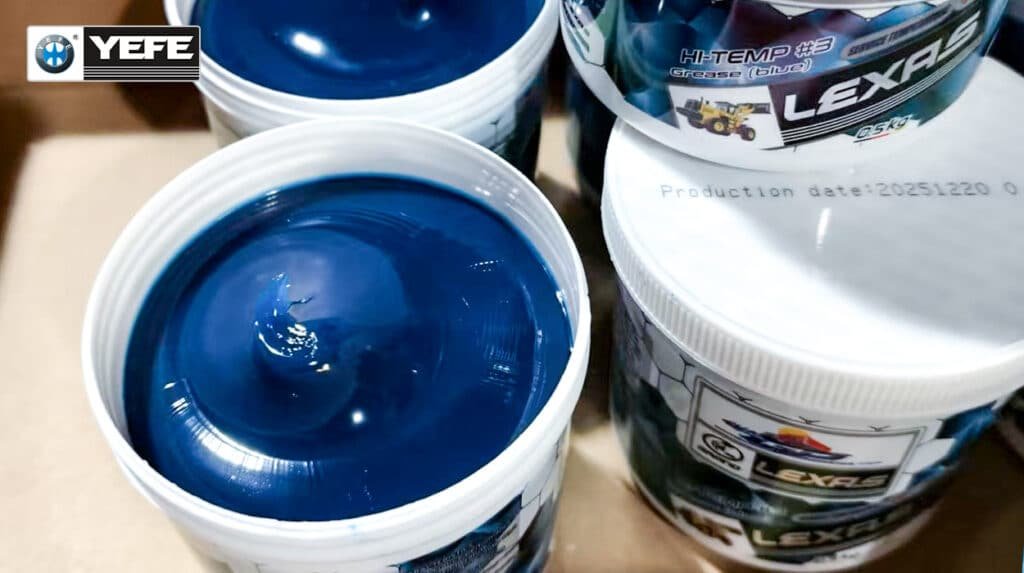
Under-greasing and over-greasing are both quite un-reliable. In over-greasing, the components roll, forcing their way through their surplus material creating heat that further increases the rate of oxidation and thickener corrosion.
Under-greasing permits direct contact of the metals, which gives a quick wear, scoring, and ultimate seizure. Re-greasing in wrong time reduces the total grease life and prevents the lubrication regime.
| Practice | Resulting Risk |
| Over-greasing | Seal damage, overheating |
| Under-greasing | Metal contact, wear |
| Incorrect timing | Reduced grease life |
Excessive greasing has a tendency to break the seals and contaminants may be introduced to further damage it. It also makes energy consuming in electric motors. Under-greasing is more damaging in the long-term since it allows crepidoma to develop which is difficult to undo.
How to Build a Practical Re-Greasing Strategy
An effective re-greasing plan takes lubrication as a focused, factual undertaking as opposed to a habitual one. Begin with the review of equipment design requirements such as bearing type, seal arrangement, and OEM.
Secondly, record operating conditions – load, speed, temperature cycle, contaminant exposure. These are to be used to determine baseline intervals, and the performance of the vibration, thermography, and sample grease.
Change the adjustment periods according to the feedback: reduce the periods in case the temperature or the vibration increases, and lengthen only in situations when it is proved that the conditions are stable. Consideration: The probing team has to standardize their procedures in terms of the type of grease used, amount used per point, and the method of application. Record all interventions to develop historical patterns and the development of the program.
This proactive methodology transforms the concept of re-greasing to a fundamental aspect of predictive service.
Conclusion — Re-Greasing Is a Condition-Based Maintenance Decision
To decide on the frequency of re-greasing equipments it is necessary to know the behaviour of grease under real working conditions. Predetermined time-based schedules are not always in line with the reality and will probably either lack enough protection or will be overused.
Hi-tech re-greasing plans, which rely on the feedback provided by the equipment and the environmental conditions, are used to ensure the stability of lubrication efficiency, minimize the maintenance problem, and prolong the service life of the equipment. The maintenance crews will be able to avoid numerous typical lubrication related failures and raise the overall reliability by ensuring the right time to perform the relevant application.