
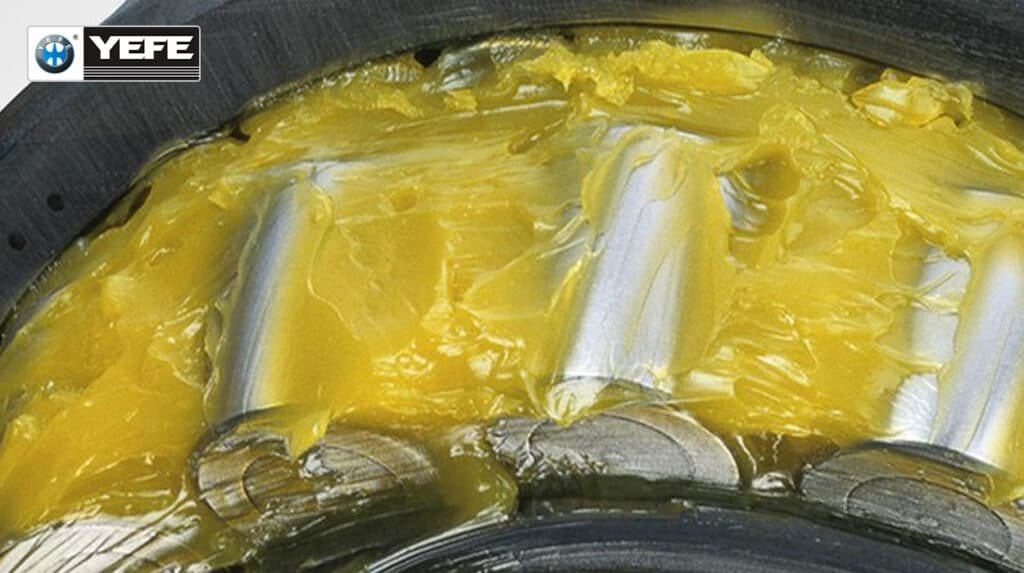
Construction, mining, and agriculture industrial grease applications differ greatly in terms of types of loads, quantity of contamination, types of cycles of operation, and exposure to the environment. It is expected that most individuals think that a single type of industrial grease can be used in all of the heavy-duty equipment yet in real-life situations it proves that once a universal method is employed, heavy machinery will wear out faster, stay out of commission longer and have higher cost of maintenance.
The ability of industry greases to be properly chosen relies on the learning of the environment where the engine will operate and the specific characteristics of the task which will be mechanical. The key idea is very simple, in various industries, the performance of industrial grease is sensitive to the condition of application, the condition of load and risk of exposure. The selection according to these factors enables the preservation of film strength, avoidance of corrosion, and increased lifespan of the components in harsh environments.
Why Industrial Applications Demand Specialized Grease
Intensive industrial equipment only performs much under the harsher environments than either light-duty or automotive, and also demands grease formulations able to perform under the same condition without deteriorating.
The industrial environments are usually characterized by high constant load, shock load frequency shocks, dust abrasion entry, moisture accessibility, and prolonged periods of duty. In such cases, the grease of general purpose usually leads to poor film coverage, premature wear, tear of the seals, or even disastrous breakdown of bearings, pins, and bushings.
The following is an apparent breakdown of major factors and their impacts:
| Industrial Factor | Impact on Grease |
| Heavy load | Increased film stress and risk of rupture |
| Dust and debris | Accelerated wear from abrasion |
| Moisture exposure | Corrosion risk and potential washout |
| Long duty cycles | Stability demand to prevent thinning or hardening |
These conditions explain why specialized heavy-duty industrial grease, with greater extreme pressure (EP) additives, greater mechanical steadiness, and better sealing properties to be more a necessity than optional.
Grease Applications in Construction Equipment

Construction sites present equipment to a trifectant mixture of shock loads, everlasting articulation, dust clouds, and weather inconsistency and so grease choice is vital in pivot points, bushings, and bearings.
Excavators, loaders, cranes and concrete equipment have their own distinct problems, which generic greases are unable to handle well. The grease should be able to keep its structure under the high-impact movements and at the same time should prevent being displaced due to vibration and contaminated.
Typical challenges include:
| Equipment Type | Grease Application Challenges |
| Excavators | Shock loading and heavy ingrains of dust. |
| Loaders | Habitual articulation and pin / bushing wear. |
| Cranes | Exposure to high loads and outdoors. |
| Concrete equipment | Alkaline pollution and sand grains. |
Practically, the grease should have a high level of sticking power to remain hard to remove during extending of the boom or bucket excavations, and the EP additives ensure that the metal to metal contact during unexpected loads. Effective selection in this regard will help minimize pin seizures directly, and increase service intervals, in the workplaces where thousands of US dollars are lost due to downtime.
Grease Applications in Mining Equipment
Mining processes drive equipment to the limit with huge capacities, silica dust that is aggressively silica and dust is generally a damp underground environment and 24/7 working cycles that require extreme durability of greases.
In applications of industrial lubrication, the haul trucks, shovels, excavators and crushers are subjected to some of the harshest conditions. Grease in this case needs to offer a high degree of protection in areas where breakdown may cause stagnation of complete production lines.
The major requirements emanate out of the environment:
| Mining Condition | Grease Requirement |
| Extreme load | High EP capability to prevent welding |
| Abrasive dust | Strong sealing ability to block ingress |
| Moisture | Superior corrosion protection |
| Extended service | Long grease life and oxidation resistance |
Within such requirements, the grease will create a protective coating that will not allow fine particles to penetrate the bearing surfaces. Water resistance becomes incomparable in wet pits or wash-downs whereas long-lasting stability can be discussed as the assurance of minimum re- greasing halts in more distant places.
Grease Applications in Agricultural Equipment
Farm equipment use is seasonal and often done outside, in muddy conditions, dealing with crop debris, and unpredictable loads in the form of tillage to harvest.
The conditions that face tractors, combines, planters and implements during field work is highly variable against the time they are kept in storage. Grease should be able to withstand mud and water washout and rust proof when off-season.
Some of the key exerting factors are:
| Agricultural Factor | Impact on Grease Selection |
| Mud and water | Need for washout resistance |
| Seasonal storage | Strong rust prevention during idle periods |
| Variable load | Consistent lubrication across speed changes |
| Field contamination | Enhanced adhesiveness to resist fling-off |
Wheel bearings, universal joints, and pivot points in the field should be greasy to avoid being displaced by soil and moisture. It helps to prevent corrosion when in exposed metal surfaces during winter storage. The use of grease that is chosen with good stickiness and water resistance is used to protect it during wet harvests and dry fallow intervals.
Key Grease Properties That Matter Across Industries
Although the stresses in any sector are different, some properties of greases are universal in ensuring satisfactory performance in heavy-duty industrial lubrication.
The proper balance of these characteristics will make the grease remain useful during pressure, temperature fluctuations and contamination.
| Grease Property | Importance |
| Mechanical stability | Maintains structure under shear and vibration |
| EP additives | Provides load protection during high pressure |
| Water resistance | Guards against moisture exposure and washout |
| Oxidation resistance | Extends service life in high-temperature or long-duty conditions |
All these properties collaborate to ensure that the lubricant film remains intact and less wear occurs as well as the frequency of construction, mining and agricultural maintenance interventions is decreased.
Common Industrial Grease Selection Mistakes
Even teams who have gone through experiences sometimes adopt habits that compromise reliability of equipment.
- The contamination, load and environmental profile of all industries using the same grease is not only ignored.
- The disregard of contamination exposure results in the quick abrasive wear in case dust or water engulfs the grease shield.
- Neglecting re-lubrication period enables the grease to either wear down or move aside leaving components uncovered.
- The combination of incompatible types of greases may lead to softening, hardening, or separation, which will either give the grease poor performance or lead to failure.
These pitfalls could be avoided by aligning grease properties to the prevailing conditions of different operating equipment and location.
Conclusion — Industrial Grease Must Match Industry Conditions
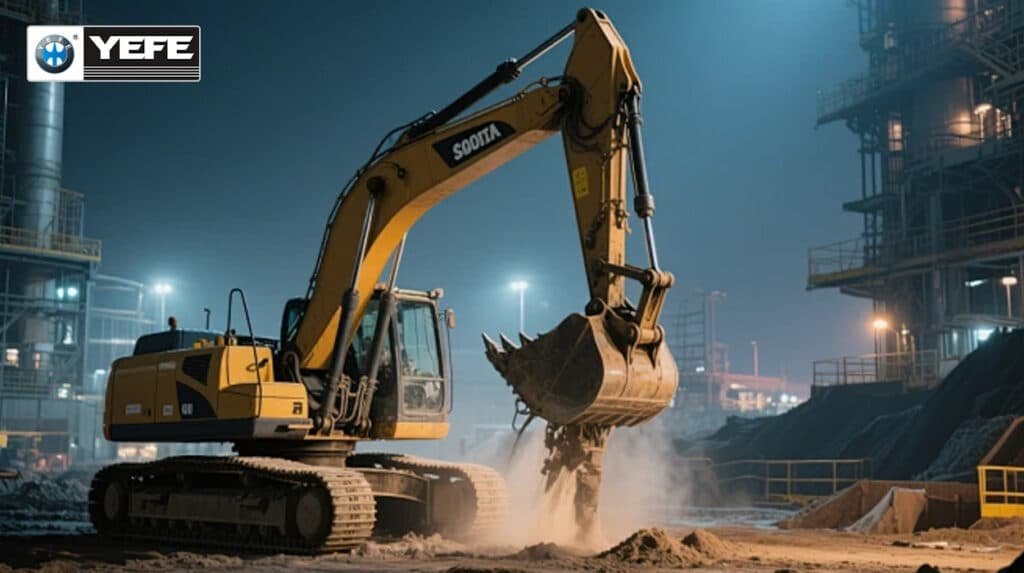
Industrial grease is important in the preservation of equipments in construction, mining, and farming. It is always good to get knowledge on how different industries operate to ensure that the grease is selected correctly; do they have shock loads and dust during construction or are they in extreme abrasion during mining or are they operating in heavy rainy seasons during agriculture. Such a specific solution will help minimize wear, eliminate unforeseen failures, and provide a longer service in a tough industrial setting.