The manufacture of private label truck engine oils is based on the same high-quality industrial technology as branded oil, whereby the specific formulation, blending, testing, and packaging are done. The variation in quality does not take place on the label, but occurs in the degree of control that the manufacturer exercises in the formulation, in the maintenance of the accuracy of blending, and in the observance of standards of testing. Most of the consumers have the wrong notion that the truck engine oils are generic or of poor quality. As a matter of fact, they are all based on manufacturing control and specification management.
Reliability of the private label truck engine oils depends on how they are made, tested and controlled and not on the name that is stamped on the label. The manufacturing of the private label truck engine oil requires high standards of the process discipline in a bid to achieve consistency in the viscosity, resistance to oxidation, and wear protection in the heavy-duty diesel applications. In the case of distributors and importers who assess suppliers, an insight into these phases will help them realize that the capability to manufacture is much more significant than the design of the labels.
When selecting an OEM partner for private label truck engine oil products, one ought to consider their process controls and not their promotional claims.

What Private Label Means in Truck Engine Oil Manufacturing
The process of lubricating products through own-label of an already formed manufacturer (OEM) and selling them under the brand name of the buyer is known as private label in the lubricants industry, and includes formulation and manufacture entirely controlled by the OEM.
In comparison to branded oils where the marketer owns the brand and often the marketing story, in the case of the successful one the ownership of the brand has returned to the distributor or importer and the OEM bears the responsibility of the technical and production work. The design can be tailor-made or conformed to the normal API/ACEA heavy truck engine specification.
The difference between the two is mostly in ownership and control:
| Aspect | Private Label Reality | Branded Oil Reality |
| Brand ownership | Distributor or importer | Oil company or major marketer |
| Manufacturing | OEM lubricant producer | Often the same oil company |
| Quality outcome | Process-dependent | Process + brand reputation |
| Market positioning | Flexible, market-specific | Brand-driven |
Practically, the entire concept of high-quality production of the own label truck engine oil is similar to the branded production when the OEM is using the same criteria.
Formulation Development and Specification Alignment
The base of any credible personal brand truck oil engine is the formulation development where the selection and balancing of base oils and added pursuits are done to satisfy specific performance necessities.
In the case of applications involving heavy duty trucks, then the process starts with the selection of suitable base oils- which are usually Group II or III mineral oils, or synthetic blends of the same to achieve greater performance. These are the basis of viscosity and thermal stability. Additives are next added to give it wear protection, detergency, dispersancy, oxidation resistance and shear stability, which are all required to meet the requirements of API CK-4, FA-4 or other diesel engine standards.
To deliver the desired viscosity index, the pour point, and flash point, SAE viscosity grades (15W-40 or 10W-30) must be carefully calculated to match the desired viscosity grade with the OEM requirements.
| Formulation Element | Manufacturing Role |
| Base oil | Determines viscosity, volatility, and stability |
| Additives | Provides protection, cleanliness, and longevity |
| Specification | Ensures application suitability (API, SAE, OEM) |
This misalignment will result in the failure of the field, therefore, long-established OEMs utilize laboratory blending tests and simulations of performance prior to full production.
Blending and Production Process Control

The genius of mixing directly determines the homogeneity and reproducibility of the batches of the so-called unlabeled diesel engine oil.
The contemporary OEM plant comprises automated blending that can measure the base oils and the additives with computerized controls. A constant temperature (usually 50 70 o C) is used to keep the temperature steady without degradation, and high-shear mixers provided homogeneity.
The control by ratio is essential- additive packages of truck engine oils may contain 1020 components, which are dosed to a narrow range (typically within a 0.5 percent range). The batch sizes are 10- 50 tons, and the continuous monitoring is required to eliminate stratification.
Standardized procedures, raw material verification, as well as in processes help to ensure batch consistency. This step colors out variation which may influence engine protection in aggressive heavy-duty operation.
Quality Testing and Batch Verification
All the lots of the private label truck engine oil are thoroughly tested to ensure that they are up to standard before making them available.
Lab tests involve kinematic viscosity (40 deg C and 100 deg C), viscosity index, total base number (TBN), flash point, pour point. Tests such as RPVOT or PDSC are used to evaluate oxidation stability, whereas elemental analysis is used to measure the level of contamination or addition.
The cleanliness is verified through particle counting and full traceability through the batch records with the association of raw materials and finished product.
| Test Type | Purpose |
| Viscosity test | Grade accuracy |
| Oxidation test | Thermal stability |
| Contamination check | Cleanliness |
| Batch record | Traceability |
Batches which meet all requirements are only approved, which guarantees the reliability in the long term.
Filling, Packaging, and Labeling Processes
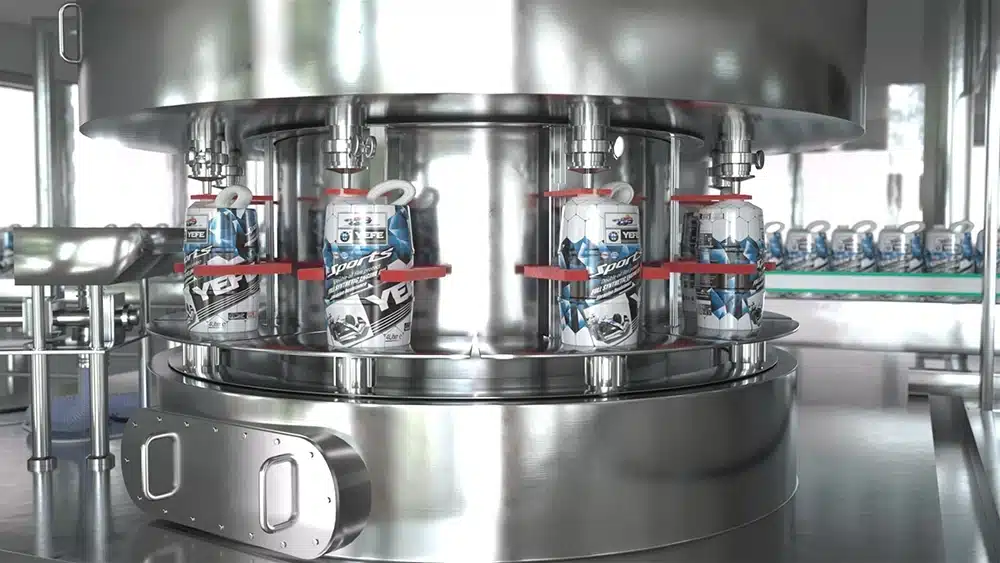
The last stage of the manufacture chain is filling and packaging, transforming bulk oil into packaging that is ready to the market and does not affect quality.
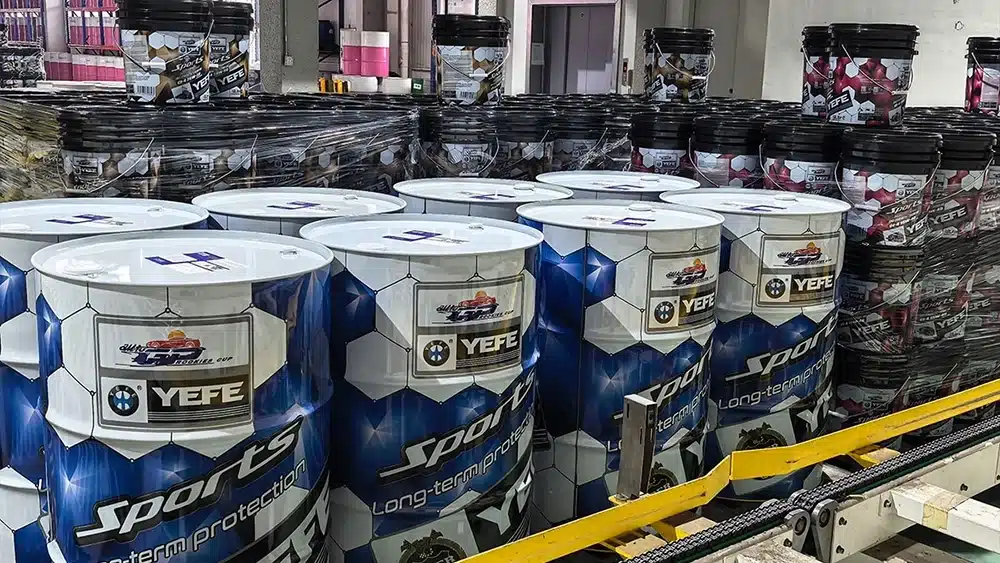
Bottles (1L-5L), drums (200L), IBCs, or bulk tankers with accurate volume control and nitrogen blanketing are filled on automated filling lines to ensure that oxidation is minimized. The containers are leak tested and filled under clean conditions to prevent ingression of particulate.
Docontinuity creating tamper-evident packaging and strong packaging materials that can withstand transportation to emerging markets. Labeling engraves customer designs using correct product details, grade of viscosity, API grade and safety data, which completely adhere to international standards.
It is a stage that preserves the integrity that was applied in the formulation and blending.
Common Risks in Private Label Truck Engine Oil Manufacturing

Even the structured private label truck engine oils may be spoiled by weak production.
- Bad metering or insufficient mixing can cause inconsistent formulation which means that additive ratios change between batches causing uneven engine performance.
- Poor quality control- Leaving or haphazard testing means off-spec products will go out, and they may or may not pass through the oxidation, pieces-of-shape breakdown, or wear-related heavy-duty service.
- Weak batch traceability – No detailed records are made on how the raw materials were used to make finished batches, it is hard to recall and impossible to do root-cause analysis, in case there are problems with the field.
These are some of the risks that explain why a buyer should consider the process controls and certifications of a supplier.
Conclusion — Manufacturing Defines Private Label Quality
The safety or the failure of the private label truck engine oils will be dependent on their mode of production. Since formulation and blending to testing and packaging, quality verification and controlled processes define the differences between products carrying a private label delivering averagely high performance and credibility in the market over a long-term period.
Having transparency in manufacturing (documented processes, batch records and intense testing) makes the difference between trustworthy suppliers and untrustworthy ones. To distributors, importers, and brand owners, it is more appropriate to focus process ability as compared to branding so that the end product will be able to yield to the requirements of the current heavy-duty truck engines.