DOT 4 brake fluid is a product that has a safety aspect. A single bad batch can affect braking, expose the company to liability and hurt the brand that it has nurtured for years. Importing it from China can provide high margins for distributors, auto parts companies and fuel station chains—if they aren’t looking for a discount. This DOT 4 China buyer’s guide covers all the exact points importers consider while verifying the DOT 4 brake fluid compliance, shortlisting the capable China factories, setting workable commercial terms and protecting the quality of the brake fluid after arrival in the container.

DOT 4 Basics Every Buyer Must Understand
To begin with, you should have a firm understanding of what DOT 4 is and what could go wrong if you ask for a quotation.
What DOT 4 Means in Standards and Boiling Points
The performance standards that define DOT 4 include primarily FMVSS 116 (USA) and ISO 4925 (international). The standards include minimum dry/wet boiling points, viscosity limits and compatibility with brake system materials. The higher boiling points of DOT 4 resist vapor lock at heavy usage, under tow or in hot environments when compared with DOT 3.
This is the real-world distinction most buyers refer to:
| Fluid | Dry Boiling Point (min) | Wet Boiling Point (min) | Viscosity at -40 °C (max) | Notes |
| DOT 3 | 205 °C (401 °F) | 140 °C (284 °F) | 1,500 mm²/s | Older vehicles, lower cost |
| DOT 4 | 230 °C (446 °F) | 155 °C (311 °F) | 1,800 mm²/s | Most passenger cars and light trucks |
| DOT 4 LV / Class 6 | 230 °C+ | 155 °C+ | 750 mm²/s | Modern ABS/ESP systems, faster response |
Any decent DOT 4 brake fluid supplier in China must be capable of presenting some recent lab reports including measured values, not the minimums on the label.
Glycol-Based Chemistry, Hygroscopic Behavior and Maintenance
DOT 4 is a Borate Esters Glycol-Ether fluid for use in hydraulic systems. It absorbs moisture from the air over time (is hygroscopic). The more water gets into the brake system, the lower the wet boiling point and the greater the risk of corrosion. That is the reason why OEMs and service manuals suggest changing fluids every two years or 40000 to 50000 km, even if the vehicle doesn’t exhibit any symptoms.
In considering the production line, consider the need for clear labelling and customer communications on service intervals. If suppliers are familiar with this, they can assist you to prepare precise maintenance instructions for a market, and not just to fill bottles.
Standards and Compliance – What to Ask for Before Pricing
The first filter is standards. Be wary of marketing claims.
FMVSS 116 vs ISO 4925 – Which One Do You Need?
FMVSS 116 is the U.S. federal government motor vehicle safety standard. In Europe, Asia, South America and the Middle East, ISO 4925 is the international standard. Many markets will accept either, but some national regulations or large fleet buyers will mandate one or the other. Determine your target markets first and then verify the supplier’s test reports are specific to the standard and class that you require (typically Class 4 for standard DOT 4).
Data Sheet and Test Report Checklist
Ask for a complete Technical Data Sheet and laboratory reports confirming the product code you are to purchase. The following is a minimum that should be included:
| Parameter | What to Verify | Why It Matters |
| Compliance standard | FMVSS 116 and/or ISO 4925 Class 4 stated clearly | Legal market access and liability protection |
| Dry boiling point | Measured value ≥ 230 °C | High-temperature performance under load |
| Wet boiling point | Measured value ≥ 155 °C | Safety after moisture absorption |
| Kinematic viscosity | At -40 °C and at 100 °C within spec | ABS/ESP response and pumpability |
| Copper strip corrosion | Pass rating (usually 1a or 1b) | Compatibility with metal components |
| pH value | Within 7.0–11.5 typical range | Corrosion protection balance |
| Rubber compatibility | Swell and hardness change within limits | Seal integrity over service life |
| Base fluid type | Glycol ether / borate ester | System compatibility and mixing rules |
| Date of test report | Recent (within 12 months) and lot-specific | Current formulation, not historical data |
If the supplier is unable to provide recent (but not too recent) reports that can be traced back to a lot and match these points then select the next candidate.
How to Evaluate DOT 4 Brake Fluid Manufacturers in China
Lab Specs are just half the answer. You’ll also need a factory capable of producing your brand’s required volume and quality.
Certifications, Capacity and Experience
Conduct a search for ISO 9001 as a point of reference. IATF 16949 is a more powerful message for automotive fluid manufacturers. Inquire into monthly or annual brake fluid production, existing export markets and if they have any direct or indirect OEM/OES supply history. One-off repacking plants for traders can face problems of batch uniformity and lack of documentation.
Private Label, OEM and Technical Support Capabilities
For most importers, the commercial abilities are as important as the chemistry. Will the factory offer custom labels, printed cartons and bottle designs that cater to your market’s language and hazard-symbol needs? Are they available to assist you with technical support when you’re dealing with regulatory inquiries or customer complaints? Can they fit documentation to various locations without the months of give and take? Suppliers that can confidently and with examples answer these questions are the ones to establish a long term relationship with.
MOQ and Pricing Expectations for DOT 4 Brake Fluid from China
Typical Minimum Order Quantities by Pack and Project Size
The majority of Chinese brake fluid manufacturers export in Full Container Loads. A typical starting point is a 20 ft container, which can generally hold a combination of bottle sizes or even two DOT grades, depending on the arrangement, if planned in advance. In private label programs, there are individual SKUs for which, once there is an established relationship, 3–5 pallets per SKU are accepted, or about 7,500–10,000 bottles of 350 ml as a practical minimum. Make clear from the outset what the MOQ means: per grade, per bottle size, or per order value.
How MOQ, Packaging and Specifications Influence Price
The volume is not the only factor that influences the unit price. “DOT 4 Plus” or low-viscosity are premium formulations, with a higher price that exceeds standard DOT 4. The size of the bottle, the quality of the resin, the cap type, the strength of the carton, and the complexity of the labels all impact the needle. Private label projects come with setup costs due to custom artwork and multiple languages. Get multiple quotes for one container and two containers to establish the actual cost difference and the amount of inventory risk you’re willing to take on.
Packaging and Labeling Options for Export DOT 4
Common Retail and Workshop Pack Sizes

There are series of common features of Chinese factories:
- Small bottles (250-350ml) for motorcycle topping up and small vehicles.
- 500 ml, 800 ml and 1 L bottles for Passengers cars, typically 24 or 30 on a carton.
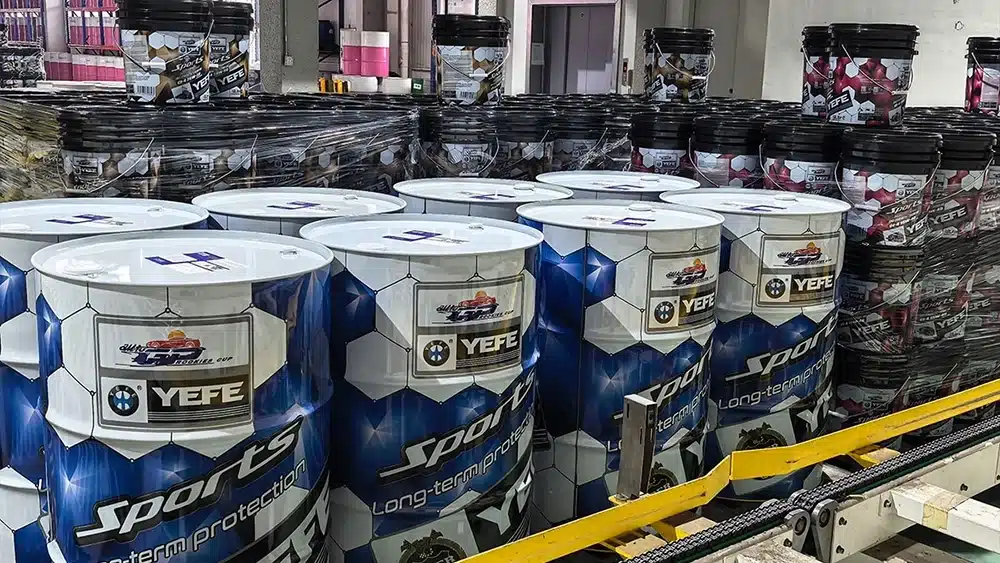
- 4 litre and 5 litre jerrycans, 20 litre pails and 200 litre drums/IBCs for workshops and bulk users.
Select pack sizes that are in line with service sizes and retail price points in your market. A bottle of 500 mls, which is a popular size in one country, could be a forgotten item in another country.
Custom Labels, Cartons and Branding Execution
Most factories which accept export jobs are capable of full private label jobs. You provide art work or they draw a template. The label must contain the appropriate DOT 4 designation, boiling point claims, compliance statements, hazard symbols and any language or text required by local regulations in your destination market. When printing proofs always sign off on them and ask for a pre-production sample in the final package before authorizing mass production. Quality of carton makes the difference as well—bad boxes means bad product and returns that take your profit.
Quality Control, Testing and Ongoing Supplier Management
Incoming Inspection and Periodic Testing
Sourcing is not finished after the container goes through customs. Establish an easy incoming QA procedure for each batch:
- Compare lot number, production date, CoA value to specification agreed with you
- Have an independent lab or trusted local partner test and measure the following key parameters with random samples of the product, and run dry/wet boiling point tests.
- Check all packaging for leaks, proper label placement and carton integrity
The measures benefit both your customers and your brand.
Managing Changes and Communication with the Factory
Production cannot be changed to a different raw material supplier, new formula or different packaging if not communicated and agreed in writing. Keep a simple change-control log to help you to keep up-to-date your own product literature and regulatory documents. Think of the relationship as a technical, not “one-off” relationship.
This Practical Sourcing Checklist for DOT 4 Brake Fluid from China serves as a guide.
Practical Sourcing Checklist for DOT 4 Brake Fluid from China

Follow this sequence to stay on track with projects:
- Verify that the vehicles and climates you’re interested in are covered by the DOT 4 specification.
- Determine the standards (FMVSS 116, ISO 4925 or both) and performance level (standard or low-viscosity) your customers need.
- Narrow down Chinese manufacturers to those with relevant quality certifications, with some experience of export and commercial production of DOT 4.
- Ask for TDS, SDS and Lot specific test reports. Check the actual boiling points and viscosity, which should correspond to the product label.
- Set your desired bottle/carton size, your branding strategy and your realistic MOQ per sku & MOQ overall order.
- Get samples to final packaging, send to your lab or independent lab and then proceed to container-level production.
Adopting this checklist provides control of the product sourced from China to ensure it meets DOT 4 standards, enables competitive costs and ensures customer and brand protection.
When it comes time to ask for samples or talk specifications, choose a manufacturer that has automated blending lines, full batch traceability, and can handle OEM and private label orders with export documentation. YEFE’s production and quality systems are designed for just these purposes. Let us know your target markets, pack sizes and any particular compliance requirements, and we will be able to give you up to date information and practical solutions for your timeframe.