NLGI grade 2 grease is the most widely-used consistency specification in the world on lubricant labels and technical data sheets. The industry standard grease consistency is ideal because it provides the lubrication needed within the bearings without being so thick that it can’t be pumped through grease guns or centralized grease systems. When it comes to protecting equipment, especially in various automotive, industrial and marine applications, knowing exactly what NLGI 2 is will help prevent misapplications for maintenance teams, fleet operators and distributors.
YEFE offers high-quality, low-attrition NLGI Grade 2 Automotive and Industrial Lubricants. Our years of blending, testing, researching and supporting global customers every day shows us how the right blend can directly affect the life of your bearings, downtime and your operating costs. This guide covers the understanding of the NLGI system, the reason for choosing grade 2, and a method to go beyond the numbers and determine your equipment’s correct product specification.

What Is NLGI and What Does the Grade Number Measure?
The National Lubricating Grease Institute (NLGI) has created a standardized classification system which measures the consistency of the grease, or how thin or stiff the grease is at the end of the process. NLGI consistency number is a laboratory test that is based on a cone penetration method. The technicians process the grease sample mechanically and insert a standardized cone into the sample and note in tenths of a millimeter how deep it goes into the grease.
The NLGI Grade Scale at a Glance
The NLGI grade scale ranges from 000 (nearly fluid, like thick oil) to 6 (very hard, nearly solid block).
- Grades 000 to 0 are used in centralized lubrication systems and gearboxes where flow is the most important factor.
- The bulk of rolling element and plain bearings are covered by grade 1 to 3, with grade 2 as the “sweet spot” for most applications.
- Grade 6 greases are firmer wax greases, suitable for certain high stay-in-place applications.
It is important to note that the NLGI grade applies to consistency alone. It does not provide information on the viscosity of the base oil, on the type of thickener used (lithium, calcium, polyurea, etc.), or on the performance of the additives. Two Grease of the same NLGI can exhibit vastly different performance characteristics when subjected to loading, temperature, or water conditions.
What Does NLGI Grade 2 Actually Mean?
The average worked penetration of NLGI grade 2 grease is in the range of 265 to 295 tenths of a millimeter. In common language, it is like peanut butter; it is solid, but yet pours and spreads when sheared.
The consistency provides very good performance in most normal situations. It remains stable in bearing housings, does not slump or leak under normal vibration and orientation conditions and is easily pumped through standard grease guns and distribution lines. It provides a practical middle ground for manufacturers and end users, and is why there are so many equipment manuals that recommend the use of NLGI 2 grease.
Why NLGI 2 Became the Global “Standard” Consistency
NLGI 2 provides the middle ground for a wide temperature range, moderate speeds and most of the load ranges for the common applications in passenger car, truck, electric motors, pumps and general machinery. It makes a reliable choice in most climates, and is less likely to become over- or under-ridged in moderate temperatures in winter or summer.
Typical Applications for NLGI Grade 2 Grease
NLGI Grade 2 Grease is used in a variety of applications, including:
Automotive and Light Commercial Vehicles
NLGI 2 lithium or lithium complex greases are suitable for wheel bearings, chassis parts, suspension bushings, steering linkages and universal joints. This grade is recommended for factory fill and service by many automotive manufacturers due to its ability to seal well, resist water damage when properly treated, and endure under differing road conditions over extended service intervals.
Industrial and Plant Maintenance
High-quality NLGI 2 multipurpose grease is used in electric motor bearings, conveyor rollers, pumps, fans and general purpose machinery. In factories, a maintenance team may choose to use a single versatile NLGI 2 product on most points to minimize the chances of using the wrong grease and minimize training and stock problems.
When NLGI 2 Is the Right Choice – and When It Is Not

NLGI 2 is very suitable for most horizontal and lightly loaded vertical bearings with moderate speed and temperature applications. But it’s not a one-size-fits-all answer.
Cases Where a Softer Grease (NLGI 0 or 1) Is Preferable
A softer grade such as NLGI 0 is appropriate for very cold climates or for high-speed low-torque applications, where it lubricates faster on start-up, and reaches critical contact areas sooner. NLGI 2 may become excessively stiff in below zero temperatures and can cause excessive wear to occur during cold start and delay lubrication.
Cases Where a Stiffer Grease (NLGI 3 or Higher) Is Needed
Stiffer grades such as NLGI 3 are generally necessary for high-load, slow-speed bearings or in overhead or vertical shaft applications or for use in high vibration environments. These retain position more and don’t bleed or sling off under the stress.
NLGI Grade vs Base Oil Viscosity, Thickener Type, and Additives
That’s the point at which many users start to go wrong. The NLGI number indicates just consistency. A genuine lubrication engineer will always review the complete technical data sheet of:
- Base Oil Viscosity – such as ISO VG 100 for high speed or VG 460 for heavy load.
- Chemistry of thickener (Lithium complex for high temperature, Calcium sulfonate for extreme water resistance)
- To ensure durability, waterproofing and resistance to corrosion and oxidation, additives are added to the performance of the cutting oil.
In actual service, a high quality NLGI 2 grade grease, which may have the same NLGI number but a different base oil and additive formulation, can be significantly superior to a lower cost grease of the same NLGI number.
Why Engineers Must Look Beyond “NLGI 2” on the Label
Always check operating temperature range, load conditions, speed and environment. NLGI 2, for instance, might be selected for a high-speed electric motor with lighter base oil and high oxidation resistance, or it may be chosen for a heavily loaded mining conveyor that requires a higher viscosity base oil and good EP protection.
How NLGI 2 Grease Fits into Real-World Maintenance Programs
Smart maintenance programmes involve a consistent use of a reliable NLGI 2 multipurpose grease for most uses and have specialty greases available for special circumstances. This process provides inventory simplification, minimisation of errors and overall cost savings if the selected grease perfectly meets the majority of the requirements.
Benefits of Standardizing on a Reliable NLGI 2 Grease
With fewer SKUs, ordering is easier, technicians can train more easily and there is less risk of cross-contamination. It is important to pick a technically competent product with the proper testing and documentation and not just on price.
When to Specify a Different Grade or Product
Pay attention to warning signs such as frequent bearing failures, grease leakage, excessive heat, or poor flow in cold weather. These indicate it may be time to adjust either the NLGI grade or the underlying formulation.
How Distributors and OEMs Should Talk About NLGI 2 with Customers
Look for any warning signs of bearing failure, leakage, excessive heat or reduced flow during cold conditions. These are signs that it may be necessary to change the NLGI grade or underlying formulation.
Positioning NLGI 2 Grease in a Product Line
To advise customers, tell them that for a reason NLGI 2 is the industry benchmark and it’s just one of the elements. Emphasize that the base oil, thickener and additives must be compatible with the specific operating conditions. This helps to establish trust and makes you more of a partner and not just a vendor.
How a Professional Grease Manufacturer Supports NLGI 2 Selection

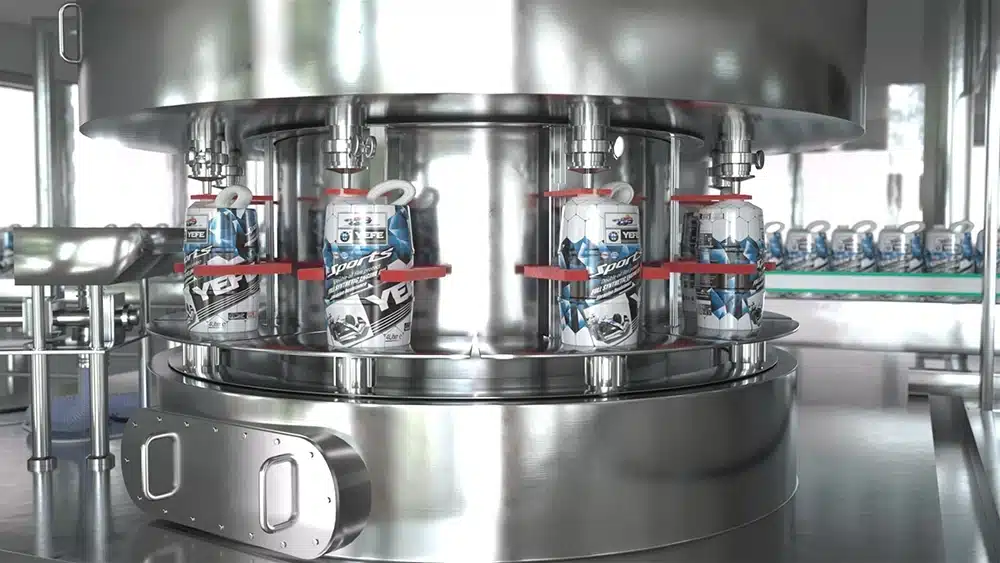
YEFE is fully transparent, with detailed Technical Data Sheets (TDS) and Safety Data Sheets (SDS) stating the penetration values, base oil viscosity, thickener type and performance specifications of every NLGI 2 grease produced. Our automated production lines and laboratory testing ensure batch-to-batch consistency and full traceability.
We work closely with the distributors, OEMs and end users to ensure the correct formulation for a particular equipment, climate and duty cycle — passenger cars in Southeast Asia, heavy trucks in the Middle East or industrial plants in extreme conditions.
Questions Maintenance Teams Should Ask Their Grease Supplier
- In what viscosity range is the NLGI 2 grease and what is its thickener?
- For what temperature range and conditions does it operate?
- Would it be a good choice for electric motors, wheel bearings, or heavy industrial use in my facility?
- What other grades or formulations do you suggest in very cold, hot, wet and overloaded conditions?
Selecting the appropriate NLGI grade 2 grease begins with understanding the consistency number, only then do you get to the right formulation to meet actual operating conditions. With a sound base of advanced R&D, strict quality control, and practical application knowledge, we strive to assist customers in maximizing equipment life and minimising total maintenance costs at YEFE.
Our technical team is available to assist you in choosing the best NLGI 2 grease for your application, or to discuss private labeling and OEM options. Tell us about your operating conditions and we’ll suggest the best high performance lubricant in our broad product line.