This is because the distribution of successful truck engine oil requires one to be knowledgeable on product specifications, proper application, and supply consistency rather than only pricing.
Distributors have been considered as an important channel of the lubricant supply chain that can directly affect customer satisfaction and durability of the equipment used in commercial vehicle activities. In case the truck engine oils do not meet the expectations of the user, the distributors would receive complaints about the product, product recall, warranty claims and image damage that can ultimately deplete market share in the long run.
A large number of distributors take the engine oil purchasing to be more of a pricing decision, which is actually a technical and risk-management decision. The implementation of oils at random without careful consideration of the specifications, level of formulation, and consistency of suppliers may result in engine complications such as faster wear and tear and even disastrous failures in high-performance applications.
The distributors with knowledge of specifications and application needs of truck engine oil will be in a better position to develop credible, lucrative markets. They focus on informed sourcing and reduced risks, improved customer relationships, and developed sustainable competitive advantages in heavy-duty lubricant segment.

Why Distributor Knowledge Matters in Truck Engine Oil Supply
Well informed sourcing choices are what can make the difference between a business that succeeds as a distributor and one which encounters recurrent problems in the commercial vehicle industry.
Distributors play a big role in the lubricant value chain and they ensure that the products distributed to various lessees within the fleet of trucks, construction firms and logistics are as per the various needs. Mismatched or irregular truck engine oils may impair the engine life, fuel savings as well as emission systems, which have direct implication on user confidence and loyalty.
Unsuitable sourcing costs can easily be substantially greater than the initial savings in the long-term. When oils fall short of their anticipated performance under realistic operating conditions such as high-load hauling, extreme temperatures, or long drain intervals, the returns, field failures and missed repeat business compound very rapidly.
| Distributor Responsibility | Business Impact |
| Product suitability | Reduced complaints |
| Quality consistency | Repeat orders |
| Technical support | Customer trust |
| Stable supply | Market reliability |
Key Specifications Distributors Must Understand
The mastery of core specifications of truck engine oils is necessary to match them with the engine designed and conditions of usage.
The engine oils in the trucks should conform to the norms of the industry in order to provide sufficient protection in the current heavy-duty diesel engines. Critical performance levels are specified in the API performance standards, and present performance standards are API CK-4 (backward-compatible to a broad selection of engines) and API FA-4 (designed with a focus on fuel economy in more recent designs with lower values of high-temperature high-shear viscosity). These substitute previous classes such as CJ-4 engines and preserving engines that are of high quality in terms of emitting emissions.
SAE grades of viscosity establish the flow properties in different temperatures. Heavy-duty grades are typically SAE 15W-40 (traditional top protection), SAE 10W-30 and lower-viscosity grades such as 5W-30 or 10W-30 in FA-4 formulations to make highly efficient in modern trucks.
Common, application-specific OEM references are those of Cummins (CES standards), Detroit Diesel (DFS), Mack (EOS) and Volvo (VDS). These OEM approvals make sure that they are compatible with culture of exhaust aftertreatment system, protracted spleen-like drains, and certain wear protection requirements.
| Specification | Why It Matters |
| API rating | Engine compatibility |
| SAE grade | Climate and load suitability |
| OEM references | Market acceptance |
When sourcing, distributors should reference reliable options like those in the truck engine oils category to ensure alignment with these critical parameters.
Evaluating Product Quality Beyond Price
In heavy-duty applications, price is hardly ever a predictor of actual performance in the real-world, formulation quality determines long-term performance.
Truck engine oils of high quality begin with high quality base oil. The Group II+ or Group III base stocks are more stable to oxidation, less volatile and have an improved low temperature flow than lower-grade counterparts. These are added value of cleaner engine and longer life in the harsh environment.
It is also important to the additive system balance. An additive package should consist of detergents that control soot and deposits, anti-wear components that provide components protection, antioxidants used in thermal stability, and dispersants to deal with the combustion byproducts. Additives that are either imbalanced or under-dosed may cause sludge formation, break viscosity and/or provide insufficient protection in heavy load operation.
Resource bounded inconsistency at batch to batch isolates reliable suppliers and unreliable suppliers. Blending operation or sourcing of raw materials may also have drift in performance resulting to unforeseen field action. Distributors would want to find suppliers whose production processes are traceable and severely tested by laboratories to ensure the consistency.
Supply Stability, Packaging, and Documentation Considerations
Trusted and verified supply chains and good documentation cushion the distributors against business upheavals and bureaucracy.
Frequency is better than infrequent low prices. Lead time, reorder reliability and production capacity have a direct effect upon the performance of a distributor to provide customer service without stockouts, particularly during the peak demand or a disruption of the supply chain.
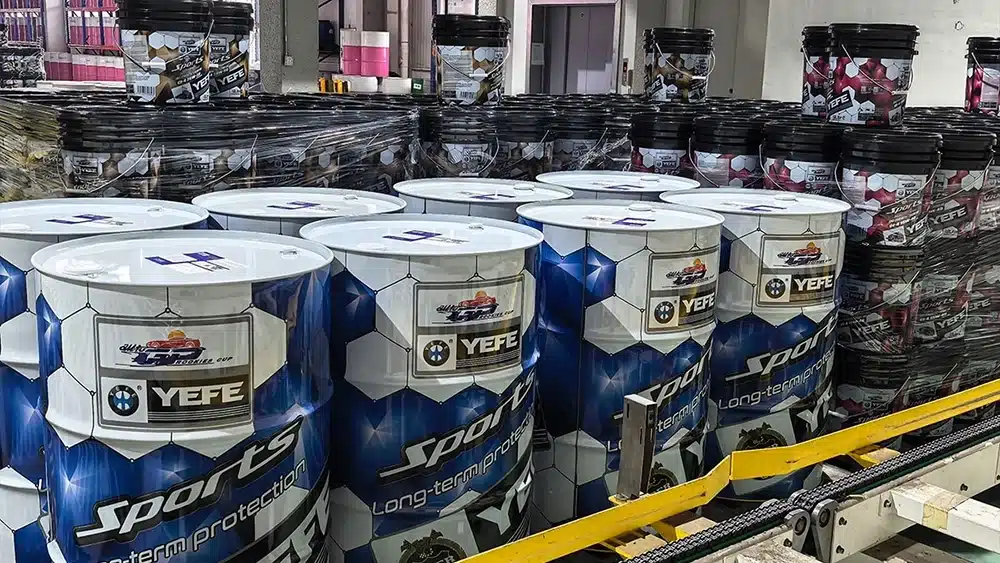
The packaging formats have an influence on the efficiency of logistics and as well as the handling by the end-user. It could be options of 1L/4L/5L bottles when a smaller workshop is used, and 200L drums, as well as IBC totes, when used in volumes. Tamper evident, secure packaging is used in preventing contamination risks during transportation and storage.
To foreign distributors, being ready to conduct export transactions cannot be negotiable. This comprises of certificates of analysis, safety data sheets, origin declaration and conformance to the importation regulations in the target markets. Suppliers ready to meet such needs facilitate easier clearance of goods at the ports and reduce delays.
Market-Specific Risks Distributors Should Anticipate

The differences within regions present distinct issues that have to be assessed proactively during the sourcing.
Oil performance risk that is caused by climate is prevalent in various markets. Temperate oils can become too thick during cold weather or they become too thin during hot weather resulting to a lack of lubrication and damage of the engine. Such failures can be avoided by matching the SAE grades and pour point properties with the conditions on the ground.
The regions have disparities in regulatory and compliance aspects such as the emission standards, the fuel content of sulfur and labeling. Disobeying products may lead to the delay or penalties associated with imports, or even a ban on the market.
The presence of counterfeit products, as well as sub-standard quality, is a constant menace especially in the developing markets. Poor quality oils usually replicate the authentic branding but have low rates of additive treat or base oil leading to quick wear out and customer dissatisfaction.
| Risk Factor | Distributor Impact |
| Climate mismatch | Product failure |
| Regulatory gaps | Import delays |
| Quality inconsistency | Brand damage |
Common Mistakes Distributors Make When Buying Truck Engine Oils
The distribution of distributors can avoid these pitfalls to protect their business and customer relations.
- Selecting on price alone – Competitive pricing is important, but focusing it on specifications and quality will result in worse performance, more claims, and reduced margins due to returns. Concentrate on overall value such as consistency and technical support.
- Not taking into account the application diversity – Fleets work in different conditions (long-haul, off-road, mixed fleets). The provision of a single size of oil regardless of the engine types or duty cycles is prone to large dissatisfaction. Align products to the real usage trends.
- Requesting suppliers to regularly switch – Now it causes lots of variation in the batch consistency and in addition, the technical support becomes difficult. Reliable manufacturers are also taken as long-term partners to create trust, thereby minimizing risks of variability.
Conclusion — Informed Distributors Build Stronger Markets
Distributors who are more aware of the specifications and quality issues of truck engine oil as well as supply stability are in a better position to minimize risk, instill customer confidence and create sustainable markets. Knowledgeable buying behavior is the basis of success in the long term in lubricant distribution in commerce. When distributors approach sourcing as strategic and technical and do not just treat it as a cost-cutting practice, the distributors stand at an advantage to survive and grow in a highly competitive industry.